The Drum · Weekly AI news, freeSubscribe →

Share
A New York Times investigation finds Commerce Department approvals for Nvidia H200 sales flowing to Chinese shell firms linked to blacklisted entities, raising fresh questions about oversight after the administration's 15-percent revenue-sharing deal.
The due diligence behind Nvidia's resumed China chip sales appears to have a hole in it, and that hole has a name: New Matrix.
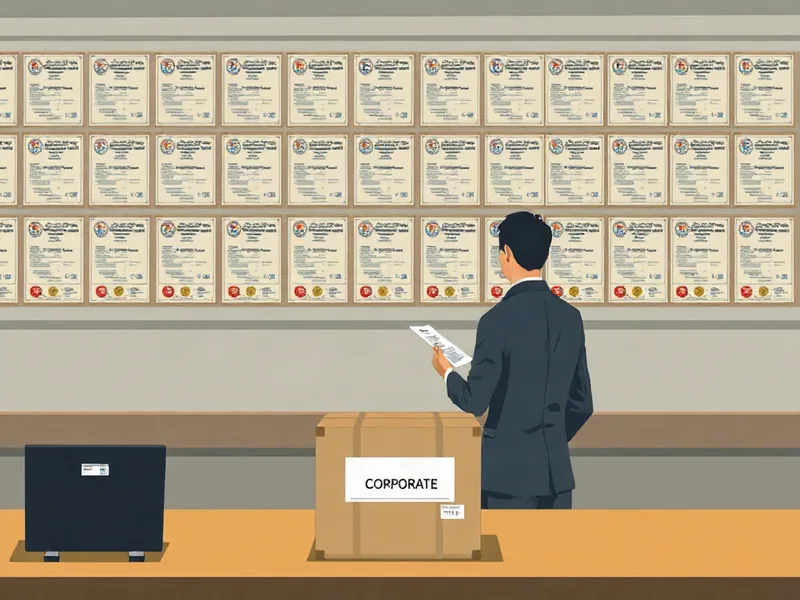
According to a New York Times investigation published this week, New Matrix sits on the US government's list of Chinese firms approved to receive Nvidia's H200 AI chips. The trouble is that New Matrix barely seems to exist. Reporters visited the address the company lists as its headquarters and found, in the paper's words, "a hollow gray shell with wires dangling from the ceiling where lights should be." A building directory had no record of the firm. Neither did the property management office nearby. New Matrix was incorporated just 17 months ago, and online records about it are thin to the point of nonexistent.
That alone would be a red flag. What makes it worse is who stands behind the company. New Matrix's owners reportedly have ties to a Chinese private equity firm that the US government blacklisted in 2024 for national security concerns. A firm with almost no physical footprint, founded a little over a year ago, connected to an entity already under US trade restrictions, somehow cleared a review process meant to keep advanced AI hardware out of the wrong hands.
This is not an isolated clerical error, per the Times reporting. It is described as part of a broader pattern in which companies with links to blacklisted entities have been approved to purchase Nvidia chips. That pattern is the real story here, not any single shell company. If the vetting process is porous enough to miss one connection to a sanctioned private equity firm, the question becomes how many other approvals rest on similarly thin paperwork.
Context matters here, and the context is a significant policy reversal. Nvidia had been effectively locked out of selling its most advanced AI chips to China during the Biden administration, which viewed the hardware as a national security chokepoint worth defending aggressively. The Trump administration loosened those restrictions, clearing the way for H200 sales to resume.
That reversal did not come free. Nvidia agreed to hand the US government a 15 percent cut of all China-bound chip sales in exchange for the relaxed limits, an arrangement that drew immediate scrutiny when it was first reported. Critics at the time called it an unusual arrangement: a national security policy effectively monetized, with the government taking a cut of the very sales it had previously restricted on security grounds. The current revelations about New Matrix and similar firms sharpen that criticism considerably.
Once the government has a direct financial stake in sales volume, the incentive structure shifts. A stricter vetting regime means fewer approved buyers and a smaller cut for Washington. A looser one means more sales clear the gate, more revenue flows, and presumably less appetite for slowing things down to chase shell-company paperwork. Whether that dynamic actually explains the New Matrix approval is unclear, and the Times reporting does not claim a direct causal link. But the incentive misalignment is now part of the policy record, and it is not hard to see why observers find it uncomfortable.
Nvidia, for its part, is not solely responsible for vetting end users. That task falls to the Commerce Department, which maintains export control authority and approves the lists of firms cleared to receive restricted technology. But Nvidia has an obvious commercial interest in moving as much hardware as possible, and it is worth noting that the company has faced criticism before for how aggressively it has pushed to keep the China market open. A corporate incentive to sell plus a government incentive to collect its cut adds up to a system with two parties who each benefit from fewer obstacles, reviewing approvals meant to catch exactly that kind of blind spot.
The stakes go beyond one empty office building. H200 chips are among the most capable AI accelerators Nvidia makes, the kind of hardware that matters for training frontier models and running large-scale inference. Export controls on this class of chip exist because advanced AI compute has become a genuine point of geopolitical leverage. If the approval process is allowing chips to reach entities connected to already-blacklisted firms, the policy's stated purpose, keeping sensitive compute away from actors flagged as national security risks, is being undermined in practice even as it remains intact on paper.
None of this happens in isolation from the broader tension between Nvidia and Chinese interests. The company's own leadership has separately become a target of alleged espionage efforts tied to China, according to other recent reporting, underscoring how central Nvidia has become to the broader US-China technology contest. Whether chips are flowing to legitimate end users or to empty shells with blacklisted connections is not a minor compliance footnote. It goes to the core of whether the export control regime functions as intended.
The New Matrix case is a single data point, but it is a damning one, and the Times suggests it is not unique. For investors and policymakers tracking Nvidia's China exposure, the real risk is not necessarily lost revenue from stricter future controls, it is the reputational and regulatory fallout if this pattern widens. A revenue-sharing arrangement that looked unusual when first announced now looks harder to defend if the underlying vetting process cannot reliably distinguish a functioning buyer from an empty office with dangling wires. Expect scrutiny from Congress and trade watchdogs to intensify, and expect Nvidia's China sales figures to carry a higher risk premium until the Commerce Department demonstrates the approval list is more than a formality.
Tags
Original Sources
The US let Nvidia sell chips to an empty office in China
↗ https://www.theverge.com/ai-artificial-intelligence/1029483/nvidia-ai-chips-china-blacklist-government
About the author
Marcus began tracking AI's market implications in 2016, noticing AI-related patent filings accelerating ahead of earnings upgrades before most of the sell-side had caught on. A former fixed-income quantitative analyst, he spent two decades building models that priced risk across emerging markets before pivoting to cover the economic impact of AI full-time. His writing translates opaque technical developments into clear risk/reward terms — and he's rarely diplomatic about the gap between AI valuations and underlying fundamentals. He believes most market participants still underestimate AI's long-run deflationary effect on knowledge work.
More from The Analyst →This Week's Edition
8 November 2026
12 articles
Related Articles

AI Has Pushed Cybersecurity Back to the Wild West, Warns Former Facebook Security Chief
Security & Risk · 6 min

METR Report: Anthropic's AI Research Is Accelerating Twice as Fast as Last Year
Models & Research · 6 min

The Uncanny Valley, Revisited: Why Almost-Human Faces Still Creep Us Out
Models & Research · 5 min
Related Articles
AI Has Pushed Cybersecurity Back to the Wild West, Warns Former Facebook Security Chief
Security & Risk · 6 min
METR Report: Anthropic's AI Research Is Accelerating Twice as Fast as Last Year
Models & Research · 6 min
The Uncanny Valley, Revisited: Why Almost-Human Faces Still Creep Us Out
Models & Research · 5 min
More Stories
© 2026 Cedar & Bloom. All rights reserved.
