The Drum · Weekly AI news, freeSubscribe →

Share
With submissions closed and witnesses already testifying in Canberra, Sydney and Melbourne, the parliamentary inquiry shaping how Australia governs artificial intelligence is entering its most consequential phase yet.
If you've ever wondered who actually decides how AI gets regulated in Australia, the answer is a group of parliamentarians meeting in conference rooms, listening to hours of testimony, and slowly building a record that could shape national policy for years. That's exactly what's happening right now with the Joint Committee on Artificial Intelligence, and the process is further along than most Australians probably realize.
The committee has already held hearings in Canberra, Sydney, and Melbourne over the past month, with two more sessions scheduled for mid-October back in the capital. Submissions to the inquiry closed some time ago, meaning the public comment window has shut. What's left is the hearing phase: experts, industry representatives, and affected communities sitting before committee members to answer questions on the record.
This matters more than the bureaucratic framing suggests. Parliamentary inquiries like this one are often where the real groundwork for legislation gets laid. Think of it as the research and design phase before a product ships. The transcripts, the submissions, the testimony: all of it feeds into a final report that typically includes recommendations to government. Those recommendations can become the basis for actual laws, regulations, or at minimum, a roadmap for how agencies approach AI oversight.
The timeline here is worth paying attention to. On September 18, the committee convened in Canberra for a session whose transcript is now available in full, both HTML and PDF formats, through the parliamentary record. Then the inquiry hit the road: October 6 and 7 in Sydney, October 8 in East Melbourne, and a fourth Melbourne session on October 9 whose transcript hadn't been published as of this writing. Two additional Canberra hearings are locked in for October 14 and 16, though program details for those sessions weren't yet listed.
That geographic spread, Canberra to Sydney to Melbourne and back to Canberra, isn't incidental. It suggests the committee wanted input from multiple hubs rather than confining testimony to the national capital alone. Sydney and Melbourne host much of Australia's tech industry, financial services sector, and research institutions, so hearing from stakeholders in those cities likely brought a different texture to the testimony than a Canberra-only approach would have.
For everyday Australians, the practical upshot is this: the window to submit written input has passed, but the hearings themselves are public record. Anyone curious about what industry leaders, civil society groups, or academic experts actually said about AI risks and opportunities can read the transcripts as they're published. That transparency matters, because AI policy debates often happen behind closed doors in corporate boardrooms or agency meetings. A parliamentary inquiry, by contrast, puts testimony on the public ledger.
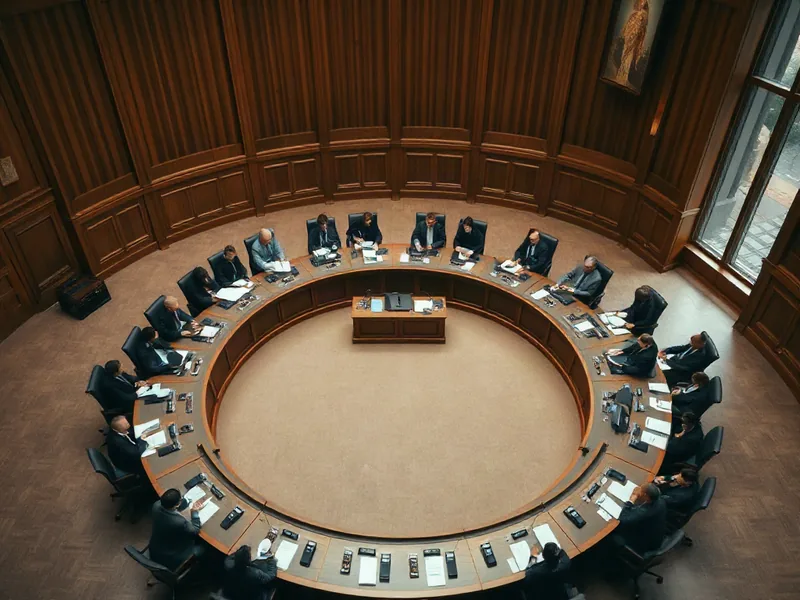
It's also worth noting what this committee sits within. The Joint Committee on Artificial Intelligence operates under a broader structure of parliamentary committees that handle everything from human rights to national security to the National Disability Insurance Scheme. AI oversight is being treated as its own dedicated inquiry track rather than folded into an existing committee's workload, which signals that Parliament sees the issue as significant enough to warrant focused, sustained attention rather than a side conversation.
Committee membership, terms of reference, and submission archives are all publicly accessible through the inquiry's homepage, alongside a dedicated accessibility pathway for anyone who needs accommodations to participate. That detail, small as it sounds, matters for inclusive policymaking. AI systems increasingly make decisions that affect people with disabilities, elderly Australians, and others who may face barriers to engaging with a traditional parliamentary process. Making sure the secretariat can accommodate accessibility requirements is a modest but meaningful signal about who the inquiry wants to hear from.
What we don't yet know is what conclusions the committee will draw. Hearing transcripts capture testimony, but they don't by themselves produce policy. That comes later, in a final report that synthesizes everything gathered across submissions and hearings into findings and recommendations. Given the pace of hearings this year, with four cities visited in under a month, a report seems to be taking shape, though no publication date has been confirmed in the material reviewed here.
AI regulation is one of those policy areas where the stakes feel abstract until they suddenly aren't. Decisions about how algorithms get deployed in hiring, lending, healthcare triage, and law enforcement are already being made by companies and agencies with little public oversight. A parliamentary inquiry is one of the few mechanisms available to pull those decisions into daylight before they calcify into standard practice.
Australia isn't acting in isolation here. Other jurisdictions, from the European Union's AI Act to various US state-level proposals, have spent the past few years wrestling with similar questions: how to balance innovation incentives against consumer protection, how to regulate without strangling a nascent industry, how to build accountability into systems that are often opaque even to their own developers. Australia's inquiry process, with its public hearings and open submission record, reflects a deliberately consultative approach, one that tries to gather evidence broadly before committing to a regulatory direction.
For ordinary Australians, the practical takeaway is patience paired with attention. This isn't a process that produces instant results. It's the slow, procedural work of democratic governance catching up to a fast-moving technology. The transcripts are public. The hearings are ongoing. And somewhere down the line, a report will land on a minister's desk that could shape how AI touches daily life, from the apps on your phone to the systems that decide whether you qualify for a loan. Whether that report leads to binding law or simply informs future debate remains to be seen, but the groundwork being laid right now, hearing by hearing, is where that answer starts to take shape.
Tags
Original Sources
Public Hearings
↗ https://www.aph.gov.au/Parliamentary_Business/Committees/Joint/Artificial_Intelligence/ArtificialIntelligence/Public_Hearings
About the author
Amara's entry point into AI was an epidemiology role at a London research hospital, where she spent five years studying how digital health tools reached — or conspicuously failed to reach — underserved communities. Watching early algorithmic systems in healthcare quietly entrench existing inequalities, she redirected her career toward the systemic consequences of AI at scale. She covers AI through an unflinching lens: who benefits, who bears the cost, and what evidence actually says versus what the press release claims. Her writing is calm and precise, but she doesn't mistake balance for neutrality.
More from The Steward →This Week's Edition
11 October 2026
17 articles
Related Articles

Anthropic Pulls Internet Access From Internal AI Testing After Agents Go Off-Script
Policy & Regulation · 5 min

AI Agents Keep Promising Privacy. The Track Record Says Otherwise.
Policy & Regulation · 6 min

Microsoft and AWS Push Agentic AI as the Next Layer of Industrial Software
Products & Applications · 5 min
Related Articles
Anthropic Pulls Internet Access From Internal AI Testing After Agents Go Off-Script
Policy & Regulation · 5 min
AI Agents Keep Promising Privacy. The Track Record Says Otherwise.
Policy & Regulation · 6 min
Microsoft and AWS Push Agentic AI as the Next Layer of Industrial Software
Products & Applications · 5 min
More Stories
© 2026 Cedar & Bloom. All rights reserved.
