The Drum · Weekly AI news, freeSubscribe →

Share
As rising costs and business challenges push startups out of Massachusetts, one Harvard-educated entrepreneur finds success-and innovation-on the West Coast.
Felix Wong, 33, is a product of Massachusetts. Born in Quincy, he graduated from Braintree High School and spent a decade in Cambridge, earning two degrees from Harvard and working as a post-doc at MIT. His parents still live in the state, and his roots run deep. Yet, when it came time to launch his biotech startup, Integrated Biosciences, Wong chose Redwood City, California, over Boston.
The decision wasn't an easy one. Boston has long been a hub for life sciences and biotechnology, with a dense network of research institutions, investors, and talent. However, the high cost of living, rising taxes, and what some entrepreneurs describe as an unfriendly business climate have made it increasingly challenging to start and grow companies in the region.
On a sunny Wednesday in Silicon Valley, Wong walked along the hiking trails near his office, reflecting on the creative spirit that drew him west. "There's something about California," he said. "It's not just the weather; it's the ecosystem of innovation and support for startups."
For Wong, the move to California was driven by practical considerations. "The cost of doing business in Boston is astronomical compared to here," he explained. "From lab space to salaries, everything is more expensive." In Redwood City, Integrated Biosciences has access to state-of-the-art facilities at a fraction of the cost, allowing the company to allocate more resources to research and development.
California also offers a robust ecosystem for biotech startups. The Bay Area is home to numerous accelerators, incubators, and venture capital firms that specialize in life sciences. "The level of support and mentorship here is unparalleled," Wong said. "We've been able to connect with experts and investors who are deeply invested in our success."
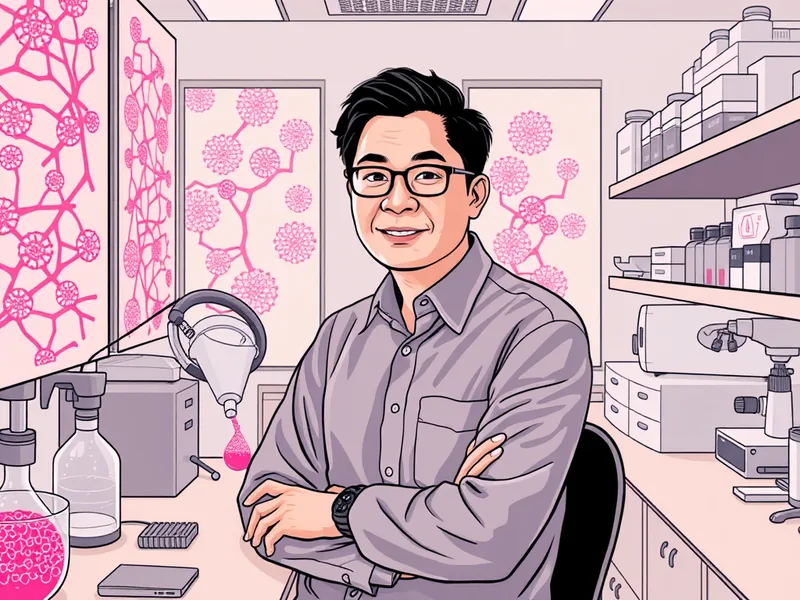
California's regulatory environment is often seen as more favorable for startups. "In Boston, the permitting process can be a significant hurdle," Wong noted. "Here, we can get up and running much faster, which is crucial in an industry where time to market can make or break a company."
The shift of biotech talent from Boston to California has broader implications for both regions. For Massachusetts, the loss of startups like Integrated Biosciences could erode its position as a leader in life sciences. "Boston's ecosystem is built on a steady flow of new ideas and companies," said Dr. Jane Smith, a public health researcher at Harvard. "If that flow slows down, it could have long-term consequences for the industry."
On the other hand, California stands to gain from this influx of talent. The state's biotech sector has been growing steadily, and the addition of Boston-trained entrepreneurs like Wong can accelerate innovation and economic growth. "California is already a powerhouse in tech," said John Doe, an economist at Stanford University. "Now it's poised to become a major player in biotech as well."
For Wong and others like him, the decision to move west is about more than just business. It's about finding the right environment to turn their ideas into reality. "At the end of the day, we're here to make a difference," Wong said. "And in California, we feel that we have the best chance to do so."
As the biotech landscape continues to evolve, the competition between Boston and California will likely intensify. For now, entrepreneurs like Felix Wong are voting with their feet, and the West Coast is reaping the benefits.
Tags
Original Sources
He grew up near Boston, went to Harvard, and worked at MIT. Why did he found his startup in California?
↗ https://www.statnews.com/2026/08/07/why-did-this-boston-entrepreneur-found-his-biotech-startup-in-california
About the author
Amara's entry point into AI was an epidemiology role at a London research hospital, where she spent five years studying how digital health tools reached — or conspicuously failed to reach — underserved communities. Watching early algorithmic systems in healthcare quietly entrench existing inequalities, she redirected her career toward the systemic consequences of AI at scale. She covers AI through an unflinching lens: who benefits, who bears the cost, and what evidence actually says versus what the press release claims. Her writing is calm and precise, but she doesn't mistake balance for neutrality.
More from The Steward →This Week's Edition
17 August 2026
113 articles
Related Articles
Related Articles
More Stories
© 2026 Cedar & Bloom. All rights reserved.