The Drum · Weekly AI news, freeSubscribe →

Share
As doctors increasingly rely on artificial intelligence for clinical decision-making, a new study comparing specialized and general AI models has sparked intense debate over trust and accuracy in patient care.
In the rapidly evolving world of medical technology, the role of artificial intelligence (AI) is becoming more prominent. Hundreds of thousands of U.S. Doctors now use clinical large language models (LLMs), which are marketed as safer alternatives to the generalist models developed by Big Tech companies like Google and Microsoft. These clinical AI tools, offered by companies such as OpenEvidence, Doximity, and UpToDate, are designed to reduce the risk of "hallucinations", instances where AI generates incorrect or nonsensical information.
However, a recent study from researchers at NYU Langone Health has thrown this assumption into question. The findings, published in Nature Medicine in June, suggest that clinical AI models may not be as reliable as previously thought when compared to their generalist counterparts. This revelation has sent shockwaves through the health AI community and raised urgent questions about trust, accuracy, and safety in AI-assisted patient care.
The study tested both general and clinical LLMs on three sets of clinical questions. To everyone's surprise, the generalist models outperformed the specialized clinical tools. This outcome was unexpected because clinical AI is specifically designed to handle medical scenarios with greater precision and safety. The researchers used a variety of performance metrics, including accuracy, coherence, and relevance, to evaluate the responses.
Ethan Goh, MD, a physician and AI advocate, acknowledges that no single benchmark can fully capture the complexity of how clinical AI systems are used in real-world settings. "Clinical AI will improve patient care, expand access, and reduce physician burden," he wrote on LinkedIn. "No benchmark can test every way a clinical AI system might be used."
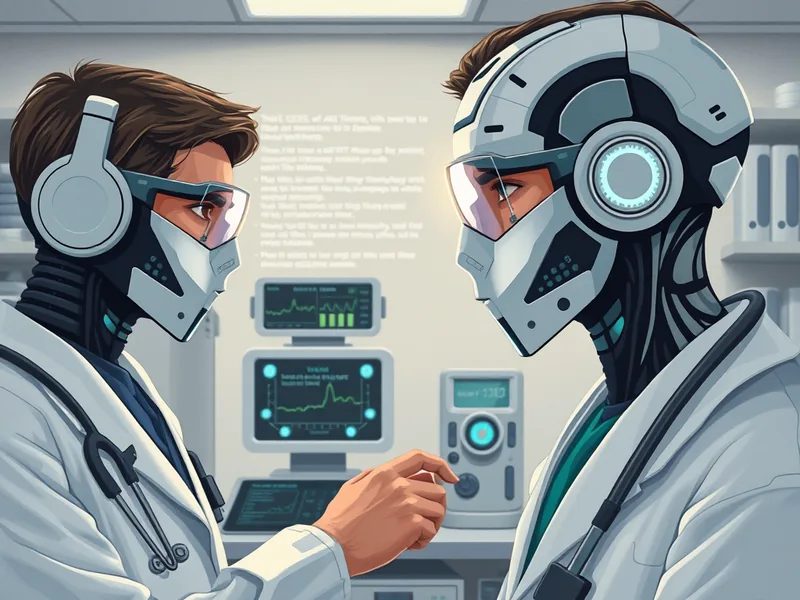
However, the study's findings have sparked intense debate. Kaiser Permanente’s vice president of AI and emerging technologies noted on LinkedIn, “I’ve never seen a single paper trigger the kind of reactions this one has in the health AI community.” The implications are significant: if generalist models can outperform specialized clinical tools, it could reshape how doctors view and use AI in their practices.
The stakes are high. Trust in medical technology is crucial for patient care. If doctors cannot rely on AI to provide accurate and safe information, the potential benefits of these tools, such as improved diagnostic accuracy and reduced physician burnout, may be overshadowed by risks. The study's findings raise several critical issues:
As the debate continues, it is clear that more research is needed to fully understand the capabilities and limitations of both generalist and specialized AI models in a clinical context. The goal should be to develop tools that enhance patient care while maintaining the highest standards of trust and safety.
Tags
Original Sources
Clinical chatbots are taking medicine by storm. Should doctors trust them?
↗ https://www.statnews.com/2026/07/29/clinical-ai-vs-generalist-llm-benchmark-study-trust-accuracy-safety
About the author
Amara's entry point into AI was an epidemiology role at a London research hospital, where she spent five years studying how digital health tools reached — or conspicuously failed to reach — underserved communities. Watching early algorithmic systems in healthcare quietly entrench existing inequalities, she redirected her career toward the systemic consequences of AI at scale. She covers AI through an unflinching lens: who benefits, who bears the cost, and what evidence actually says versus what the press release claims. Her writing is calm and precise, but she doesn't mistake balance for neutrality.
More from The Steward →This Week's Edition
6 August 2026
25 articles
Related Articles

Study Finds Pharmacy Care Coordination Cuts Hospitalizations for Cancer Patients
Health & Science · 5 min

A Decade-Late Diagnosis Sparked a New Model for Funding Precision Health
Health & Science · 5 min

Stanford Scientists Grow Mice With Nearly Half-Human Brains, Reviving Old Ethical Questions
Health & Science · 5 min
Related Articles
Study Finds Pharmacy Care Coordination Cuts Hospitalizations for Cancer Patients
Health & Science · 5 min
A Decade-Late Diagnosis Sparked a New Model for Funding Precision Health
Health & Science · 5 min
Stanford Scientists Grow Mice With Nearly Half-Human Brains, Reviving Old Ethical Questions
Health & Science · 5 min
More Stories
© 2026 Cedar & Bloom. All rights reserved.
