The Drum · Weekly AI news, freeSubscribe →
Share
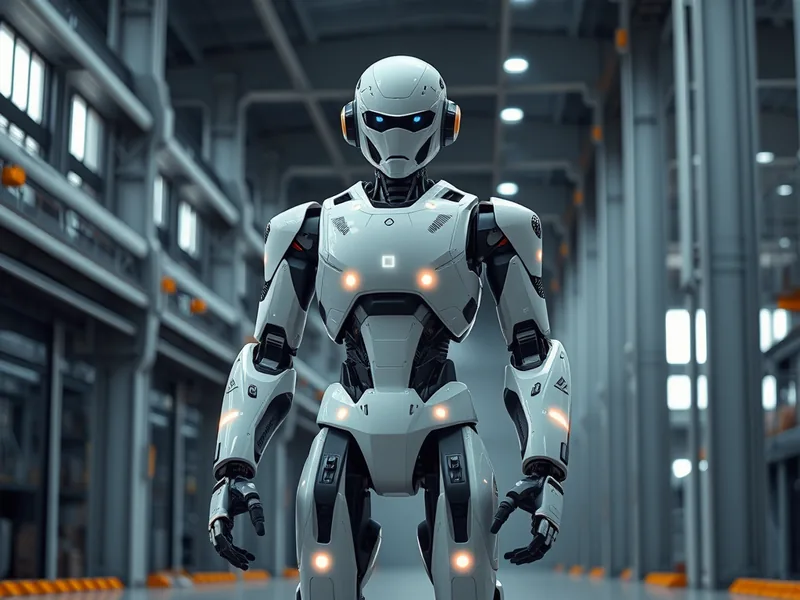
This partnership injects advanced AI capabilities into Boston Dynamics' Atlas robot, transforming its autonomy through Toyota's large behavior models and pushing the boundaries of robotic intelligence and adaptability.
Boston Dynamics, known for its advanced robotics, has teamed up with the Toyota Research Institute (TRI) to bring AI-driven capabilities to their electric humanoid robot, Atlas. This collaboration leverages TRI's work on large behavior models (LBMs), which are similar in concept to large language models (LLMs) like those behind ChatGPT.
The integration of LBMs into the Atlas robot marks a significant shift in how humanoid robots can operate autonomously. Traditionally, robots have relied on pre-programmed behaviors or simple reinforcement learning algorithms. However, LBMs allow for more dynamic and context-aware decision-making, enabling Atlas to perform complex tasks with greater efficiency and adaptability.
Key Technical Changes:
Why It Matters:
The collaboration between Boston Dynamics and TRI involves several key components:
Model Training:
System Architecture:
Benchmarks:
The integration of AI into humanoid robots like Atlas opens up a plethora of possibilities for both research and practical applications. In research, it allows for more sophisticated experiments in areas like human-robot interaction and autonomous navigation. For practical applications, it could lead to more capable robots in industries such as manufacturing, healthcare, and disaster response.
The collaboration between Boston Dynamics and TRI represents a significant step forward in the field of humanoid robotics. By integrating advanced AI capabilities, Atlas is poised to become a more versatile and reliable robot, setting a new standard for what is possible in this domain.
Tags
Original Sources
About the author
Kai built ML infrastructure at a Bay Area startup before developing an obsession with transformer architectures and inference optimisation that eventually pulled him out of product work entirely. A stint at a compute research lab sharpened his instinct for what actually matters in a model release versus what is marketing. He writes from the inside — from the perspective of someone who has debugged the systems he is describing at three in the morning. He is allergic to hype and instinctively drawn to the unglamorous plumbing questions that everyone else skips over.
More from The Engineer →This Week's Edition
22 October 2024
29 articles
Related Articles

Rosarium Health Partners With Anthem Medi-Cal to Fund Home Modifications for Older Californians
Products & Applications · 5 min

Meta's new open-weight model runs on Macs, if you have 1TB of RAM to spare
Products & Applications · 5 min

Persona AI Bets on Calm Execution in a Noisy Humanoid Robotics Market
Products & Applications · 5 min
Related Articles
Rosarium Health Partners With Anthem Medi-Cal to Fund Home Modifications for Older Californians
Products & Applications · 5 min
Meta's new open-weight model runs on Macs, if you have 1TB of RAM to spare
Products & Applications · 5 min
Persona AI Bets on Calm Execution in a Noisy Humanoid Robotics Market
Products & Applications · 5 min
More Stories
© 2026 Cedar & Bloom. All rights reserved.
