The Drum · Weekly AI news, freeSubscribe →

Share
Establishing a sustainable human presence on the Moon is no small feat. Here’s how engineers are tackling the monumental task, step by step.
Establishing a permanent moon base is one of the most ambitious engineering projects humanity has ever undertaken. It involves overcoming formidable challenges in space travel, habitat design, and resource management. The journey to a fully functional moon base can be broken down into three key steps: landing on the Moon, setting up infrastructure, and sustaining long-term human habitation.
The first step is getting humans and equipment safely to the lunar surface. This involves advanced navigation systems, robust spacecraft design, and precise landing mechanisms. The Artemis program by NASA, for example, aims to land the first woman and the next man on the Moon by 2024. Here are some of the technical details:
Once on the Moon, the next challenge is setting up the necessary infrastructure for human habitation. This includes habitats, power systems, and communication networks. Each component must be designed to withstand the extreme conditions of the lunar environment.
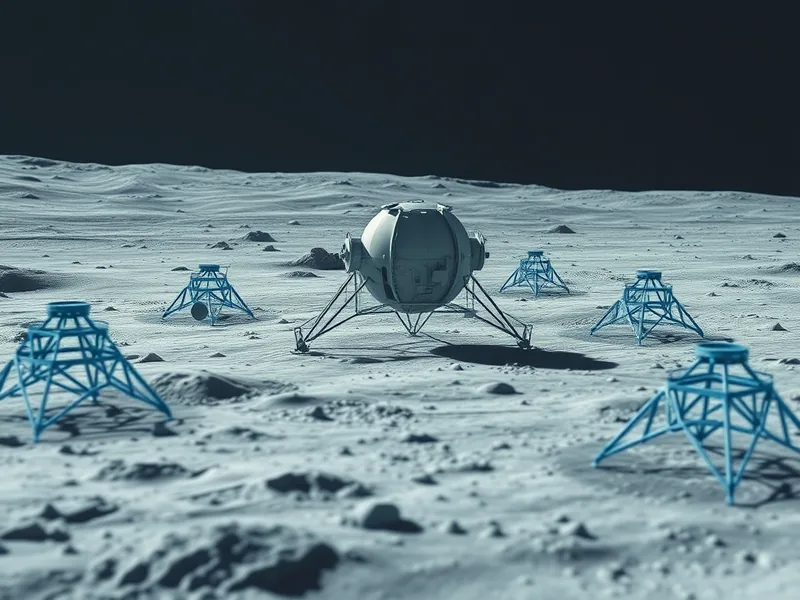
The final step is ensuring that the moon base can support long-term human habitation. This requires sustainable resource management, health monitoring systems, and continuous scientific research.
Establishing a permanent moon base is a complex but achievable goal. It requires advancements in navigation, landing systems, habitat design, power generation, communication, resource management, health monitoring, and scientific research. Each step builds upon the last, creating a robust foundation for long-term human presence on the Moon. As we continue to push the boundaries of space exploration, the lessons learned from building a moon base will pave the way for future missions to Mars and beyond.
Tags
Original Sources
Three Steps to a Moon Base
↗ https://spectrum.ieee.org/three-steps-to-a-moon-base
About the author
Kai built ML infrastructure at a Bay Area startup before developing an obsession with transformer architectures and inference optimisation that eventually pulled him out of product work entirely. A stint at a compute research lab sharpened his instinct for what actually matters in a model release versus what is marketing. He writes from the inside — from the perspective of someone who has debugged the systems he is describing at three in the morning. He is allergic to hype and instinctively drawn to the unglamorous plumbing questions that everyone else skips over.
More from The Engineer →This Week's Edition
13 July 2026
34 articles
Related Articles

Cisco's Edge Intelligence Tackles the Unsexy Problem of Getting IoT Data Out of the Field
Tools & Engineering · 5 min

Anthropic Opens Up Cyber Tools for Claude, With Hospitals in Mind
Tools & Engineering · 5 min

The 2026 Nobel Prizes, and the Persistent Gap Science Still Hasn't Closed
Policy & Regulation · 5 min
Related Articles
Cisco's Edge Intelligence Tackles the Unsexy Problem of Getting IoT Data Out of the Field
Tools & Engineering · 5 min
Anthropic Opens Up Cyber Tools for Claude, With Hospitals in Mind
Tools & Engineering · 5 min
The 2026 Nobel Prizes, and the Persistent Gap Science Still Hasn't Closed
Policy & Regulation · 5 min
More Stories
© 2026 Cedar & Bloom. All rights reserved.
