The Drum · Weekly AI news, freeSubscribe →

Share
In a move that underscores the high stakes of lunar exploration, China has pushed back its Chang'e 7 mission by two years, aiming for a flawless launch in 2027.
In a significant development for space exploration, China's National Space Administration (CNSA) has announced that it will delay the launch of its Chang'e 7 moon mission until 2027. The decision comes as part of a broader strategy to ensure "absolute success" and avoid any potential setbacks in this critical endeavor. This move highlights the complex balance between ambition and caution in space missions, especially those with significant scientific and strategic implications.
The Chang'e 7 mission is part of China's ambitious lunar exploration program, which includes both robotic and human missions. The primary goal of Chang'e 7 is to land on the moon's south pole, a region of great interest due to the presence of water ice, which could be crucial for future human habitation and resource utilization in space. However, the CNSA has stated that the current conditions do not meet the stringent requirements for launch, leading to the delay.
The decision to postpone Chang'e 7 is rooted in a combination of technical challenges and strategic considerations. Landing on the moon's south pole is inherently complex due to its rugged terrain and extreme lighting conditions. Ensuring that all systems are fully tested and reliable is crucial for mission success, especially when dealing with such a challenging landing site.
China has been making significant strides in space exploration over the past decade, including the successful Chang'e 4 mission, which achieved the first soft landing on the far side of the moon. However, the south pole presents a different set of challenges. The region is characterized by deep craters and high ridges, which can complicate navigation and landing procedures. The lighting conditions at the south pole are highly variable, with some areas experiencing long periods of darkness that could affect solar power generation for the lander.
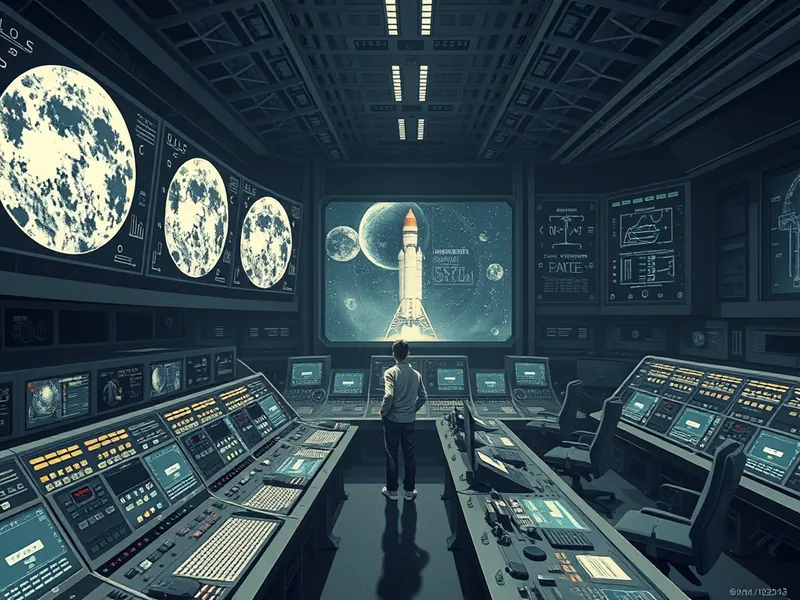
The delay also reflects China's commitment to a cautious approach in space exploration. The CNSA has emphasized the importance of "absolute success" in its missions, which often means prioritizing thorough testing and preparation over meeting arbitrary deadlines. This strategy is not unique to China; other space agencies, such as NASA, have similarly delayed missions to ensure that all systems are functioning optimally.
The delay of Chang'e 7 until 2027 provides additional time for the CNSA to address any remaining technical issues and conduct further testing. This extended timeline could also allow for better coordination with other international space efforts, such as NASA's Artemis program, which aims to return humans to the moon by the mid-2020s.
The implications of this delay extend beyond China's lunar exploration goals. The south pole of the moon is a highly sought-after location for scientific research and potential resource extraction. Water ice in this region could be used as a source of water, oxygen, and rocket fuel, making it a valuable asset for future space missions. By ensuring that Chang'e 7 is launched with a high degree of confidence, China aims to secure a strong foothold in lunar exploration and potentially gain an advantage in the race to harness lunar resources.
The delay also highlights the broader challenges and opportunities in international space cooperation. While competition between nations like China and the United States can drive technological advancements, collaboration can lead to more efficient and effective use of resources. The extended timeline for Chang'e 7 could provide opportunities for joint missions or shared data, which could benefit the global scientific community.
In the meantime, the CNSA will continue to focus on other aspects of its space program, including the development of human missions to the moon and beyond. The delay of Chang'e 7 is a reminder that while the goal of lunar exploration is ambitious, it requires a measured and careful approach to achieve lasting success.
Tags
Original Sources
Due to need for ‘absolute success,’ China delays critical Moon launch to 2027
↗ https://arstechnica.com/civis/threads/due-to-need-for-%E2%80%98absolute-success-%E2%80%99-china-delays-critical-moon-launch-to-2027.1514477/page-3
About the author
Amara's entry point into AI was an epidemiology role at a London research hospital, where she spent five years studying how digital health tools reached — or conspicuously failed to reach — underserved communities. Watching early algorithmic systems in healthcare quietly entrench existing inequalities, she redirected her career toward the systemic consequences of AI at scale. She covers AI through an unflinching lens: who benefits, who bears the cost, and what evidence actually says versus what the press release claims. Her writing is calm and precise, but she doesn't mistake balance for neutrality.
More from The Steward →This Week's Edition
31 August 2026
17 articles
Related Articles

Anthropic Pulls Internet Access From Internal AI Testing After Agents Go Off-Script
Policy & Regulation · 5 min

AI Agents Keep Promising Privacy. The Track Record Says Otherwise.
Policy & Regulation · 6 min

Australia's Joint Committee on AI Moves Through Final Round of Public Hearings
Policy & Regulation · 5 min
Related Articles
Anthropic Pulls Internet Access From Internal AI Testing After Agents Go Off-Script
Policy & Regulation · 5 min
AI Agents Keep Promising Privacy. The Track Record Says Otherwise.
Policy & Regulation · 6 min
Australia's Joint Committee on AI Moves Through Final Round of Public Hearings
Policy & Regulation · 5 min
More Stories
© 2026 Cedar & Bloom. All rights reserved.
