The Drum · Weekly AI news, freeSubscribe →

Share
As Tesla's Optimus remains in the prototype stage, Chinese firms are racing ahead in humanoid robotics, aligning with Beijing’s tech ambitions and potentially dominating future markets.
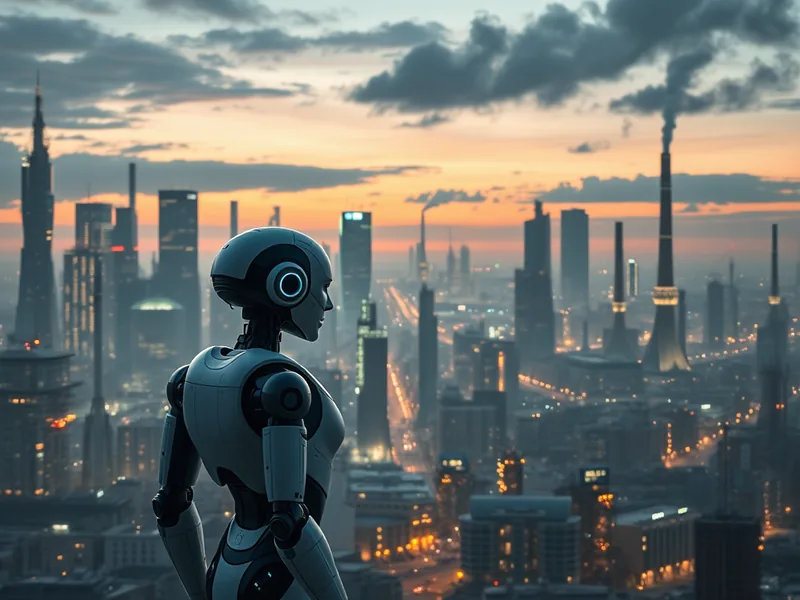
China is positioning itself to take an early lead in the development and commercialization of humanoid robots, a sector that billionaire Elon Musk has touted as central to Tesla’s future valuation. While Tesla’s flagship humanoid robot, Optimus, remains unsold, Chinese firms are ramping up production and scaling rapidly, driven by Beijing's strategic priorities.
The global robotics market is poised for significant growth, with humanoid robots expected to play a crucial role in various industries from manufacturing to hospitality. China’s early lead could solidify its position as a tech powerhouse, potentially outpacing the United States in this critical technology. Andreas Brauchle, partner at consultancy Horváth, noted, "China currently leads the United States in the early commercialization of humanoid robots. While both countries are expected to build similarly large markets over time, China is scaling more rapidly in this initial phase."
Over the past few years, China has made robotics a key focus of its tech strategy. The Chinese government has unveiled plans to create robust supply chains and mass production capabilities for humanoid robots. This strategic push includes significant investments in research and development, as well as supportive policies to encourage domestic innovation.
An engineer debugs robots at the factory of AgiBot, a leading robotics company specializing in embodied intelligence, on December 8, 2025, in Shanghai, China. (Photo by Tang Yanjun/China News Service/VCG via Getty Images)
Despite the rapid progress, Chinese authorities have warned of potential bubbles forming in the humanoid robot industry. Analysts expect some bottlenecks to emerge, particularly in areas such as advanced AI algorithms and high-quality semiconductors. These challenges could slow down the pace of innovation and commercialization.
Brauchle added, "While China has a strong manufacturing base and government support, there are still significant technological hurdles to overcome. The development of sophisticated AI and hardware remains a critical bottleneck."
The potential applications for humanoid robots are vast. They can be deployed in factories to enhance productivity, in hospitality to improve customer service, and even in homes to assist with daily tasks. Proponents argue that these robots could significantly reduce labor costs and increase efficiency across various sectors.
Elon Musk has positioned Tesla’s Optimus robot as a key driver of the company's future value, predicting it could push Tesla’s valuation into the trillions. However, Chinese firms are not far behind. Companies like AgiBot are already making strides in developing and commercializing humanoid robots with advanced capabilities.
China’s strategic focus on robotics is paying off, with domestic companies taking an early lead in the development and production of humanoid robots. While there are risks and challenges ahead, the potential benefits for both China and global markets are substantial. As Tesla continues to refine its Optimus robot, it will face stiff competition from a rapidly advancing Chinese tech sector.
Tags
Original Sources
About the author
Marcus began tracking AI's market implications in 2016, noticing AI-related patent filings accelerating ahead of earnings upgrades before most of the sell-side had caught on. A former fixed-income quantitative analyst, he spent two decades building models that priced risk across emerging markets before pivoting to cover the economic impact of AI full-time. His writing translates opaque technical developments into clear risk/reward terms — and he's rarely diplomatic about the gap between AI valuations and underlying fundamentals. He believes most market participants still underestimate AI's long-run deflationary effect on knowledge work.
More from The Analyst →This Week's Edition
1 January 2026
29 articles
Related Articles

Rosarium Health Partners With Anthem Medi-Cal to Fund Home Modifications for Older Californians
Products & Applications · 5 min

Meta's new open-weight model runs on Macs, if you have 1TB of RAM to spare
Products & Applications · 5 min

Persona AI Bets on Calm Execution in a Noisy Humanoid Robotics Market
Products & Applications · 5 min
Related Articles
Rosarium Health Partners With Anthem Medi-Cal to Fund Home Modifications for Older Californians
Products & Applications · 5 min
Meta's new open-weight model runs on Macs, if you have 1TB of RAM to spare
Products & Applications · 5 min
Persona AI Bets on Calm Execution in a Noisy Humanoid Robotics Market
Products & Applications · 5 min
More Stories
© 2026 Cedar & Bloom. All rights reserved.
