The Drum · Weekly AI news, freeSubscribe →

Share
Beijing has named biotechnology a national "pillar industry" with designs on American leadership. The stakes aren't abstract: millions of jobs, future medicines, and pandemic defenses hang in the balance.
Think back to 1957. When the Soviet Union launched Sputnik, the first satellite to orbit Earth, it didn't just unsettle American scientists. It jolted an entire nation into action, reshaping education, funding, and policy for a generation. We may be living through a quieter version of that moment right now, except the orbit in question isn't space. It's the human body, and the race is over who gets to cure disease first.
China has just unveiled a new five-year plan that designates biotechnology as a national "pillar industry." The goal is explicit: displace the United States as the world's biotech leader. That's not a minor policy tweak. It's a direct challenge to one of the few sectors where America still holds a commanding global edge, and it deserves to be treated with the same urgency that once sent American rockets into orbit.
John F. Crowley, president and CEO of the Biotechnology Innovation Organization, laid out the stakes plainly in a recent op-ed. America's biotech sector supports nearly 10 million jobs and generates over $3 trillion in annual economic activity, according to a 2026 TEConomy report commissioned by BIO. That's not just a number on a balance sheet. It translates into advanced manufacturing jobs in towns that need them, newer and better medicines reaching patients faster, and a stronger shield against pandemics and biological threats we can't yet predict.
Losing that edge wouldn't just cost us bragging rights. It would mean ceding ground on a technology that increasingly underpins both economic competitiveness and national security, two things that used to feel separate but now overlap more than most people realize.
Here's where the Sputnik comparison gets useful as an analogy, but also where it breaks down a little. The Space Race had a clear finish line: get a person on the moon. Biotech doesn't work that way. It's not one rocket built by one agency. It's an entire ecosystem, more like a city's water supply than a single pipeline.
University labs and small startups often plant the first seeds of a breakthrough therapy. Clinical trial networks then test whether those ideas actually help patients. Manufacturing facilities turn promising science into something that can reach a pharmacy shelf. Each of these pieces depends on the others. Weaken one link, say, trial infrastructure or domestic manufacturing capacity, and the whole chain slows down, no matter how brilliant the lab science is.
That interconnectedness is precisely why there's no silver-bullet policy that protects American leadership. A tax credit alone won't do it. Neither will a single piece of legislation aimed at drug pricing or patent reform. What's needed, according to Crowley, is a coordinated plan that strengthens every facet of the ecosystem at once, from basic research funding to regulatory efficiency to domestic manufacturing incentives.
This is a tougher ask than it sounds. Coordinated, ecosystem-wide strategy requires sustained political will across multiple administrations and congressional sessions, something that's historically been hard to muster in a system built around two-year election cycles. China, by contrast, can plan in five-year increments without worrying about a midterm wipeout changing its priorities.
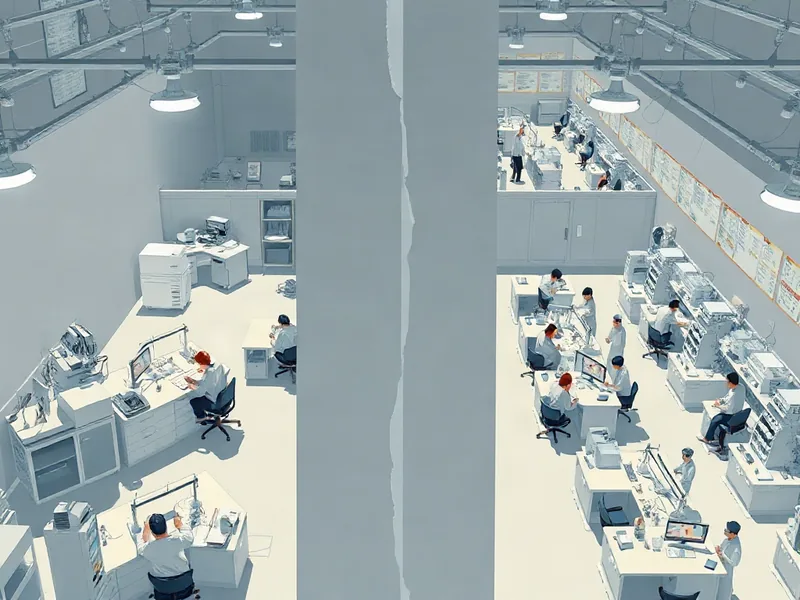
That doesn't mean the American system is doomed to lose. It means the response has to be deliberate, not reactive. It also helps to remember that American biotech didn't become dominant by accident. Decades of public investment in basic science, a robust venture capital ecosystem, and a regulatory framework that, for all its frustrations, has provided a credible pathway to market, all of these built the foundation China is now trying to match or surpass.
There's also a geopolitical wrinkle worth watching closely. Just this month, the Trump administration removed WuXi AppTec, a major Chinese biotech manufacturing company, from its list of firms tied to the Chinese military. That kind of move shows how tangled the US and Chinese biotech industries already are, even as the two countries compete for long-term dominance. Untangling supply chains that have developed over twenty years isn't simple, and it isn't fast.
Meanwhile, China's own biotech sector has faced internal friction. A wave of controversial, investigator-initiated clinical trials in China has reportedly slowed to a trickle amid new restrictions, according to recent reporting. That suggests Beijing's ambitions aren't unfolding without domestic turbulence of their own, even as the government doubles down on biotech as a strategic priority.
The temptation here is to frame this purely as a competitiveness story, a contest of national pride measured in patents and market share. But the stakes run closer to home than that. The medicines that treat rare diseases, the vaccines that respond to the next pandemic, the manufacturing jobs that anchor local economies, all of these depend on a healthy, well-supported biotech sector.
If America's lead erodes, patients don't just lose bragging rights either. They could face longer waits for new treatments, less domestic control over critical drug supply chains, and a weaker position in future public health emergencies. For a country still working through the lessons of the last pandemic, that risk should carry real weight.
None of this requires panic. It does require patience paired with urgency, something of a contradiction, but a necessary one. Building biotech infrastructure takes years, sometimes decades. The decisions made now about funding, regulation, and manufacturing capacity will shape whether America leads this field in 2036 the same way Sputnik-era investments shaped American science for the rest of the twentieth century.
The question isn't whether China is serious about this challenge. It clearly is. The real question is whether the United States can summon the same kind of sustained, coordinated response that once got a person to the moon, applied this time to the far more intimate frontier of human health.
Tags
Original Sources
BIO CEO: American biotech needs a coordinated plan to beat China — now
↗ https://www.statnews.com/2026/11/10/china-biotech-bio-plan-space-race
About the author
Amara's entry point into AI was an epidemiology role at a London research hospital, where she spent five years studying how digital health tools reached — or conspicuously failed to reach — underserved communities. Watching early algorithmic systems in healthcare quietly entrench existing inequalities, she redirected her career toward the systemic consequences of AI at scale. She covers AI through an unflinching lens: who benefits, who bears the cost, and what evidence actually says versus what the press release claims. Her writing is calm and precise, but she doesn't mistake balance for neutrality.
More from The Steward →This Week's Edition
11 November 2026
14 articles
Related Articles

Europe's Digital ID Push Tests a New Privacy Tool: Zero-Knowledge Proofs
Policy & Regulation · 5 min

Why the Woman Who Fired Sam Altman Still Doesn't Trust AI's Boardrooms
Policy & Regulation · 5 min

Pakistan to Send Climate Minister to India for First High-Level Visit in Three Years
Policy & Regulation · 5 min
Related Articles
Europe's Digital ID Push Tests a New Privacy Tool: Zero-Knowledge Proofs
Policy & Regulation · 5 min
Why the Woman Who Fired Sam Altman Still Doesn't Trust AI's Boardrooms
Policy & Regulation · 5 min
Pakistan to Send Climate Minister to India for First High-Level Visit in Three Years
Policy & Regulation · 5 min
More Stories
© 2026 Cedar & Bloom. All rights reserved.
