The Drum · Weekly AI news, freeSubscribe →

Share
The actor's revelation that her multiple sclerosis diagnosis was wrong for years exposes a tension doctors have long wrestled with: catching disease early without sacrificing the accuracy patients depend on for their futures.
Imagine spending five years believing you understand your own body, only to learn the map you were given was wrong the whole time. That is what actor Christina Applegate revealed this week when she disclosed that she had been misdiagnosed with multiple sclerosis, five years after first receiving that diagnosis. Her story is deeply personal, but it is also a window into one of the hardest problems in modern neurology: how do you diagnose a complicated disease early enough to protect someone's nervous system, without getting it wrong?
Bruce Bebo, chief research and medical affairs officer at the National Multiple Sclerosis Society, has watched this challenge evolve over nearly four decades. When he began his career, he writes, physicians often had no choice but to wait. They would watch a patient for new or recurring symptoms before they felt confident enough to confirm an MS diagnosis. That waiting game had a real cost. MS is a disease where the immune system mistakenly attacks the protective coating around nerve fibers, and the damage that occurs during those uncertain early years cannot always be undone.
Today, the landscape looks different. Advances in imaging, biomarkers, and formal diagnostic criteria mean doctors can often spot signs of MS much earlier than they once could. Think of it like the difference between diagnosing a leak only after your basement floods versus catching the first sign of water damage behind a wall. Earlier detection gives treatment the best chance to work before symptoms become permanent.
But speed cuts both ways. The same tools that let doctors diagnose MS sooner can also lead to diagnoses that turn out to be wrong, as Applegate's case shows. Neurological symptoms overlap across many conditions. Numbness, fatigue, vision changes, and balance problems can point to MS, but they can also signal other disorders entirely. Separating true MS from its look-alikes requires not just better tools, but careful, patient application of them.
There is a real tension at the center of this story, and it does not have a tidy resolution. On one hand, delayed diagnosis leaves people vulnerable. Nerve damage from MS can accumulate quietly for years before a patient notices anything is wrong, and by the time symptoms become obvious, some of that damage may already be permanent. Getting ahead of the disease, even by a year or two, can meaningfully change a person's long-term outcome.
On the other hand, rushing to a diagnosis carries its own danger. Being told you have MS when you actually have something else can mean starting treatments that do nothing for your real condition, while the actual cause of your symptoms goes unaddressed. It can also mean years of psychological weight, financial strain, and life decisions made around a diagnosis that was never accurate to begin with. Bebo is blunt about this: too many people spend years searching for the right answer, while others are given an answer too quickly and too confidently.
This is not simply a technical problem for specialists to sort out behind closed doors. It is a question of how medicine balances two values that often pull in opposite directions, urgency and certainty. Diagnostic criteria for MS have been revised multiple times over the decades precisely because researchers keep trying to find that balance. Each revision aims to catch real cases earlier while reducing the number of false positives. That is a difficult needle to thread, and Applegate's experience suggests the needle is still not perfectly placed.
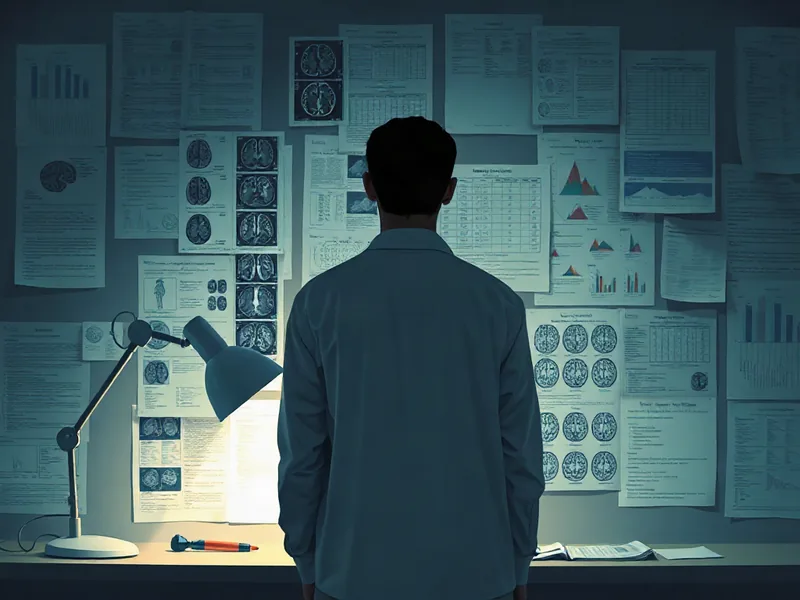
Part of what makes this especially fraught is that MS does not announce itself with a single definitive test, the way some infections or genetic conditions do. Diagnosis relies on a combination of imaging scans, spinal fluid analysis, clinical history, and the exclusion of other possible explanations. Each piece of evidence adds confidence, but none of them alone delivers certainty. That ambiguity is built into the disease itself, and it means the diagnostic process will likely always carry some risk of error, even as the tools keep improving.
For patients, this uncertainty is not an abstract policy debate. It shapes real decisions about treatment, family planning, careers, and daily life. A misdiagnosis does not just delay accurate treatment. It can actively steer someone down the wrong path for years, as Applegate's case illustrates.
Applegate's willingness to speak publicly about her misdiagnosis does something valuable: it puts a human face on a statistic that too often stays buried in medical journals. Behind every diagnostic revision and every improved biomarker test are real people trying to make sense of symptoms that frighten them, and trusting doctors to get the answer right.
The goal going forward cannot be framed as a choice between speed and accuracy. Patients deserve both. That means continued investment in better diagnostic tools, yes, but it also means training clinicians to apply those tools carefully, to resist the pressure to close a case quickly when ambiguity remains, and to revisit diagnoses when new information emerges rather than treating an initial call as permanent.
It also means taking patient stories like Applegate's seriously as data points, not just as anecdotes. When someone who trusted the medical system for five years discovers that trust was misplaced, that is a signal worth examining closely. Diagnostic science improves when the medical community listens to these experiences and asks hard questions about where the process failed, rather than treating misdiagnosis as an unfortunate but unavoidable cost of progress.
The stakes here are not abstract. They are measured in years of a person's life, in treatment decisions that cannot be undone, and in the basic trust between patients and the people entrusted with their care. Getting MS diagnosis right, consistently and early, remains one of neurology's most urgent unfinished tasks.
Tags
Original Sources
Christina Applegate puts a face on one of the most consequential challenges in neurology
↗ https://www.statnews.com/2026/10/24/christina-applegate-multiple-sclerosis-why-ms-misdiagnosis-happens
About the author
Amara's entry point into AI was an epidemiology role at a London research hospital, where she spent five years studying how digital health tools reached — or conspicuously failed to reach — underserved communities. Watching early algorithmic systems in healthcare quietly entrench existing inequalities, she redirected her career toward the systemic consequences of AI at scale. She covers AI through an unflinching lens: who benefits, who bears the cost, and what evidence actually says versus what the press release claims. Her writing is calm and precise, but she doesn't mistake balance for neutrality.
More from The Steward →This Week's Edition
25 October 2026
18 articles
Related Articles

IEEE Expands Smart City Advisory Services as Municipal Tech Budgets Grow
Products & Applications · 5 min

Robot Infants Are Being Built to Study Human Emotion. Should They Look So Real?
Products & Applications · 5 min

The Navy's Carbon Problem: Why Electrifying Warships Matters for Climate Policy
Environment & Climate · 5 min
Related Articles
IEEE Expands Smart City Advisory Services as Municipal Tech Budgets Grow
Products & Applications · 5 min
Robot Infants Are Being Built to Study Human Emotion. Should They Look So Real?
Products & Applications · 5 min
The Navy's Carbon Problem: Why Electrifying Warships Matters for Climate Policy
Environment & Climate · 5 min
More Stories
© 2026 Cedar & Bloom. All rights reserved.
