The Drum · Weekly AI news, freeSubscribe →

Share
Two of America's top intelligence bodies were quietly breached, the latest in a monthslong wave of federal cyber incidents that raises hard questions about whether government networks can keep pace with determined attackers.
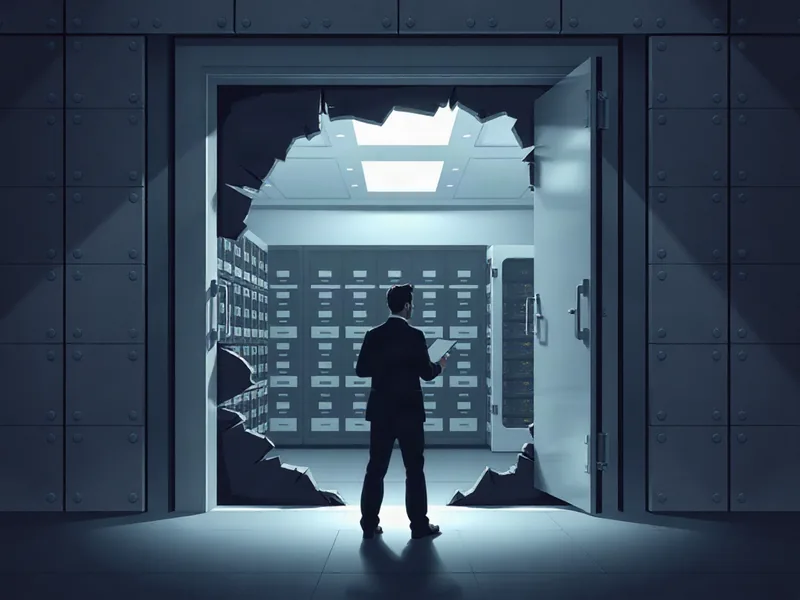
When people picture the CIA, they tend to imagine impenetrable vaults and locked-down servers. So the news that the agency, alongside the Office of the Director of National Intelligence, recently suffered a cybersecurity breach lands with a particular jolt, even though officials say no classified systems were touched.
A person familiar with the matter told Reuters that the intrusion exposed some unclassified information held by both agencies. The New York Times, which first reported the breach, said the affected network is used to scan public, unclassified material for intelligence insights. Think of it as a research tool that trawls through open sources, news reports, social media chatter, public records, looking for patterns analysts might otherwise miss. It was not designed to hold state secrets. But it was still compromised.
That distinction matters, and it doesn't. Unclassified does not mean unimportant. Even open-source intelligence networks can reveal what topics analysts are tracking, what questions they're asking, and where their attention is focused. For an adversary, that kind of metadata can be its own kind of intelligence windfall, even without a single classified document changing hands.
The Times reported that information at other federal agencies also appears to have been exposed in connection with the breach, though it was not clear exactly what material was taken or how widely the intrusion spread. Asked for comment, the ODNI offered a narrow but pointed reassurance: there had been "no disruptions to critical capabilities or classified systems." Notice what that statement does not say. It does not say nothing was accessed. It does not explain how the breach happened. It draws a careful line around the most sensitive systems while leaving plenty of room for uncertainty about everything else.
This breach does not exist in a vacuum. It lands amid a string of cybersecurity failures across the federal government that has unfolded over just the past few weeks. The Department of Agriculture disclosed its own breach days earlier. The FBI has reported two separate intrusions in recent memory. The Pentagon and the Department of Homeland Security have each been caught up in cyber incidents of their own. And the White House's national cyber director recently left the post, a departure reported amid the broader churn.
Layer onto that a wave of outages hitting government technology systems, and a picture starts to emerge: federal networks, across multiple agencies with wildly different missions, are under sustained pressure. Some of these problems trace back to aging infrastructure. Some trace back to the sheer complexity of securing dozens of agencies with different budgets, different vendors, and different levels of technical staffing. Whatever the mix of causes, the frequency is hard to ignore.
It's worth comparing this moment to what is happening in the private sector. Just this week, CrowdStrike announced a $44 billion acquisition of Zscaler, consolidating two major cybersecurity players as threats mount across industries. Corporations are spending enormous sums to shore up their defenses. Public agencies, often operating with tighter budgets and slower procurement cycles, are not always able to move at the same pace. That mismatch, well-funded private security versus stretched public infrastructure, helps explain why government breaches keep making headlines even as cybersecurity spending climbs overall.
There's also a geopolitical backdrop worth noting. The US is reportedly eyeing Iran as a possible culprit behind a separate wave of cyberattacks targeting ships, according to the Wall Street Journal. The UK government, meanwhile, has warned companies supplying Ukraine about the threat of Russian sabotage. None of these threads are confirmed to be connected to the CIA and ODNI breach. But they paint a picture of a cyber threat landscape that is active on multiple fronts simultaneously, state-linked actors, criminal groups, and unknown intruders all probing for weaknesses in critical infrastructure and government systems alike.
The Times report did not specify how the breach occurred, whether through a phishing attack, a software vulnerability, a compromised vendor, or something else entirely. That absence of detail is frustrating but not unusual. Intelligence agencies rarely disclose forensic specifics about their own security failures, for reasons that are at least partly legitimate: revealing too much about how a breach happened can hand adversaries a roadmap for the next one.
People often assume that breaches at intelligence agencies are either catastrophic, classified secrets stolen, operations compromised, or essentially meaningless, just some unclassified files nobody cares about. The reality sits uncomfortably in between. Even a breach limited to open-source intelligence tools can erode trust in the institutions meant to protect national security information. It can expose patterns of analysis that adversaries find useful. And it adds to a growing public record of federal agencies struggling to keep their own networks secure, even as they're tasked with defending the country against cyber threats from abroad.
For ordinary citizens, the direct harm from this specific breach may be limited. No evidence has surfaced suggesting personal data was compromised the way it might be in a retail or healthcare breach. But the cumulative effect of these incidents, Agriculture, the FBI twice over, the Pentagon, Homeland Security, and now the CIA and ODNI, should give everyone pause. These are the agencies responsible for food safety, law enforcement, defense, border security, and intelligence. If their networks are this frequently breached, the question isn't whether another incident will happen. It's when, and how much will be exposed next time.
Tags
Original Sources
US CIA, ODNI suffer cybersecurity breach of some unclassified information, source says
↗ https://www.reuters.com/world/us-cia-odni-suffer-cybersecurity-breach-some-unclassified-information-nyt-2026-11-24
About the author
Amara's entry point into AI was an epidemiology role at a London research hospital, where she spent five years studying how digital health tools reached — or conspicuously failed to reach — underserved communities. Watching early algorithmic systems in healthcare quietly entrench existing inequalities, she redirected her career toward the systemic consequences of AI at scale. She covers AI through an unflinching lens: who benefits, who bears the cost, and what evidence actually says versus what the press release claims. Her writing is calm and precise, but she doesn't mistake balance for neutrality.
More from The Steward →This Week's Edition
25 November 2026
20 articles
Related Articles

The New York Times Tells Freelance Photographers to Avoid the Latest Photoshop Over Hidden AI Tags
Security & Risk · 5 min
UK Warns Firms Supplying Ukraine's Military Face Rising Russian Sabotage Threat
Security & Risk · 5 min

AI Can Now Draft Your Radiology Report. The Question Is Whether That Makes You Safer
Health & Science · 6 min
Related Articles
The New York Times Tells Freelance Photographers to Avoid the Latest Photoshop Over Hidden AI Tags
Security & Risk · 5 min
UK Warns Firms Supplying Ukraine's Military Face Rising Russian Sabotage Threat
Security & Risk · 5 min
AI Can Now Draft Your Radiology Report. The Question Is Whether That Makes You Safer
Health & Science · 6 min
More Stories
© 2026 Cedar & Bloom. All rights reserved.