The Drum · Weekly AI news, freeSubscribe →
Share
As AI language models become integral to our workflows, codebases and documents are transforming to cater to both human users and these intelligent agents, ushering in a new era where documentation leads development.
When AI language models (LMs) like Claude, Perplexity, SearchGPT, and Gemini start to integrate deeply into our daily workflows, the line between "agent" and "environment" begins to blur. This shift isn’t just about building better LMs; it’s about how the digital world is adapting to these new users. Codebases, websites, and documents are evolving in ways that optimize for both humans and LMs.
When coding alongside tools like GitHub Copilot, you might notice subtle changes in your behavior. One significant shift is the rise of "docstring-first programming." This approach leverages the model's ability to generate code snippets based on descriptions. Here’s how it works:
# Function to calculate the factorial of a number
def factorial(n):
    if n == 0:
        return 1
    else:
        return n * factorial(n-1)
The result is a codebase that looks different from one written without LMs in mind. The environment adapts to the tool, making it easier for both humans and LMs to understand and work with the code.
As a library or framework developer in 2024, you can expect that many of your users will be interacting with your tools through coding assistants. This means building for LMs is now part of being "dev-friendly." For instance:
llm-ctx files, which are documentation intended specifically for LMs rather than humans.
This dual approach reflects a new, parallel world where content is tailored to both human and machine users.
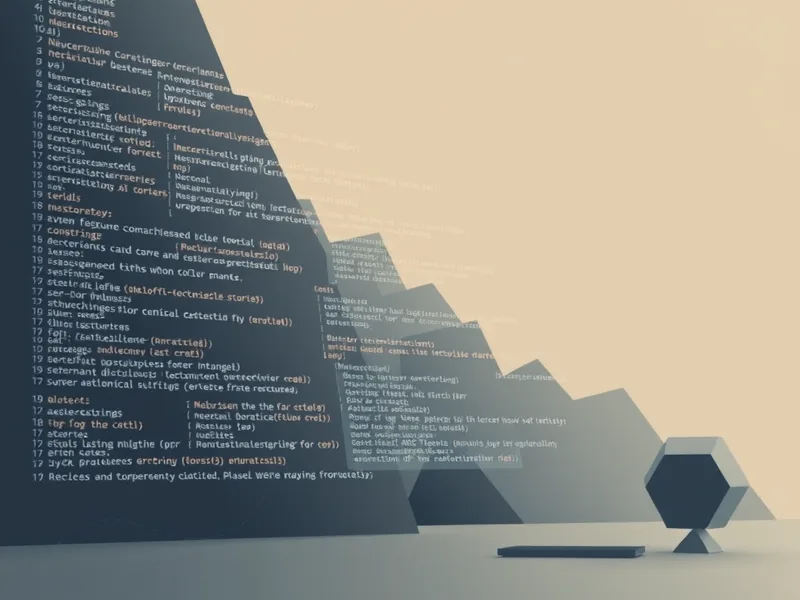
The principle of adapting interfaces for LMs extends beyond code. To make LM agents work better, you need to provide them with the right context in a format they can understand. This applies to various applications:
For example, FastHTML’s llm-ctx files provide dense, structured text that helps LMs understand the library’s functionalities. This approach ensures that both human developers and AI assistants can effectively use the framework.
As the digital world continues to evolve, we must consider how it will adapt to the increasing presence of LMs. This isn’t just about building better models; it’s about creating end-to-end systems where agents and environments co-adapt. Here are some key takeaways:
In this co-evolution, the digital landscape becomes a dynamic environment where agents and environments continuously influence each other. As researchers and developers, we need to think beyond just improving models and focus on building systems that thrive in this new, interconnected world.
Tags
Original Sources
About the author
Kai built ML infrastructure at a Bay Area startup before developing an obsession with transformer architectures and inference optimisation that eventually pulled him out of product work entirely. A stint at a compute research lab sharpened his instinct for what actually matters in a model release versus what is marketing. He writes from the inside — from the perspective of someone who has debugged the systems he is describing at three in the morning. He is allergic to hype and instinctively drawn to the unglamorous plumbing questions that everyone else skips over.
More from The Engineer →This Week's Edition
15 January 2025
29 articles
Related Articles

Wharton's Fourth Annual AI Survey: Most Companies See Returns, Few See Big Ones
Models & Research · 6 min
Tensormesh Launches Enterprise KV Cache Platform to Cut Redundant LLM Compute
Models & Research · 6 min

Iambic Therapeutics Raises $150 Million in IPO to Fund AI-Designed Cancer Drugs
Finance & Markets · 5 min
Related Articles
Wharton's Fourth Annual AI Survey: Most Companies See Returns, Few See Big Ones
Models & Research · 6 min
Tensormesh Launches Enterprise KV Cache Platform to Cut Redundant LLM Compute
Models & Research · 6 min
Iambic Therapeutics Raises $150 Million in IPO to Fund AI-Designed Cancer Drugs
Finance & Markets · 5 min
More Stories
© 2026 Cedar & Bloom. All rights reserved.
