The Drum · Weekly AI news, freeSubscribe →

Share
Dentistry offers valuable insights into integrating AI effectively by showing how streamlined operational systems can enhance patient care and reduce workflow inefficiencies, setting a precedent for broader healthcare adoption.
Artificial intelligence (AI) is transforming healthcare, from improving clinical documentation to enhancing diagnostic support. However, as more organizations move beyond pilot programs, a critical challenge is emerging: the effectiveness of AI depends on the operational systems it integrates with.
When AI is layered onto fragmented workflows and disconnected systems, healthcare doesn’t become simpler; it becomes faster at producing inconsistencies. This can lead to more variability in documentation, increased workflow friction, and downstream complications in revenue cycle performance. In other words, intelligence alone does not create operational improvement. Systems must be able to coordinate the work of care delivery itself.
This is where dentistry offers an early and valuable signal. Dental practices, with their tighter reimbursement cycles and immediate visibility into administrative inefficiencies, are already evaluating AI for its operational impact rather than novelty. The focus in dentistry has shifted from experimentation to systems that help coordinate documentation, eligibility, claims, and payment workflows. This shift provides a critical preview for the broader healthcare industry.
One of the most common mistakes in healthcare is assuming that AI can solve what is fundamentally an infrastructure problem. Many organizations still operate with a patchwork of systems: clinical records are stored in one place, imaging in another, billing in yet another workflow, and patient communication in a separate tool. For years, people have served as the connective tissue across these systems, reconciling documentation, attaching missing records, correcting coding issues, and resolving gaps left by technology.
In dental practices, where the need for efficiency is acute, AI is being evaluated not just for its ability to analyze information but for its capacity to coordinate workflows. This shift from experimentation to operational accountability is crucial. For example, an automated system that ensures all necessary documentation is complete before a claim is submitted can reduce administrative burden and improve revenue cycle performance.
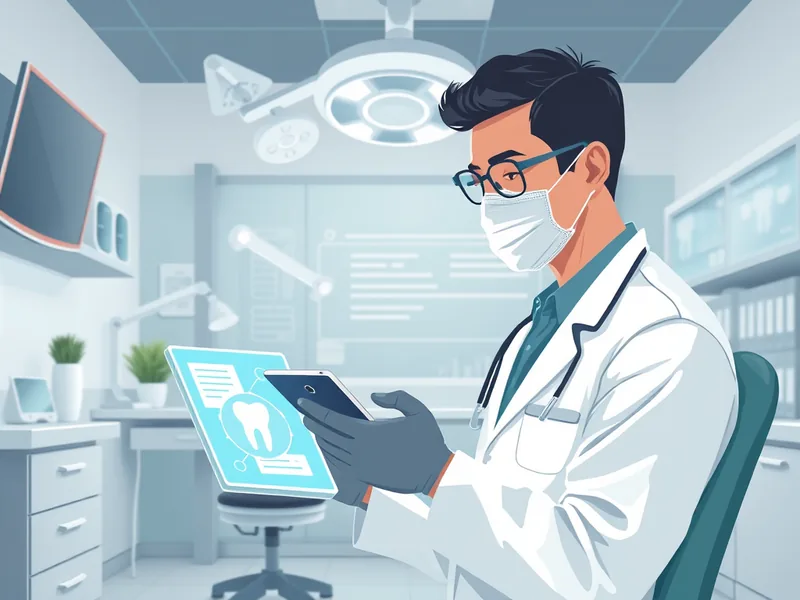
By reducing administrative tasks and redesigning workflows around human needs, dental practices are creating more space for what matters most: the connection between clinicians and patients. This approach not only enhances patient care but also improves job satisfaction among healthcare providers.
Dr. Michael Blackman, Chief Medical Officer at Greenway Health®, highlights this in his article, "Inside an Automated Healthcare Practice: Redesigning Care Around People, Not Paperwork." He emphasizes that by streamlining administrative processes, healthcare professionals can focus more on patient interactions and less on paperwork.
The lessons from dentistry have significant implications for the broader healthcare industry. As AI continues to evolve, it is essential to prioritize operational systems that support seamless care delivery. This means investing in infrastructure that integrates clinical, administrative, and financial workflows.
For instance, a well-coordinated system can ensure that patient data is consistent across all platforms, reducing errors and improving overall efficiency. It can also facilitate better communication between different departments, leading to more coordinated care and improved patient outcomes.
The integration of AI in healthcare is not just about adopting the latest technology; it’s about creating operational systems that enhance both patient care and workflow efficiency. Dentistry’s approach to AI offers a clear roadmap for the broader healthcare industry: focus on infrastructure, coordinate workflows, and prioritize human needs. By doing so, we can create a more efficient, effective, and compassionate healthcare system.
Tags
Original Sources
About the author
Amara's entry point into AI was an epidemiology role at a London research hospital, where she spent five years studying how digital health tools reached — or conspicuously failed to reach — underserved communities. Watching early algorithmic systems in healthcare quietly entrench existing inequalities, she redirected her career toward the systemic consequences of AI at scale. She covers AI through an unflinching lens: who benefits, who bears the cost, and what evidence actually says versus what the press release claims. Her writing is calm and precise, but she doesn't mistake balance for neutrality.
More from The Steward →This Week's Edition
30 April 2026
29 articles
Related Articles

Rosarium Health Partners With Anthem Medi-Cal to Fund Home Modifications for Older Californians
Products & Applications · 5 min

Meta's new open-weight model runs on Macs, if you have 1TB of RAM to spare
Products & Applications · 5 min

Persona AI Bets on Calm Execution in a Noisy Humanoid Robotics Market
Products & Applications · 5 min
Related Articles
Rosarium Health Partners With Anthem Medi-Cal to Fund Home Modifications for Older Californians
Products & Applications · 5 min
Meta's new open-weight model runs on Macs, if you have 1TB of RAM to spare
Products & Applications · 5 min
Persona AI Bets on Calm Execution in a Noisy Humanoid Robotics Market
Products & Applications · 5 min
More Stories
© 2026 Cedar & Bloom. All rights reserved.
