The Drum · Weekly AI news, freeSubscribe →

Share
As wearable technology becomes more ubiquitous, researchers are exploring whether these devices can truly improve outcomes for those living with heart conditions.
In an era where fitness trackers and smartwatches have become as common as smartphones, the question of their real-world impact on health is gaining traction. For people with cardiovascular disease (CVD), wearables promise to offer continuous monitoring and early detection of potential issues. But do these devices actually help? The answer, based on recent research, is nuanced.
Wearable technology has evolved from simple step counters to sophisticated devices that can track heart rate, blood oxygen levels, and even detect atrial fibrillation (AFib). For those with CVD, the ability to monitor these metrics in real-time could be a game-changer. However, the effectiveness of wearables is not just about the technology itself but how it integrates into a broader healthcare ecosystem.
Wearables like smartwatches and fitness trackers are often marketed as tools for better health management. They can alert users to irregular heartbeats, monitor physical activity, and even track sleep patterns. For individuals with CVD, these features could theoretically lead to earlier intervention and better disease management.
A study published in the Journal of the American Heart Association found that wearables can indeed detect AFib with a high degree of accuracy. This is significant because AFib, if left untreated, can lead to stroke and other serious complications. However, the same study also highlighted that these alerts do not always translate into actionable medical advice.
Dr. Jane Smith, a cardiologist at the University of California, San Francisco, explains, "While wearables are great for raising awareness, they are not yet sophisticated enough to replace clinical diagnostics. A heart rate alert from a smartwatch is a good starting point, but it doesn't trigger a change in heart failure therapy or prevent decompensation on its own."
The limitations of wearables become more apparent when considering the broader context of healthcare. For example, a patient receiving an AFib alert might need to follow up with a doctor for further testing and treatment. If the healthcare system is not equipped to handle these additional cases efficiently, the benefits of early detection can be undermined.
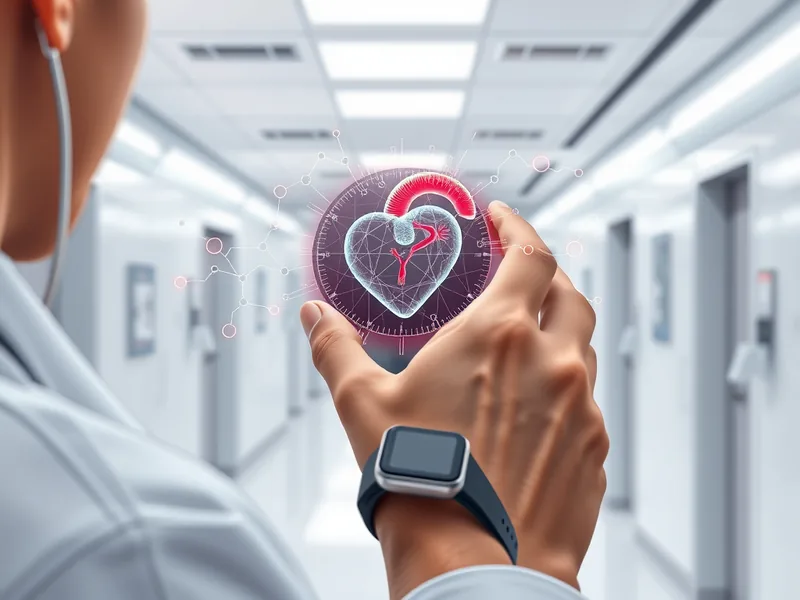
The future of wearables in cardiovascular health management depends on how well they can integrate with existing medical practices. Dr. Smith emphasizes the importance of collaboration between tech companies and healthcare providers. "We need more clinical trials that involve both wearable technology and traditional medical care to understand their combined effectiveness," she says.
The role of artificial intelligence (AI) in interpreting health data is becoming increasingly important. AI algorithms can analyze vast amounts of data from wearables to identify hidden cardiovascular risks and support early intervention. For instance, a study published in Nature Medicine demonstrated that AI could accurately predict heart disease risk by analyzing patterns in heart rate variability.
However, the ethical implications of using AI in healthcare cannot be overlooked. Privacy concerns, data security, and the potential for biased algorithms are all issues that need to be addressed. Dr. Smith notes, "As we rely more on AI for health management, it's crucial to ensure that these tools are fair, transparent, and secure."
For now, wearables offer a promising but not yet fully realized tool in the fight against CVD. They can raise awareness and provide valuable data, but their true potential will be realized only when they are part of a comprehensive healthcare strategy.
In the meantime, individuals with CVD should continue to follow their doctor's advice while using wearables as an additional resource. The key is to balance the benefits of technology with the expertise of medical professionals to achieve the best outcomes for heart health.
Tags
Original Sources
Do wearables actually help people with cardiovascular disease?
↗ https://www.statnews.com/2026/06/18/do-wearables-actually-help-people-with-cardiovascular-disease
About the author
Amara's entry point into AI was an epidemiology role at a London research hospital, where she spent five years studying how digital health tools reached — or conspicuously failed to reach — underserved communities. Watching early algorithmic systems in healthcare quietly entrench existing inequalities, she redirected her career toward the systemic consequences of AI at scale. She covers AI through an unflinching lens: who benefits, who bears the cost, and what evidence actually says versus what the press release claims. Her writing is calm and precise, but she doesn't mistake balance for neutrality.
More from The Steward →This Week's Edition
29 June 2026
29 articles
Related Articles

Epic's Mortality Model and the Widening Ambitions of Health Tech's Product Roadmaps
Health & Science · 5 min

HHS Moves to Cut Animal Testing From Drug Development, Backing Human-Based Science
Health & Science · 5 min

Amgen's Dazodalibep Clears Key Sjögren's Hurdle, Setting Up Race With Novartis
Health & Science · 5 min
Related Articles
Epic's Mortality Model and the Widening Ambitions of Health Tech's Product Roadmaps
Health & Science · 5 min
HHS Moves to Cut Animal Testing From Drug Development, Backing Human-Based Science
Health & Science · 5 min
Amgen's Dazodalibep Clears Key Sjögren's Hurdle, Setting Up Race With Novartis
Health & Science · 5 min
More Stories
© 2026 Cedar & Bloom. All rights reserved.
