The Drum · Weekly AI news, freeSubscribe →

Share
While nurses report feeling supported by AI and having ample time for patient care, doctors are grappling with higher levels of burnout and doubt about the technology's benefits in their practice.
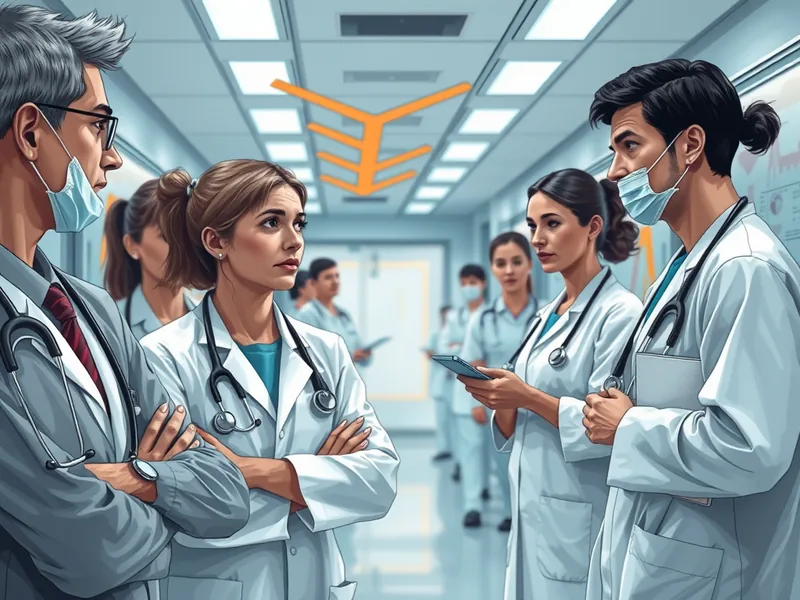
In a world where healthcare is increasingly complex and demanding, a new report by Elsevier highlights significant differences in how doctors and nurses experience their jobs. The Clinician of the Future 2026 report, based on a global survey of over 2,700 clinicians, reveals that while nurses generally feel more positive about their work environment and the use of artificial intelligence (AI), doctors are struggling with burnout and skepticism.
The survey, conducted between late 2025 and early 2026, found that 71% of nurses globally feel they have enough time with patients, compared to only 60% of doctors. This disparity is particularly pronounced in the United States, where just 49% of clinicians report having sufficient time for patient care, compared to 65% globally. The primary reason cited for this shortage is administrative burden.
Doctors are also more likely to report feeling too tired to treat patients effectively (44%) compared to nurses (34%). They struggle more with keeping up with medical and technological advancements-68% of doctors versus 43% of nurses feel overwhelmed by medical advances, and 70% of doctors compared to 42% of nurses find it challenging to keep pace with tech developments.
Despite the challenges, there are some bright spots. For instance, while four in 10 nurses feel unheard in the workplace, only a fifth of doctors share this sentiment. This suggests that while both groups face significant pressures, nurses may have more support or avenues for feedback within their organizations.
The report also delves into clinicians' attitudes toward AI. Half of all respondents believe AI is improving patient care, but fewer expect it to save them time compared to last year. Interestingly, despite lower uptake among nurses (50% of clinicians reported using AI for work purposes, with usage being less common among nurses than doctors), they have more positive views of their workplace’s approach to AI.
Jan Herzhoff, president of health markets at Elsevier, commented on the findings: "Our Clinician of the Future 2026 report shows that clinicians, particularly physicians in the U.S., continue to face significant administrative and workflow pressures that reduce time with patients and contribute to burnout. While nurses are also experiencing substantial strain, physicians reported especially high levels of burden tied to documentation, data overload, and operational complexity."
The implications of these findings extend beyond individual job satisfaction. High levels of burnout among doctors can lead to reduced patient care quality, increased medical errors, and higher turnover rates. These issues not only affect the well-being of healthcare professionals but also have a direct impact on patient outcomes and the overall efficiency of the healthcare system.
The differing attitudes toward AI between nurses and doctors highlight a potential gap in how these technologies are being integrated into clinical practice. Addressing this gap is crucial for ensuring that AI tools are used effectively to enhance care rather than add to the workload.
As healthcare continues to evolve, it's essential to address the administrative burdens and technological challenges faced by clinicians. By doing so, we can create a more sustainable and supportive environment for both doctors and nurses, ultimately leading to better patient care and outcomes.
Tags
Original Sources
Docs more burned out, skeptical of AI than nurses, survey report finds
↗ https://www.fiercehealthcare.com/providers/elsevier-report-finds-docs-more-burnt-out-skeptical-ai-nurses
About the author
Amara's entry point into AI was an epidemiology role at a London research hospital, where she spent five years studying how digital health tools reached — or conspicuously failed to reach — underserved communities. Watching early algorithmic systems in healthcare quietly entrench existing inequalities, she redirected her career toward the systemic consequences of AI at scale. She covers AI through an unflinching lens: who benefits, who bears the cost, and what evidence actually says versus what the press release claims. Her writing is calm and precise, but she doesn't mistake balance for neutrality.
More from The Steward →This Week's Edition
14 May 2026
29 articles
Related Articles

Ottawa Expands AI Funding for Northern Ontario Businesses, Aims to Close the Regional Tech Gap
Job Market & Society · 6 min
AI Is Lowering the Cost of Starting a Business. It's Not Lowering the Cost of Running One.
Job Market & Society · 6 min

Iambic Therapeutics Raises $150 Million in IPO to Fund AI-Designed Cancer Drugs
Finance & Markets · 5 min
Related Articles
Ottawa Expands AI Funding for Northern Ontario Businesses, Aims to Close the Regional Tech Gap
Job Market & Society · 6 min
AI Is Lowering the Cost of Starting a Business. It's Not Lowering the Cost of Running One.
Job Market & Society · 6 min
Iambic Therapeutics Raises $150 Million in IPO to Fund AI-Designed Cancer Drugs
Finance & Markets · 5 min
More Stories
© 2026 Cedar & Bloom. All rights reserved.
