The Drum · Weekly AI news, freeSubscribe →

Share
A man died pulled into a spinning lathe with no guard in place. The penalty that followed raises hard questions about how workplaces protect people from machines built to spin, cut and crush.
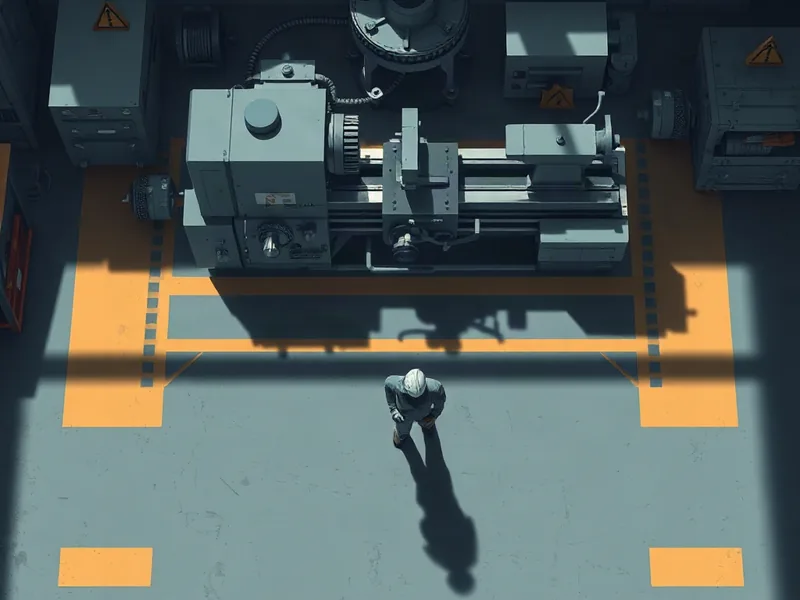
A man went to work at an east Edmonton machine shop on March 4, 2024, and never came home. He became entangled in a manual lathe, a machine with powerful spinning gears commonly used to shape metal or wood, and was pulled into the rotating workpiece. He died from the injuries he sustained.
More than two years later, the company behind that shop has paid a price, though not the kind that brings anyone back.
Rylex Machine & Supply Ltd. pleaded guilty on Sept. 14 in the Edmonton Court of Justice to one count under the Occupational Health and Safety Code. The charge: failing to provide safeguards where a worker might come into contact with moving parts of machinery or equipment. The company was fined $217,000.
That single guilty plea tells only part of the story. Rylex was originally charged with 12 counts under the Occupational Health and Safety Act following the worker's death. Prosecutors and the company ultimately settled on one charge, a common outcome in Alberta's workplace safety cases, where the process of negotiating pleas often narrows a long list of alleged violations down to the count that best captures what went wrong.
Numbers on a page can feel abstract. Here's what this one means in practice.
Of the $217,000 penalty, $216,000 will go to the Northern Alberta Institute of Technology under what's known as a creative sentencing structure. Instead of the money disappearing into general government revenue, it gets directed toward a specific remedy tied to the harm caused. In this case, NAIT will use the funds to purchase a dual-spindle lathe and to invest in education aimed at building a stronger workplace safety culture among future trades professionals.
Think of it as an attempt to turn a tragedy into a teaching tool. Every apprentice who trains on that new equipment will do so under a program shaped, in part, by a fatal accident that safeguards were supposed to prevent.
The remaining $1,000 covers the standard victim fine surcharge, a routine addition attached to most penalties of this kind under Alberta law.
Rylex was also placed under two years of enhanced regulatory supervision. That means provincial safety inspectors will be watching the company more closely than a typical workplace, checking that the changes needed to prevent another incident like this one are actually being made and maintained.
Both the company and the Crown have up to 30 days to appeal the conviction or the penalty. Until that window closes, the case isn't fully settled, though the guilty plea and sentencing represent the practical end of the legal process for now.
Lathes are not exotic machinery. They're a staple of machine shops, trade schools and manufacturing floors across the country. A rotating workpiece can grab loose clothing, hair or a hand in a fraction of a second, which is exactly why guards and safeguards exist: to create a physical barrier between a worker's body and moving parts that offer no mercy if contact is made. When those safeguards are missing or inadequate, the margin for error shrinks to nothing.
This case did not happen in isolation. Alberta has seen a steady stream of workplace fatality prosecutions in recent months. A landscaping company was fined after a fatal fall at an Edmonton construction site. An operator faced penalties after a drowning death in a fracking pond in northern Alberta. Safety charges were laid following an explosion at a Red Deer bus depot that injured five workers. Taken together, these cases sketch a pattern that anyone working in a hazardous trade should find sobering: the machinery and environments involved in industrial and resource work carry real, sometimes fatal, risk when safety protocols slip.
Alberta's Occupational Health and Safety Code exists precisely to close those gaps before someone gets hurt. The code lays out specific, often technical requirements, like machine guarding, because vague guidance isn't enough when the stakes involve moving parts that can maim or kill in an instant. Enforcement, in the form of charges, fines and supervision orders, is the mechanism meant to give those requirements teeth.
Critics of Alberta's occupational health and safety enforcement have long argued that fines, even substantial ones like this $217,000 penalty, don't always translate into lasting change on shop floors. Supporters of creative sentencing counter that directing money toward tangible investments, like new equipment or trades education, does more good than a payment that vanishes into a government account. Both arguments have merit, and neither fully resolves the central problem: a worker is dead, and no fine changes that.
Behind every regulatory case number is a person who went to work expecting to come home. That's easy to lose sight of amid the language of "counts," "pleas" and "creative sentencing structures." The worker who died in this incident, unnamed in court records made public so far, represents a loss that no dollar figure can offset.
For the trades community in Alberta, and for workers in machine shops and manufacturing facilities across the country, this case is a reminder that safeguards aren't bureaucratic red tape. They are the physical difference between a close call and a fatality. A guard on a lathe, properly installed and maintained, is designed to do one job: keep a spinning machine from ever making contact with a human body.
The $216,000 headed to NAIT will, in time, help train the next generation of machinists on safer equipment, with lessons shaped by what went wrong here. That's a meaningful outcome, but it's also a modest consolation set against the loss of a life. Workplace safety regulation works best when it prevents tragedies, not when it merely accounts for them after the fact. This case, like the others piling up across the province, underscores how much work remains to make that the norm rather than the exception.
Tags
Original Sources
Company fined $217K in death of worker at east Edmonton machine shop | CBC News
↗ https://www.cbc.ca/news/canada/edmonton/edmonton-ohs-charge-9.7348151
About the author
Amara's entry point into AI was an epidemiology role at a London research hospital, where she spent five years studying how digital health tools reached — or conspicuously failed to reach — underserved communities. Watching early algorithmic systems in healthcare quietly entrench existing inequalities, she redirected her career toward the systemic consequences of AI at scale. She covers AI through an unflinching lens: who benefits, who bears the cost, and what evidence actually says versus what the press release claims. Her writing is calm and precise, but she doesn't mistake balance for neutrality.
More from The Steward →This Week's Edition
18 September 2026
25 articles
Related Articles

Global Survey: Most People Expect AI to Destroy More Jobs Than It Creates
Job Market & Society · 6 min

When Employees Let AI Say What They Can't: The Rise of "Safety by Proxy" at Work
Job Market & Society · 6 min

Medicare's AI Push Meets a Discovery Problem for Health Chatbots
Products & Applications · 5 min
Related Articles
Global Survey: Most People Expect AI to Destroy More Jobs Than It Creates
Job Market & Society · 6 min
When Employees Let AI Say What They Can't: The Rise of "Safety by Proxy" at Work
Job Market & Society · 6 min
Medicare's AI Push Meets a Discovery Problem for Health Chatbots
Products & Applications · 5 min
More Stories
© 2026 Cedar & Bloom. All rights reserved.
