The Drum · Weekly AI news, freeSubscribe →

Share
A wave of new reporting asks children and teens directly how they feel about artificial intelligence, climate anxiety, and online monitoring, revealing a generation navigating promise and peril with more nuance than adults often assume.
Ask a teenager what they think the future holds, and you might expect a shrug or a scroll. But a growing body of reporting suggests young people are thinking hard about the world AI is building around them, and their answers are more complicated than simple optimism or dread.
This matters because the generation coming of age right now will inherit the consequences of decisions adults are making today about automation, climate policy, and digital surveillance. They didn't get a vote on any of it. Yet they're the ones who will spend the most years living with the results, whether that means a labor market reshaped by machine learning or a planet further altered by carbon emissions. Several recent reports went directly to kids and teens to ask how they're processing it all, and the picture that emerges is one of clear-eyed ambivalence rather than naive hope or paralyzing fear.
Think of it like handing someone the keys to a car they didn't help design. Some teens are excited about where the road leads. Others are anxious about who's actually driving. Most are somewhere in between, trying to figure out how much control they actually have.
That ambivalence shows up most sharply around AI itself. When researchers asked children and tweens directly how they feel about a future filled with artificial intelligence, the responses ranged from genuine excitement about new tools to real unease about what gets lost when machines take over tasks humans used to do by hand or by heart. It's a reminder that young people aren't passive recipients of technology. They're active interpreters of it, weighing benefits against costs in ways adults sometimes assume only grown-ups can do.
Climate change compounds that uncertainty. Today's young people are growing up amid what researchers increasingly call a polycrisis, a tangle of overlapping threats, from extreme weather to economic instability, that don't resolve neatly one at a time. Support networks have emerged specifically to help kids navigate the anxiety that comes with watching these trends unfold on the news and in their own neighborhoods. These aren't therapy replacements. They're more like a life jacket for a kid who's being asked to swim in rising water before anyone's taught them the strokes.
Some of the technology aimed at kids promises comfort rather than chaos. AI companion toys designed for neurodivergent children, for instance, offer the promise of connection and even therapeutic support. For a child who struggles with social cues or sensory overload, a patient, endlessly available companion can feel like a genuine lifeline.
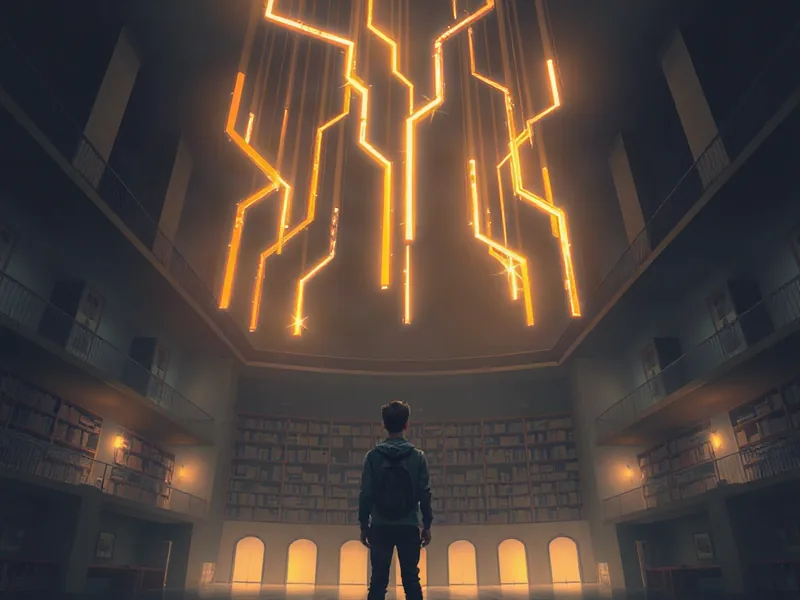
But promises made by technology and promises kept by technology aren't always the same thing. The hard question is whether these companion toys can deliver real benefit over the long haul, not just in a demo or a first few weeks of novelty. What happens when the toy breaks, gets discontinued, or simply can't grow with the child the way a human relationship would? These are not hypothetical worries. They're the kind of practical, emotional stakes that matter enormously to a kid who has bonded with a device, and to the parents trying to decide whether that bond is healthy.
Monitoring apps raise a similar tension between good intentions and real-world outcomes. Parents install them hoping to keep kids safer online, a reasonable instinct given how much of childhood now happens on a screen. But online safety experts say the surveillance approach can backfire, eroding trust between parents and kids without necessarily making anyone safer. If a teenager knows every message and search is being watched, they don't necessarily stop risky behavior. They just get better at hiding it. Experts argue there's a better way, one built more on open conversation than covert tracking, though that approach takes more patience and more trust than simply installing an app and walking away.
There's also something quietly fascinating happening at the intersection of child development and machine learning. Large language models need vastly more data than a child does to learn how language works, a gap researchers are eager to understand. A toddler can pick up grammar and vocabulary from a relatively small set of everyday conversations. The biggest AI systems, by contrast, need to chew through enormous volumes of text to get there. Figuring out why could help engineers build more efficient models. It could also teach us something new about how young, developing minds actually learn, information that has value well beyond the tech industry.
Even AI's own limitations are becoming a kind of teaching tool for kids. A recent set of puzzles and games designed to expose the gaps in what AI models can and can't do invites young people to test their own skills against the machine. The exercise reframes AI not as an infallible oracle but as a system with specific blind spots, something kids can outsmart if they know where to look. That kind of hands-on literacy may matter more for a young person's future than any amount of abstract warning about robots taking over.
None of this adds up to a single tidy verdict on whether AI is good or bad for kids. It adds up to something more useful: a clearer picture of how young people are actually experiencing a moment of rapid technological change, in their own words rather than ours. Adults building these systems, and the policies around them, owe children something better than assumptions. They owe them attention to what kids themselves are saying about hope, anxiety, trust, and the kind of future they actually want to help build. Listening is the cheapest and most overlooked part of getting this right.
Tags
Original Sources
About the author
Amara's entry point into AI was an epidemiology role at a London research hospital, where she spent five years studying how digital health tools reached — or conspicuously failed to reach — underserved communities. Watching early algorithmic systems in healthcare quietly entrench existing inequalities, she redirected her career toward the systemic consequences of AI at scale. She covers AI through an unflinching lens: who benefits, who bears the cost, and what evidence actually says versus what the press release claims. Her writing is calm and precise, but she doesn't mistake balance for neutrality.
More from The Steward →This Week's Edition
1 November 2026
21 articles
Related Articles
Related Articles
More Stories
© 2026 Cedar & Bloom. All rights reserved.