The Drum · Weekly AI news, freeSubscribe →

Share
Musk is reconsidering his dormant phone project in light of Apple’s embrace of OpenAI, citing security worries and hinting at a potential countermove to challenge the tech giant.
Elon Musk, CEO of Tesla and X (formerly Twitter), has reignited discussions about a potential phone project following Apple's integration of OpenAI’s ChatGPT into its devices. During the New York Times DealBook Summit last November, Musk hinted at developing a phone if it became essential. Recent developments suggest that the idea is gaining more serious consideration.
Apple's decision to integrate OpenAI’s ChatGPT at the operating system (OS) level has raised significant security concerns for Musk. In posts on X, he expressed strong disapproval of this move, stating that Apple devices would be banned from his companies if the integration proceeds. This stance underscores a growing tension between tech giants and highlights the potential for a new entrant in the smartphone market.
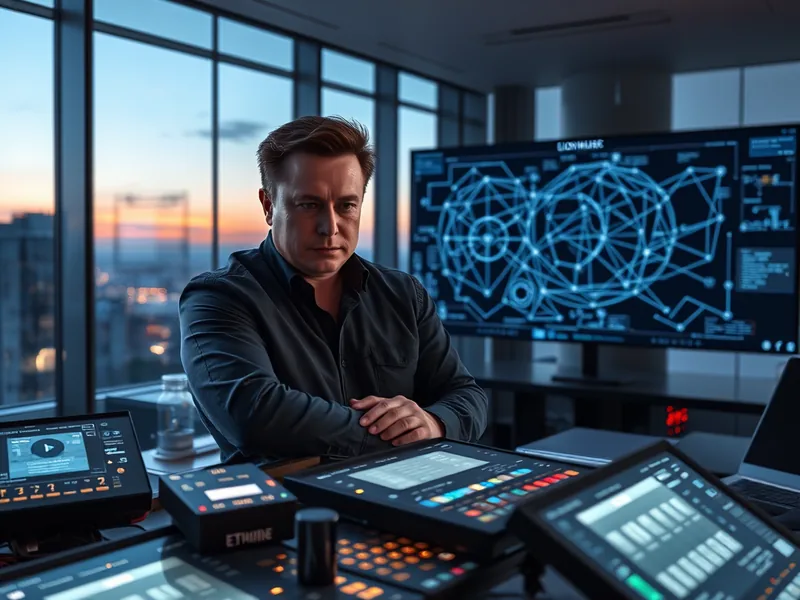
The smartphone market is ripe for disruption, with growing concerns about data privacy and security. A phone developed by Musk’s team could leverage the latest advancements in AI and cybersecurity to address these issues. However, the success of such a project would depend on overcoming significant technical and market challenges.
Musk’s comments on X have already sparked discussions within the tech community. Tim Cook, Apple's CEO, responded to Musk’s concerns, but it remains unclear whether this will lead to any changes in Apple’s strategy.
Elon Musk’s reconsideration of a phone project following Apple’s OpenAI integration highlights the evolving dynamics in the tech industry. While security and market competition present significant risks, there is also a clear opportunity for innovation and differentiation. The potential impact on data privacy and technological ecosystems makes this development worth watching closely.
Tags
Original Sources
About the author
Marcus began tracking AI's market implications in 2016, noticing AI-related patent filings accelerating ahead of earnings upgrades before most of the sell-side had caught on. A former fixed-income quantitative analyst, he spent two decades building models that priced risk across emerging markets before pivoting to cover the economic impact of AI full-time. His writing translates opaque technical developments into clear risk/reward terms — and he's rarely diplomatic about the gap between AI valuations and underlying fundamentals. He believes most market participants still underestimate AI's long-run deflationary effect on knowledge work.
More from The Analyst →This Week's Edition
17 June 2024
29 articles
Related Articles

Rosarium Health Partners With Anthem Medi-Cal to Fund Home Modifications for Older Californians
Products & Applications · 5 min

Meta's new open-weight model runs on Macs, if you have 1TB of RAM to spare
Products & Applications · 5 min

Persona AI Bets on Calm Execution in a Noisy Humanoid Robotics Market
Products & Applications · 5 min
Related Articles
Rosarium Health Partners With Anthem Medi-Cal to Fund Home Modifications for Older Californians
Products & Applications · 5 min
Meta's new open-weight model runs on Macs, if you have 1TB of RAM to spare
Products & Applications · 5 min
Persona AI Bets on Calm Execution in a Noisy Humanoid Robotics Market
Products & Applications · 5 min
More Stories
© 2026 Cedar & Bloom. All rights reserved.
