The Drum · Weekly AI news, freeSubscribe →

Share
As AI capabilities expand in the digital realm, experts contend that true intelligence demands more than just software; it requires physical form and environmental interaction, mirroring human development.
In the world of AI, we've seen some incredible advancements in recent years. AIs can now generate videos, translate languages with ease, and even write new computer code. However, a growing number of researchers argue that these digital-only systems will never achieve true intelligence without a physical body to navigate and interact with the real world.
The embodiment hypothesis posits that human-level intelligence can only emerge if an AI has a physical presence in the environment, similar to how babies learn through interaction. According to this theory, simply running complex algorithms on powerful servers isn't enough; true intelligence requires the ability to sense and navigate a physical space.
“AI systems that lack a physical embodiment can never be truly intelligent,” says Akshara Rai, a research scientist at Meta. “To fully comprehend the world, it is essential to interact with it and observe the outcomes of those interactions.”
While the idea of embodied AI sounds promising, there are significant challenges to overcome. One major issue is the potential for errors during training. Just like babies, AIs will make many mistakes when they first start learning a new task. If these mistakes occur in the real world, they could result in hardware damage, environmental destruction, and even harm to people.
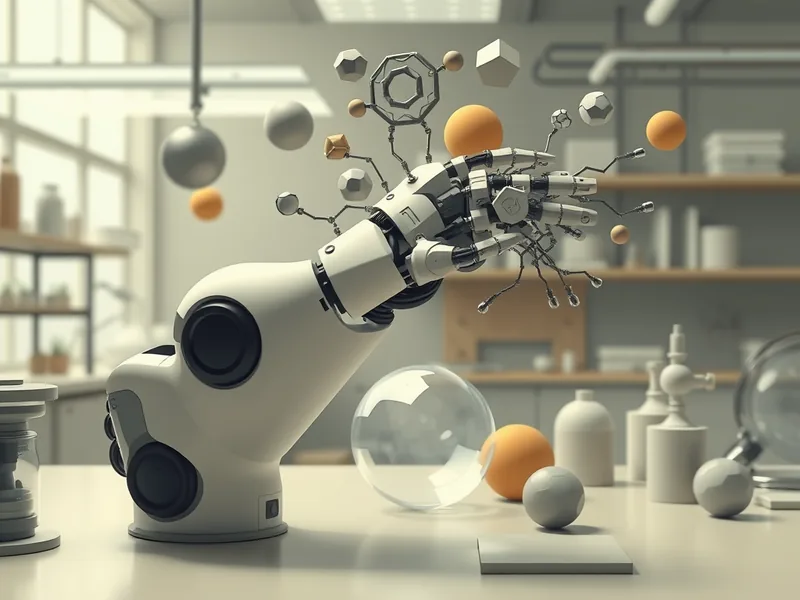
To address these challenges, researchers are turning to simulations. These virtual environments mimic real-world conditions, allowing AIs to learn and make mistakes without any physical consequences.
Despite these challenges, many researchers remain optimistic about the future of embodied AI. They believe that with the right training methods and advancements in simulation technology, we can create truly intelligent systems that can navigate and interact with the physical world.
The embodiment hypothesis suggests that true intelligence requires physical interaction with the environment. While this presents significant challenges, especially in terms of error handling and training efficiency, simulation technologies offer a promising solution. By leveraging these tools, researchers can develop embodied AIs that are both intelligent and safe.
Tags
Original Sources
About the author
Kai built ML infrastructure at a Bay Area startup before developing an obsession with transformer architectures and inference optimisation that eventually pulled him out of product work entirely. A stint at a compute research lab sharpened his instinct for what actually matters in a model release versus what is marketing. He writes from the inside — from the perspective of someone who has debugged the systems he is describing at three in the morning. He is allergic to hype and instinctively drawn to the unglamorous plumbing questions that everyone else skips over.
More from The Engineer →This Week's Edition
15 April 2024
29 articles
Related Articles

Wharton's Fourth Annual AI Survey: Most Companies See Returns, Few See Big Ones
Models & Research · 6 min
Tensormesh Launches Enterprise KV Cache Platform to Cut Redundant LLM Compute
Models & Research · 6 min

Iambic Therapeutics Raises $150 Million in IPO to Fund AI-Designed Cancer Drugs
Finance & Markets · 5 min
Related Articles
Wharton's Fourth Annual AI Survey: Most Companies See Returns, Few See Big Ones
Models & Research · 6 min
Tensormesh Launches Enterprise KV Cache Platform to Cut Redundant LLM Compute
Models & Research · 6 min
Iambic Therapeutics Raises $150 Million in IPO to Fund AI-Designed Cancer Drugs
Finance & Markets · 5 min
More Stories
© 2026 Cedar & Bloom. All rights reserved.
