The Drum · Weekly AI news, freeSubscribe →

Share
At OpenAI, scaling up reinforcement learning compute revealed the enduring wisdom of Richard Sutton's "Bitter Lesson," underscoring the power of computational resources over specialized techniques.
In February 2025, I had a significant shift in perspective at OpenAI. Reinforcement Learning (RL) was transforming how we approached problems where verification is easier than generation. The Strawberry team was achieving remarkable results by scaling up RL compute, saturating their environments every few weeks. This experience led me to ponder the highest-value RL environment and reaffirmed the importance of Richard Sutton's "Bitter Lesson."
Sutton’s “Bitter Lesson” emphasizes that general methods leveraging computation are the most effective in AI research. Moore's Law, or its broader implication of exponentially falling computational costs per unit, underpins this lesson. Despite this knowledge, many researchers still focus on algorithms, architecture, and data as if scaling laws were a recent discovery.
The fundamental insight is that more compute and energy are the most reliable paths to advancing AI. This doesn’t mean ignoring algorithmic improvements; rather, it suggests prioritizing scalable solutions. Here’s what this means in practice:
The dream at many frontier labs is recursive self-improvement: AI systems capable of coding better versions of themselves, leading to exponential intelligence growth. However, this notion often overlooks the Bitter Lesson. Research is compute-bound, and even with advanced AI, the bottleneck remains physical constraints.
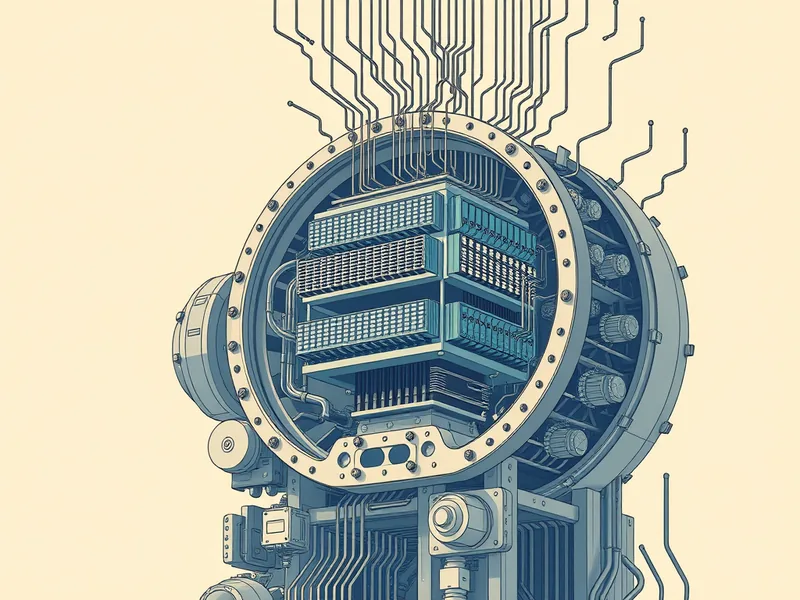
To truly take the Bitter Lesson seriously, we must focus on accelerating the technologies that are currently bottlenecked by real-world science:
Here are some practical steps to align with the Bitter Lesson:
The Strawberry team at OpenAI exemplifies the power of scaling compute. By continuously increasing the computational resources for RL, they achieved rapid progress in various environments. This approach demonstrates that with sufficient compute, even complex problems can be systematically solved.
Taking the Bitter Lesson seriously means acknowledging that more compute and energy are essential for AI advancement. While algorithmic improvements and data efficiency are important, they should not overshadow the need for scalable solutions. By focusing on real-world science to accelerate compute and energy technologies, we can pave the way for true recursive self-improvement and a future where intelligence overflows.
Tags
Original Sources
↗ https://rohanpandey.substack.com/p/taking-the-bitter-lesson-seriously?utm_source=tldrai
About the author
Kai built ML infrastructure at a Bay Area startup before developing an obsession with transformer architectures and inference optimisation that eventually pulled him out of product work entirely. A stint at a compute research lab sharpened his instinct for what actually matters in a model release versus what is marketing. He writes from the inside — from the perspective of someone who has debugged the systems he is describing at three in the morning. He is allergic to hype and instinctively drawn to the unglamorous plumbing questions that everyone else skips over.
More from The Engineer →This Week's Edition
1 October 2025
29 articles
Related Articles

Wharton's Fourth Annual AI Survey: Most Companies See Returns, Few See Big Ones
Models & Research · 6 min

Tensormesh Launches Enterprise KV Cache Platform to Cut Redundant LLM Compute
Models & Research · 6 min

Iambic Therapeutics Raises $150 Million in IPO to Fund AI-Designed Cancer Drugs
Finance & Markets · 5 min
Related Articles
Wharton's Fourth Annual AI Survey: Most Companies See Returns, Few See Big Ones
Models & Research · 6 min
Tensormesh Launches Enterprise KV Cache Platform to Cut Redundant LLM Compute
Models & Research · 6 min
Iambic Therapeutics Raises $150 Million in IPO to Fund AI-Designed Cancer Drugs
Finance & Markets · 5 min
More Stories
© 2026 Cedar & Bloom. All rights reserved.
