The Drum · Weekly AI news, freeSubscribe →
Share
As robots and AI-generated faces get more photorealistic, the old uncanny valley problem hasn't disappeared, it's gotten harder to engineer around. Here's what the research actually says about why near-human just doesn't cut it.
The source material here is thin on fresh data, but the underlying problem it gestures at is one every engineer building human-facing AI eventually runs into: the uncanny valley isn't a design footnote, it's a measurable perceptual effect, and it's getting more relevant, not less, as generative models push toward photorealism.
For the unfamiliar, the term describes a dip in emotional response as a robot, avatar, or CGI character approaches but doesn't quite reach human likeness. Masahiro Mori coined the concept back in 1970, plotting a curve where "shinwakan" (affinity, roughly) climbs steadily with human resemblance, then suddenly craters right before it would hit "indistinguishable from human." Push past that dip and you're back to pleasant. The valley is the trough, not the climb.
Here's why that matters more now than it did in Mori's era. Back then, the gap was mostly a robotics problem, animatronics and early CG characters, stuff you could mostly avoid by just not trying too hard to look human. Today's landscape is different:
That last point is the one practitioners underestimate. A photo you glance at for two seconds can dodge uncanny valley effects that a video call avatar can't, because sustained interaction gives the brain more time to catch the mismatch between expected and observed cues.
The leading explanations for the uncanny valley aren't about aesthetics, they're about perceptual mismatch and categorization failure. A few threads show up repeatedly in cognitive science literature on this:
Mismatch theory holds that discomfort spikes when different cues about "humanness" disagree with each other. A face with perfect skin texture but slightly wrong eye movement, or realistic motion paired with a static expression, creates competing signals that the visual system can't reconcile cleanly. Each cue alone might read as fine; stacked together, incongruent, and that's the trigger.
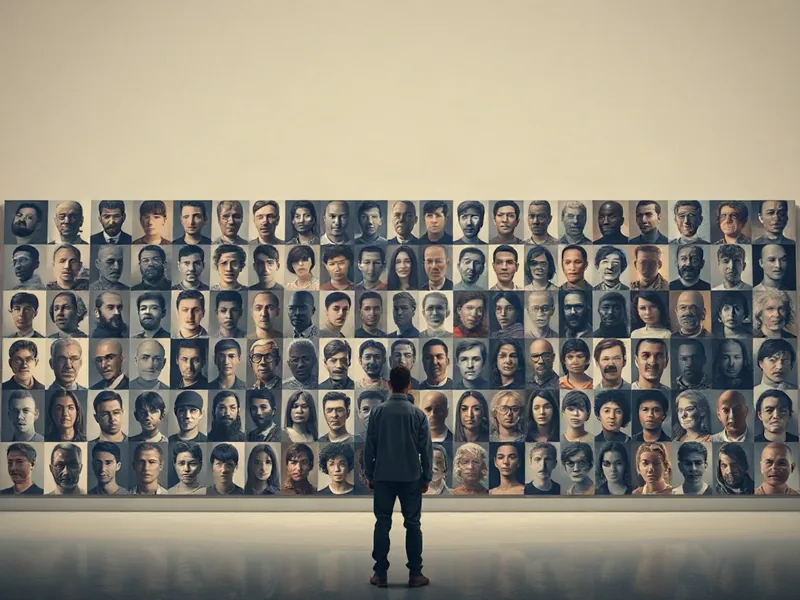
There's also a categorization ambiguity angle: when something sits right at the boundary between "human" and "not human," the brain has to work harder to classify it, and that processing friction itself produces a negative affective response. This lines up with broader findings in visual recognition research showing that category boundaries, not just extremes, are cognitively costly to resolve.
A third thread, more specific to robots and androids, ties into mortality salience and threat detection. Near-human but subtly wrong faces can trigger disease-avoidance or death-related associations, the "it looks like a corpse" or "it looks sick" reaction that shows up in some behavioral studies on android perception. This is less about elegant information theory and more about old evolutionary wiring doing exactly what it evolved to do: flag something off before conscious reasoning catches up.
None of these explanations are mutually exclusive, and that's probably the honest state of the research. the uncanny valley likely isn't one mechanism, it's several overlapping ones that happen to produce the same dip in the graph.
For people building anything human-facing, that's actually useful information. It means there's no single knob to turn, texture fidelity, motion smoothness, voice naturalness, that will reliably get you out of the valley. You have to manage congruence across modalities, not just push realism on each one independently. A hyperrealistic face with slightly laggy lip sync will often read as more unsettling than a stylized, clearly non-human face with perfect sync, because the stylized version never set up the human-match expectation that then gets violated.
That's part of why so much commercial design intentionally stays on the near side of the valley. Pixar faces, Boston Dynamics robots, most voice assistants: none of them are trying to pass as human, they're deliberately legible as not-human, which sidesteps the mismatch problem instead of trying to brute-force through it.
The harder question for the next few years is what happens as generative AI closes the remaining gaps faster than our intuitions about congruence can keep up. Video generation models are already producing clips where individual frames look flawless but something in the temporal consistency, blink timing, micro-expressions, reads as wrong to viewers who can't articulate why. That's the uncanny valley showing up in a new substrate: not robotics, not CGI, but token-by-token generated video, where the failure mode isn't bad rendering, it's statistical averaging that smooths out the small asymmetries real human faces actually have.
The uncanny valley isn't solved by better rendering alone, it's a congruence problem across multiple perceptual cues, and current research suggests mismatch between those cues, not raw realism, drives the discomfort. For teams building humanoid robots, synthetic avatars, or AI video generation, the practical lesson is to audit consistency across modalities, visual, motion, audio, timing, rather than chasing peak fidelity on any single one. The valley hasn't gone away as tech has improved; it's just moved to new terrain, and generative video may be its next testing ground.
Tags
Original Sources
Ode to the Uncanny Valley
↗ https://spectrum.ieee.org/ode-to-the-uncanny-valley/particle-5
About the author
Kai built ML infrastructure at a Bay Area startup before developing an obsession with transformer architectures and inference optimisation that eventually pulled him out of product work entirely. A stint at a compute research lab sharpened his instinct for what actually matters in a model release versus what is marketing. He writes from the inside — from the perspective of someone who has debugged the systems he is describing at three in the morning. He is allergic to hype and instinctively drawn to the unglamorous plumbing questions that everyone else skips over.
More from The Engineer →This Week's Edition
8 November 2026
12 articles
Related Articles
Related Articles
More Stories
© 2026 Cedar & Bloom. All rights reserved.