The Drum · Weekly AI news, freeSubscribe →

Share
As value-based care gains traction, hospitals are leveraging technology to ensure patients receive continuous support post-discharge, improving outcomes and reducing readmissions.
For decades, the moment a patient left the hospital marked the end of their acute care journey. Armed with a folder of instructions and follow-up recommendations, they were largely on their own. But this approach is changing. As hospitals face greater accountability for long-term patient outcomes, new technologies are extending clinical support well beyond discharge.
Caroline Hodge, PA-C, CEO of Dimer Health, sees the transition from hospital to home as a critical period that requires active, technology-enabled care. "The first 90 days aren't an afterthought anymore," Hodge said. "They're where the outcome, and the economics, actually get decided."
Hodge emphasizes that the initial 72 hours after discharge are particularly crucial. Patients leave an environment of constant monitoring and support, only to navigate complex medication regimens, follow-up appointments, and potential complications with limited guidance. Traditional discharge practices often fall short, leaving patients to manage their recovery with static instructions written in clinical jargon.
"Imagine being handed a manual for your car's engine after driving it off the lot," Hodge explained. "You'd be lost. It's no different for patients trying to manage their health post-discharge."
To bridge this gap, Dimer Health and other tech-driven solutions are providing real-time support through telehealth platforms, mobile apps, and remote monitoring devices. These tools help patients stay connected with their care teams, receive timely interventions, and address issues before they escalate.
For example, an AI-driven system using smart glasses and computer vision can guide clinicians through procedures like blood draws, ensuring that critical tasks are performed accurately even in less controlled environments. This level of support not only improves patient outcomes but also enhances the confidence of both patients and healthcare providers.
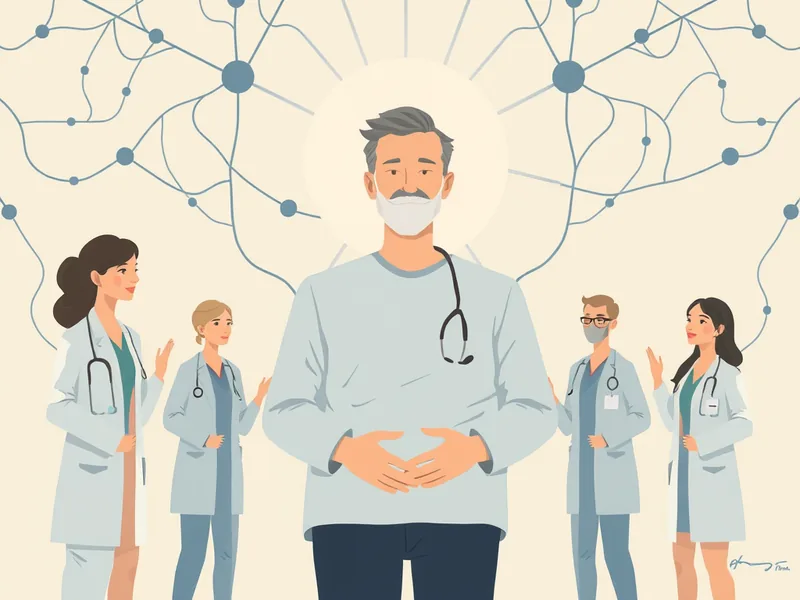
The shift towards technology-enabled transitional care is more than just a technical advancement; it's a fundamental change in how hospitals view their responsibility to patients. By providing continuous support, health systems can reduce readmissions, lower costs, and improve patient satisfaction.
"When a hospital knows a patient is genuinely covered post-discharge, is clinically supported, and has someone accountable for what happens next, it can discharge the patient with more confidence and less delay," Hodge said. This operational efficiency extends beyond the hospital walls, helping primary care physicians receive timely follow-up information and reducing the likelihood that patients seek care outside the health system.
These technologies are not just about managing acute conditions; they also play a crucial role in chronic disease management. Patients with conditions like diabetes, heart failure, or COPD can benefit from ongoing support to manage their symptoms and avoid hospital readmissions.
The broader impact of this approach is significant. Improved patient outcomes lead to better health system performance, which can translate into financial savings for both patients and providers. As value-based care models continue to gain traction, the ability to demonstrate positive long-term outcomes will become increasingly important.
In a world where healthcare costs are rising and resources are limited, technology-enabled transitional care offers a promising solution. By focusing on the first 90 days, hospitals can ensure that their patients have the support they need to recover successfully, ultimately leading to healthier communities and more sustainable healthcare systems.
Tags
Original Sources
From first 72 hours to first 90 days, tech extends hospital care beyond discharge
↗ https://www.healthcareitnews.com/news/first-72-hours-first-90-days-tech-extends-hospital-care-beyond-discharge
About the author
Amara's entry point into AI was an epidemiology role at a London research hospital, where she spent five years studying how digital health tools reached — or conspicuously failed to reach — underserved communities. Watching early algorithmic systems in healthcare quietly entrench existing inequalities, she redirected her career toward the systemic consequences of AI at scale. She covers AI through an unflinching lens: who benefits, who bears the cost, and what evidence actually says versus what the press release claims. Her writing is calm and precise, but she doesn't mistake balance for neutrality.
More from The Steward →This Week's Edition
17 August 2026
113 articles
Related Articles
Related Articles
More Stories
© 2026 Cedar & Bloom. All rights reserved.