The Drum · Weekly AI news, freeSubscribe →

Share
Researchers at Anthropic have cracked the code on making complex LLMs more transparent by isolating singularly meaningful features with sparse autoencoders, shedding light on how transformers truly function.
In a significant step towards making large language models (LLMs) more interpretable, researchers at Anthropic have developed a method to extract monosemantic features using a sparse autoencoder. This approach aims to decompose the complex functions of transformers into simpler, more understandable components.
Traditionally, neurons in neural networks are polysemantic-they respond to multiple, seemingly unrelated inputs. For example, a single neuron might activate for both cat faces and car fronts in vision models or for academic citations, English dialogue, HTTP requests, and Korean text in language models. This polysemanticity makes it challenging to understand the network's behavior by analyzing individual neurons.
By using a sparse autoencoder, the researchers managed to extract features that are monosemantic-each feature responds to a single, specific input type. This is crucial for mechanistic interpretability, which seeks to break down neural networks into understandable components. Monosemantic features allow us to better reason about how the network processes information and make it easier to identify and analyze individual functionalities.
Sparse Autoencoder:
Feature Extraction Process:
Interpreting Features:
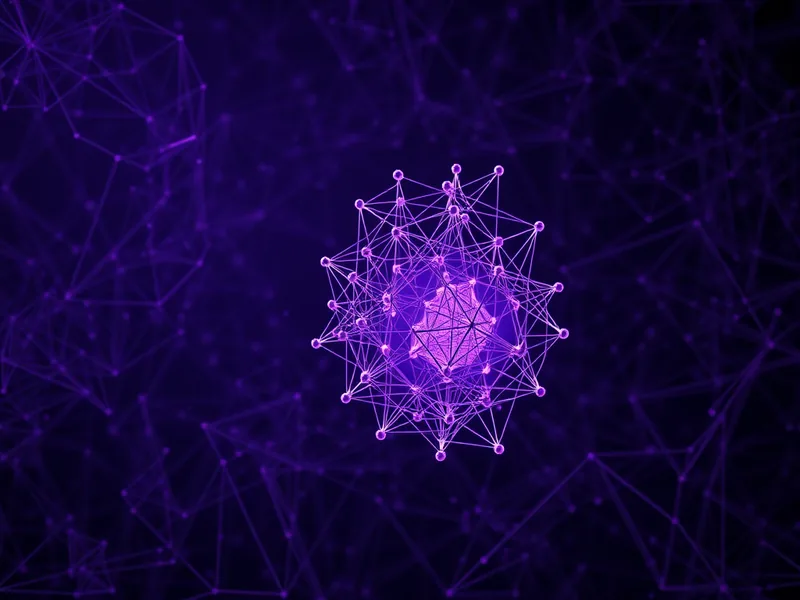
To explore the extracted features, you can browse through the following links:
This work has significant implications for the field of mechanistic interpretability. By providing a method to extract monosemantic features, it opens up new avenues for understanding and debugging large language models. Practitioners can use these techniques to gain deeper insights into how their models process information and identify potential issues or biases.
The research was conducted by Trenton Bricken*, Adly Templeton*, Joshua Batson*, Brian Chen*, Adam Jermyn*, Tom Conerly, Nicholas L Turner, Cem Anil, Carson Denison, Amanda Askell, Robert Lasenby, Yifan Wu, Shauna Kravec, Nicholas Schiefer, Tim Maxwell, Nicholas Joseph, Alex Tamkin, Karina Nguyen, Brayden McLean, Josiah E Burke, Tristan Hume, Shan Carter, Tom Henighan, and Chris Olah. They are affiliated with Anthropic.
The ability to extract monosemantic features from transformers using sparse autoencoders is a promising step towards making large language models more interpretable. This work not only enhances our understanding of these complex systems but also provides practical tools for practitioners to analyze and improve their models.
Tags
Original Sources
↗ https://transformer-circuits.pub/2023/monosemantic-features/index.html
About the author
Kai built ML infrastructure at a Bay Area startup before developing an obsession with transformer architectures and inference optimisation that eventually pulled him out of product work entirely. A stint at a compute research lab sharpened his instinct for what actually matters in a model release versus what is marketing. He writes from the inside — from the perspective of someone who has debugged the systems he is describing at three in the morning. He is allergic to hype and instinctively drawn to the unglamorous plumbing questions that everyone else skips over.
More from The Engineer →This Week's Edition
30 October 2023
29 articles
Related Articles

Wharton's Fourth Annual AI Survey: Most Companies See Returns, Few See Big Ones
Models & Research · 6 min
Tensormesh Launches Enterprise KV Cache Platform to Cut Redundant LLM Compute
Models & Research · 6 min

Iambic Therapeutics Raises $150 Million in IPO to Fund AI-Designed Cancer Drugs
Finance & Markets · 5 min
Related Articles
Wharton's Fourth Annual AI Survey: Most Companies See Returns, Few See Big Ones
Models & Research · 6 min
Tensormesh Launches Enterprise KV Cache Platform to Cut Redundant LLM Compute
Models & Research · 6 min
Iambic Therapeutics Raises $150 Million in IPO to Fund AI-Designed Cancer Drugs
Finance & Markets · 5 min
More Stories
© 2026 Cedar & Bloom. All rights reserved.
