The Drum · Weekly AI news, freeSubscribe →

Share
Sepsis kills hundreds of thousands of Americans each year, often because warning signs go unnoticed until it's too late. A newly cleared AI monitoring system aims to change that timeline entirely.
Every hour matters when sepsis takes hold in the body. It's a condition that moves fast, often quietly, and by the time symptoms become obvious to the naked eye, a patient can already be in crisis. For families who have lost loved ones to it, that speed is the cruelest part of the story: someone seemed fine, then suddenly wasn't.
That's the problem a newly FDA-cleared artificial intelligence system is trying to solve. As CNN's Jake Tapper reported on "The Lead," the technology is designed to detect early signs of sepsis in hospitalized patients before those signs become visible to doctors and nurses working through crowded, overburdened wards. The hope, according to the reporting, is that this kind of early warning could save thousands of lives lost each year to a condition that remains one of the most common causes of death in American hospitals.
Sepsis isn't a single disease. It's the body's own immune system overreacting to an infection, spiraling into a cascade that can damage organs and shut down blood flow to vital tissue. Think of it less like a fire and more like a fire alarm that never turns off, flooding the body with inflammation long after the original threat has been addressed. Left unchecked, it can lead to septic shock, organ failure, and death, sometimes within hours of the first subtle symptoms.
That speed is exactly why early detection carries so much weight. Clinicians have long relied on vital signs, lab results, and clinical judgment to catch sepsis early, but those tools have real limits. Nurses managing dozens of patients across a shift can't watch every monitor every minute. Subtle shifts in heart rate, temperature, or blood pressure can look unremarkable in isolation, even when they're part of a dangerous pattern building underneath.
The newly cleared system uses artificial intelligence to continuously scan patient data, looking for patterns that might elude a human eye glancing at a chart between rounds. Rather than waiting for a single alarming reading, the software is built to flag combinations of small changes that, together, suggest a patient may be heading toward sepsis. It's a bit like a smoke detector that can sense the earliest wisps of smoke, not just the moment the room fills with it.
That kind of continuous, pattern-based monitoring is where AI tools have shown genuine promise in medicine over the past several years. Human clinicians remain irreplaceable for judgment, empathy, and hands-on care, but they aren't built to process streams of numerical data around the clock without fatigue. Software doesn't get tired at hour eleven of a shift. It doesn't miss a subtle trend because it's juggling six other patients at once.
The FDA's clearance of the system marks a significant milestone, one that reflects growing regulatory comfort with AI tools embedded directly into patient care rather than used purely for research or administrative tasks. Getting a diagnostic AI system through the FDA process requires demonstrating that it performs reliably and safely across real clinical conditions, not just in a lab setting. That clearance signals the agency believes this tool meets that bar for the specific use case of flagging sepsis risk.
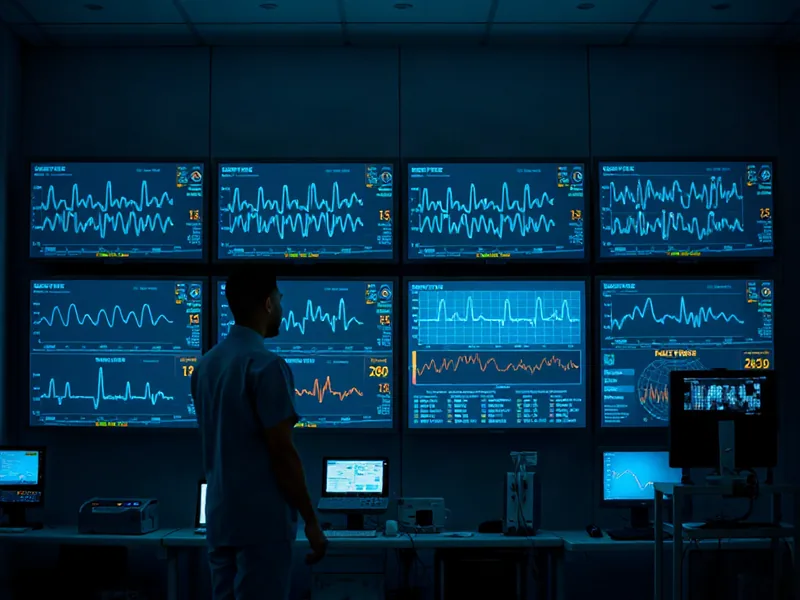
Still, no monitoring system replaces a doctor's judgment or a nurse's bedside instincts. The technology is meant to work alongside clinical staff, surfacing risk earlier so that human decision-makers have more time to act, not making treatment decisions on its own. Sepsis care still depends on rapid antibiotics, fluids, and close observation once risk is identified. What changes is the head start clinicians get before those interventions become urgent.
There's also a broader pattern worth noting here. This sepsis detection tool joins a growing wave of AI applications moving through the FDA's clearance pipeline, spanning everything from cancer screening to vaccine research. In the same news cycle that covered this sepsis system, CNN also reported on an experimental vaccine that reduced melanoma recurrence or death by 49 percent after five years, a reminder that medical innovation right now is arriving on multiple fronts at once, not just through software.
That context matters because it shows sepsis detection isn't an isolated experiment. It's part of a larger shift in how hospitals are beginning to lean on continuous, data-driven monitoring to catch dangerous conditions earlier across the board. Whether that shift delivers on its promise will depend heavily on how well these tools perform once they're deployed at scale, across diverse hospitals, patient populations, and staffing levels, not just in the clinical trials that earned them approval.
Cost and access remain open questions too. Hospitals with more resources may adopt these tools faster, potentially widening gaps in care between well-funded and under-resourced facilities. Sepsis already disproportionately affects older adults, immunocompromised patients, and people in communities with less access to prompt medical attention. A tool this promising is only as valuable as its actual reach into the hospitals treating the patients most at risk.
Sepsis kills an estimated 270,000 Americans a year, according to the Centers for Disease Control and Prevention, making it one of the leading causes of death in U.S. hospitals. It's a number that rarely makes headlines the way other conditions do, in part because it often masquerades as a complication of something else: a surgery, an infection, a routine hospital stay that took an unexpected turn.
Technology like this won't eliminate sepsis. It can't undo the underlying biology of an immune system in overdrive. But if it genuinely gives clinicians more time to intervene before a patient crashes, even a modest reduction in missed early cases could translate into thousands of lives saved each year. For families who've watched a loved one decline within hours, that kind of head start isn't just a technical achievement. It's the difference between a story that ends in recovery and one that ends in grief.
Tags
Original Sources
How a new FDA cleared AI system could save thousands of lives lost to sepsis | CNN
↗ https://www.cnn.com/2026/08/26/health/video/sepsis-monitor-detection-artificial-intelligence-fda-lead-jake-tapper
About the author
Amara's entry point into AI was an epidemiology role at a London research hospital, where she spent five years studying how digital health tools reached — or conspicuously failed to reach — underserved communities. Watching early algorithmic systems in healthcare quietly entrench existing inequalities, she redirected her career toward the systemic consequences of AI at scale. She covers AI through an unflinching lens: who benefits, who bears the cost, and what evidence actually says versus what the press release claims. Her writing is calm and precise, but she doesn't mistake balance for neutrality.
More from The Steward →This Week's Edition
1 September 2026
29 articles
Related Articles
Related Articles
More Stories
© 2026 Cedar & Bloom. All rights reserved.