The Drum · Weekly AI news, freeSubscribe →
Share
A promising AI tool developed by young researcher Pierre Elias has been cleared by the FDA, offering a new way to detect heart disease early and potentially save lives.
In the world of healthcare technology, early detection can make all the difference. This is especially true for heart disease, which remains one of the leading causes of death globally. Now, an innovative AI tool developed by Pierre Elias, a researcher who was named to STAT’s list of Wunderkinds in 2020, has been cleared by the Food and Drug Administration (FDA). This breakthrough could significantly enhance early detection and improve outcomes for patients with cardiovascular issues.
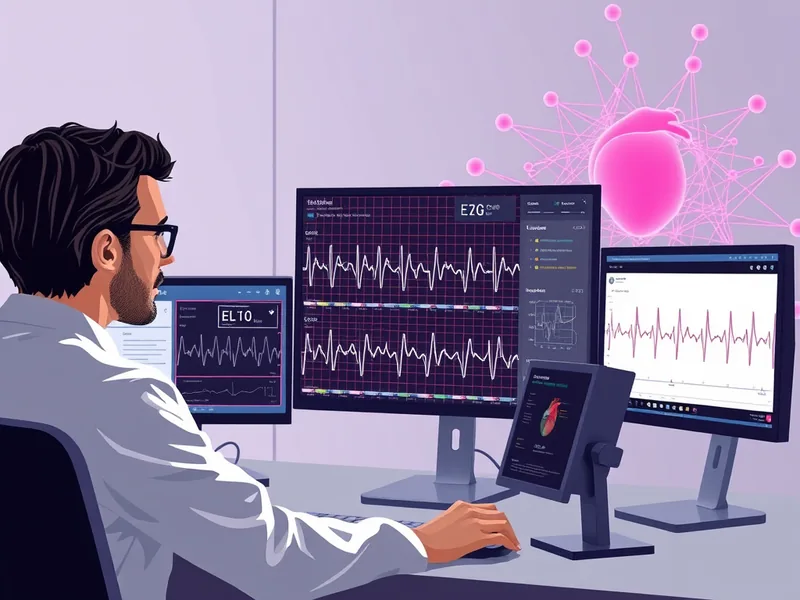
Elias's AI tool is designed to analyze electrocardiograms (EKGs), which are recordings of the heart’s electrical activity. EKGs are a standard diagnostic tool used in hospitals and clinics, but they can sometimes miss subtle signs of heart disease that an experienced cardiologist might catch. The AI tool, which has been rigorously tested and validated, is capable of detecting these subtle abnormalities with high accuracy.
The significance of this development lies in its potential to transform how we approach heart disease. Heart disease often progresses silently, and by the time symptoms become apparent, it may be too late for effective intervention. The AI tool can identify early warning signs that might otherwise go unnoticed, allowing doctors to intervene sooner and potentially prevent more serious complications.
Elias’s journey from promising researcher to commercial innovator is a testament to the rapid advancements in medical technology. His tool uses machine learning algorithms trained on vast datasets of EKGs, enabling it to recognize patterns that are indicative of heart disease. The FDA clearance is a major milestone, indicating that the tool meets rigorous standards for safety and efficacy.
The benefits of this AI tool extend beyond just early detection. It can also help reduce the workload on cardiologists by automating part of the diagnostic process. This means more accurate diagnoses in less time, which can be crucial in emergency situations where every minute counts.
However, the introduction of AI into healthcare is not without its challenges. There are concerns about data privacy, algorithmic bias, and the need for continuous monitoring to ensure that the tool remains effective as new data becomes available. Elias and his team are committed to addressing these issues through ongoing research and collaboration with medical professionals.
The next steps for Elias’s AI tool include further clinical trials to validate its effectiveness in real-world settings. The goal is to integrate the tool into existing healthcare systems, making it accessible to a wide range of patients. This will require close collaboration with hospitals, clinics, and regulatory bodies to ensure that the technology is implemented safely and effectively.
The potential impact of this AI tool on public health is significant. By improving early detection rates, it could help reduce the burden of heart disease on healthcare systems and improve patient outcomes. It also serves as a powerful example of how technology can be harnessed to address some of the most pressing health challenges we face today.
As we move forward, it will be crucial to continue monitoring the performance of AI tools like Elias’s and to foster an environment where innovation and patient care go hand in hand. The future of cardiovascular care looks brighter with each technological advance, and this FDA clearance is a promising step toward that future.
Tags
Original Sources
OpenEvidence will add FDA-cleared AI to detect heart disease
↗ https://www.statnews.com/2026/06/23/openevidence-fda-cleared-heart-disease-ai-health-tech
About the author
Amara's entry point into AI was an epidemiology role at a London research hospital, where she spent five years studying how digital health tools reached — or conspicuously failed to reach — underserved communities. Watching early algorithmic systems in healthcare quietly entrench existing inequalities, she redirected her career toward the systemic consequences of AI at scale. She covers AI through an unflinching lens: who benefits, who bears the cost, and what evidence actually says versus what the press release claims. Her writing is calm and precise, but she doesn't mistake balance for neutrality.
More from The Steward →This Week's Edition
29 June 2026
29 articles
Related Articles

Epic's Mortality Model and the Widening Ambitions of Health Tech's Product Roadmaps
Health & Science · 5 min

HHS Moves to Cut Animal Testing From Drug Development, Backing Human-Based Science
Health & Science · 5 min

Amgen's Dazodalibep Clears Key Sjögren's Hurdle, Setting Up Race With Novartis
Health & Science · 5 min
Related Articles
Epic's Mortality Model and the Widening Ambitions of Health Tech's Product Roadmaps
Health & Science · 5 min
HHS Moves to Cut Animal Testing From Drug Development, Backing Human-Based Science
Health & Science · 5 min
Amgen's Dazodalibep Clears Key Sjögren's Hurdle, Setting Up Race With Novartis
Health & Science · 5 min
More Stories
© 2026 Cedar & Bloom. All rights reserved.
