The Drum · Weekly AI news, freeSubscribe →

Share
The FDA's approval of UpDoc's AI-driven diabetes management tool marks a significant milestone in healthcare technology. But as this new frontier opens, concerns about patient safety and data privacy loom large.
The Food and Drug Administration (FDA) has given the green light to an innovative app from digital health company UpDoc, designed to help people manage their diabetes using artificial intelligence (AI). This clearance is historic, marking the first time the FDA has approved medical software that directly interacts with patients through a "large language model" chatbot interface. While this technology holds promise for improving patient care, it also raises important ethical questions.
Founded in 2023, UpDoc received FDA clearance for its diabetes management app in December but only recently announced its plans to integrate the AI-powered tool into clinical practice. The app is designed to support patients outside the clinic by providing real-time guidance based on their specific treatment plans, which are defined by their healthcare providers.
At the core of UpDoc's app is a chatbot that uses large language models (LLMs) to engage with patients. These models are sophisticated AI systems trained on vast amounts of text data, enabling them to generate human-like responses and provide personalized advice. For people with diabetes, this means the app can offer timely suggestions for managing blood glucose levels, medication dosages, and lifestyle choices.
The FDA's decision to clear UpDoc's app as a medical device places it in the same category as drug dose calculators, which use patient inputs like blood glucose levels to recommend insulin doses. This regulatory classification underscores the potential impact of AI on clinical decision-making and patient care.
The benefits of AI-driven diabetes management are significant. For patients, having a tool that can provide immediate, personalized guidance can lead to better control of their condition, potentially reducing the risk of complications like heart disease, kidney failure, and nerve damage. The app can also help healthcare providers monitor patient progress more effectively, allowing for timely interventions when necessary.
However, the use of AI in healthcare is not without risks. One of the primary concerns is the accuracy and reliability of the chatbot's recommendations. While LLMs are powerful, they can sometimes generate incorrect or misleading information. In a medical context, such errors could have serious consequences, including incorrect dosing of insulin, which can be life-threatening.
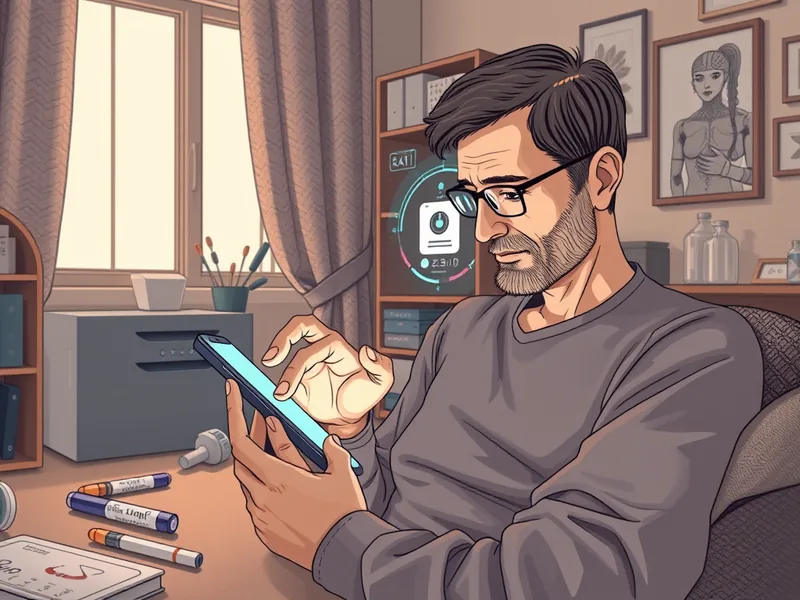
Another critical issue is data privacy. The app collects sensitive health information from users, and there are concerns about how this data is stored, used, and protected. Patients need to trust that their personal information is secure and will not be misused by third parties.
Dr. Emily Carter, a diabetes specialist at the University of California, San Francisco, highlights these concerns: "While AI has the potential to revolutionize diabetes management, we must proceed with caution. The technology needs rigorous testing and continuous monitoring to ensure it does more good than harm."
The FDA's clearance of UpDoc's app sets a precedent for the use of generative AI in healthcare, which could pave the way for similar innovations in other medical fields. However, this milestone also brings with it a responsibility to address the ethical and practical challenges that come with integrating AI into patient care.
Healthcare providers and policymakers will need to work together to establish guidelines and standards for the safe and effective use of AI tools. This includes ensuring transparency about how these systems make decisions, providing clear information to patients about the risks and benefits, and implementing robust data protection measures.
For UpDoc and other companies developing AI-driven health apps, ongoing collaboration with medical professionals and patient advocates will be crucial. By involving stakeholders in the development and testing process, developers can help build trust and ensure that these technologies meet the needs of those they are designed to serve.
As the use of AI in healthcare continues to evolve, it is essential to strike a balance between innovation and safety. The FDA's clearance of UpDoc's app is just the beginning of a broader conversation about how we can harness the power of AI to improve health outcomes while protecting patient rights and well-being.
Tags
Original Sources
A ‘historic’ FDA clearance raises the question: Is the LLM an interface or the decision-maker?
↗ https://www.statnews.com/2026/07/02/fda-clearance-raises-questions-updoc-use-generative-ai-diabetes-treatment
About the author
Amara's entry point into AI was an epidemiology role at a London research hospital, where she spent five years studying how digital health tools reached — or conspicuously failed to reach — underserved communities. Watching early algorithmic systems in healthcare quietly entrench existing inequalities, she redirected her career toward the systemic consequences of AI at scale. She covers AI through an unflinching lens: who benefits, who bears the cost, and what evidence actually says versus what the press release claims. Her writing is calm and precise, but she doesn't mistake balance for neutrality.
More from The Steward →This Week's Edition
6 July 2026
28 articles
Related Articles

Blue Shield of California Signals Commercial Expansion of Medicare's ACCESS Chronic Care Model
Health & Science · 5 min

HHS Directs Nearly $250 Million Toward Addiction Treatment and Overdose Prevention
Health & Science · 5 min

UVM Wins $38 Million to Build AI Digital Twins for ICU Patients
Health & Science · 6 min
Related Articles
Blue Shield of California Signals Commercial Expansion of Medicare's ACCESS Chronic Care Model
Health & Science · 5 min
HHS Directs Nearly $250 Million Toward Addiction Treatment and Overdose Prevention
Health & Science · 5 min
UVM Wins $38 Million to Build AI Digital Twins for ICU Patients
Health & Science · 6 min
More Stories
© 2026 Cedar & Bloom. All rights reserved.
