The Drum · Weekly AI news, freeSubscribe →

Share
The Food and Drug Administration's decision to grant breakthrough status to two AI-driven radiology devices could transform how doctors interpret chest X-rays, potentially saving lives and improving patient care.
The Food and Drug Administration (FDA) has made a significant move in the world of medical technology by granting breakthrough designation to two devices that use generative artificial intelligence (AI) to interpret chest X-rays and draft radiology reports. This development marks a critical step forward in how AI can support healthcare professionals, potentially leading to faster diagnoses and better patient outcomes.
Machine learning systems have been analyzing medical images like X-rays and CT scans for years, helping doctors spot abnormalities that might be missed by the human eye. However, recent advancements in large vision language models have introduced a new level of capability. Instead of just highlighting areas of concern for radiologists to review and write up, generative AI can now process entire images and draft detailed reports for radiologists to verify.
This technological leap is not only streamlining the diagnostic process but also challenging traditional validation and regulatory frameworks. The FDA's breakthrough designation is a clear signal that these tools are poised to make a significant impact on patient care.
In March, one of the breakthrough designations went to Cognita, a startup founded by Stanford researchers and acquired last year by the large radiology practice Radiology Partners. This tool uses advanced generative AI to interpret chest X-rays and draft reports, which are then reviewed by human radiologists. The technology is designed to reduce the time radiologists spend on routine tasks, allowing them to focus more on complex cases.
On Thursday, another breakthrough designation was awarded to Aidoc's First Read tool. This device specifically detects and describes four life-threatening conditions in chest X-rays: pneumothorax (collapsed lung), pulmonary edema (fluid in the lungs), pleural effusion (excess fluid around the lungs), and enlarged cardiac silhouette (an enlarged heart). By identifying these critical findings, Aidoc's AI can help ensure that patients receive timely and appropriate care.
The implications of these advancements are profound. Radiologists often face overwhelming workloads, with a high volume of images to review each day. AI tools like Cognita and First Read can help alleviate this burden, potentially reducing the risk of errors due to fatigue or oversight. These tools can provide valuable support in settings where radiology expertise is limited, such as rural hospitals or underserved communities.
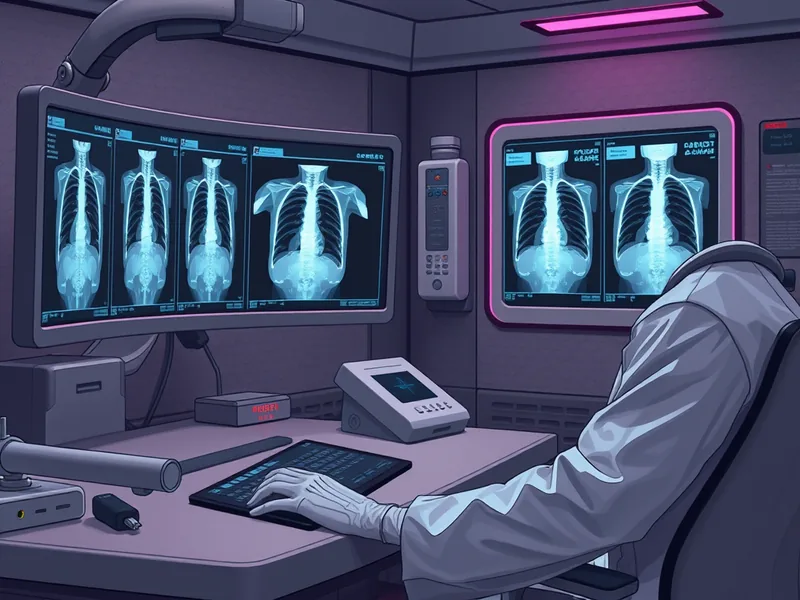
The FDA's breakthrough designation is just the beginning. It expedites the review process for these devices, bringing them closer to market approval and widespread use. However, the journey from regulatory approval to routine clinical practice is not without challenges.
One of the primary concerns is ensuring that AI tools are reliable and accurate. While early results are promising, ongoing validation studies will be crucial to establish the long-term effectiveness and safety of these technologies. Healthcare providers and patients must have confidence that AI-generated reports are as trustworthy as those written by human radiologists.
Another challenge is integrating these tools into existing workflows. Radiologists will need training to effectively use and interpret AI-generated reports. There may also be resistance from some healthcare professionals who are wary of relying on technology for critical medical decisions.
Despite these challenges, the potential benefits are too significant to ignore. Faster and more accurate diagnoses can lead to better patient outcomes, reduced healthcare costs, and improved quality of life. As AI continues to evolve, it is likely that we will see even more innovative applications in radiology and other areas of medicine.
The FDA's decision signals a new era in medical technology, where AI is not just a tool but a partner in the diagnostic process. With continued innovation and careful implementation, these breakthrough tools could transform how we approach healthcare, ultimately benefiting patients and healthcare providers alike.
Tags
Original Sources
FDA gives generative AI in radiology two breakthrough designation nods
↗ https://www.statnews.com/2026/06/25/radiology-generative-ai-cognita-aidoc-fda-breakthrough-designation
About the author
Amara's entry point into AI was an epidemiology role at a London research hospital, where she spent five years studying how digital health tools reached — or conspicuously failed to reach — underserved communities. Watching early algorithmic systems in healthcare quietly entrench existing inequalities, she redirected her career toward the systemic consequences of AI at scale. She covers AI through an unflinching lens: who benefits, who bears the cost, and what evidence actually says versus what the press release claims. Her writing is calm and precise, but she doesn't mistake balance for neutrality.
More from The Steward →This Week's Edition
29 June 2026
29 articles
Related Articles

Epic's Mortality Model and the Widening Ambitions of Health Tech's Product Roadmaps
Health & Science · 5 min

HHS Moves to Cut Animal Testing From Drug Development, Backing Human-Based Science
Health & Science · 5 min

Amgen's Dazodalibep Clears Key Sjögren's Hurdle, Setting Up Race With Novartis
Health & Science · 5 min
Related Articles
Epic's Mortality Model and the Widening Ambitions of Health Tech's Product Roadmaps
Health & Science · 5 min
HHS Moves to Cut Animal Testing From Drug Development, Backing Human-Based Science
Health & Science · 5 min
Amgen's Dazodalibep Clears Key Sjögren's Hurdle, Setting Up Race With Novartis
Health & Science · 5 min
More Stories
© 2026 Cedar & Bloom. All rights reserved.
