The Drum · Weekly AI news, freeSubscribe →

Share
As the FDA moves to reduce animal testing, biotech startups like Revalia Bio are stepping up with human-based models that promise faster, safer drug development.
In May 2026, the Food and Drug Administration (FDA) announced a draft guidance aimed at cutting unnecessary animal testing for cancer drugs. This move is part of a broader effort to improve drug safety, speed up the evaluation process, reduce R&D costs, and ultimately lower drug prices. The shift away from animal testing has been driven by several factors: the poor translation of results from animals to humans, ethical concerns, and the need for more accurate models that can better predict human responses.
One of the key challenges in drug development is ensuring that a compound works as expected when it reaches human trials. Animal studies often fail to replicate these outcomes, leading to costly and time-consuming setbacks. The FDA's proposed guidance is seen as a significant step forward, validating the potential of alternative testing methods like organoids, lab-grown human tissue models, and organ-on-a-chip technologies.
Among the companies at the forefront of this shift are Vivodyne and Emulate, both of which focus on human-based testing. Jim Corbett, CEO of Emulate, welcomed the FDA's move: "The FDA said, 'Let’s try to assist the pharma industry in general on how we can start to really chip away and reduce animals and then ideally eliminate them.' They picked areas like monoclonal antibodies where excessive non-numeric primary testing doesn’t translate to humans. And so why continue the madness?"
Organoids and organ-on-a-chip technologies are designed to mimic human organs at a microscale, allowing researchers to study drug effects in a more controlled and relevant environment. These models can provide insights into how drugs interact with specific tissues, potentially identifying issues that might not be apparent in animal studies.
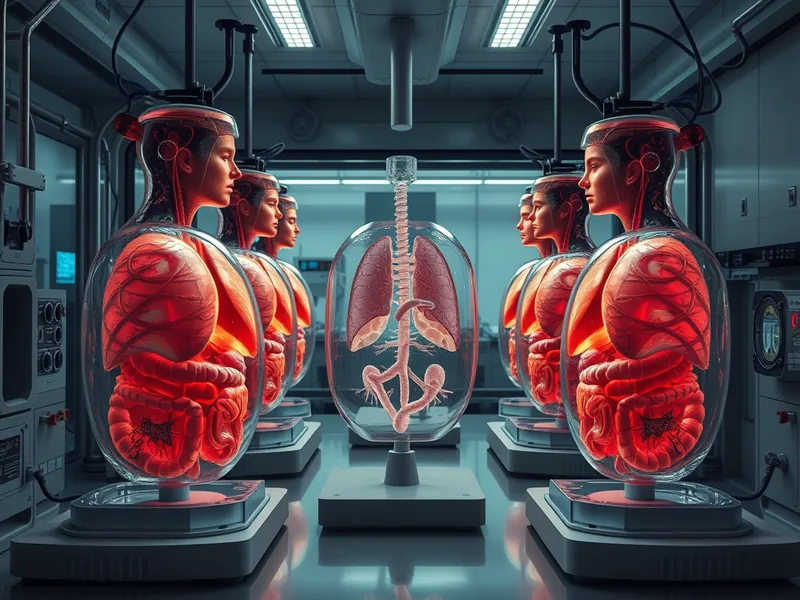
However, some biopharma executives believe that even these advanced models may not be sufficient for certain types of drug development. Revalia Bio, a startup focusing on whole-organ perfusion, is taking a different approach. The company uses donated human organs that cannot be transplanted to test drugs directly in a full organ environment.
The implications of this shift are significant. By reducing reliance on animal testing, the pharmaceutical industry can potentially speed up drug development timelines, reduce costs, and improve patient outcomes. However, there are also challenges to overcome. For instance, ensuring that these new methods are reliable and accepted by regulatory bodies will be crucial.
Revalia Bio's approach of using whole organs for drug testing offers a unique advantage in terms of realism and complexity. Dr. Sarah Thompson, the company’s chief scientific officer, explained: "While organoids and organ-on-a-chip technologies are incredibly valuable, they may not capture all the nuances of how a drug behaves in a full human organ. By using whole organs, we can get a more comprehensive understanding of drug effects, which is crucial for developing safe and effective treatments."
The FDA's proposed guidance is currently open for public comment, with the final version expected to be published soon. This could mark a turning point in how drugs are tested and developed, paving the way for more innovative and ethical approaches in medical research.
As the industry continues to evolve, the collaboration between regulatory bodies, biotech companies, and researchers will be essential. The goal is clear: to bring safer, more effective treatments to patients faster, while minimizing the use of animal testing. This shift not only aligns with ethical standards but also promises to enhance the overall efficiency and reliability of drug development processes.
Tags
Original Sources
Organ-on-a-chip, Organoids, but Drug Testing on Whole Organs? This Startup is Betting On It - MedCity News
↗ https://medcitynews.com/2026/07/organ-on-a-chip-organoids-but-drug-testing-on-whole-organs-this-startup-is-betting-on-it
About the author
Amara's entry point into AI was an epidemiology role at a London research hospital, where she spent five years studying how digital health tools reached — or conspicuously failed to reach — underserved communities. Watching early algorithmic systems in healthcare quietly entrench existing inequalities, she redirected her career toward the systemic consequences of AI at scale. She covers AI through an unflinching lens: who benefits, who bears the cost, and what evidence actually says versus what the press release claims. Her writing is calm and precise, but she doesn't mistake balance for neutrality.
More from The Steward →This Week's Edition
13 July 2026
34 articles
Related Articles

Arboretum LifeSciences Raises $30M to Turn Genetic Tests Into Drug Deals
Health & Science · 6 min

AI Tool Trained on Tumor Images Could Help Doctors Decide Who Needs Abiraterone for Prostate Cancer
Health & Science · 6 min

AI Can Spot Cognitive Decline Earlier. Health Systems Still Have to Catch the Patient on the Other Side
Health & Science · 6 min
Related Articles
Arboretum LifeSciences Raises $30M to Turn Genetic Tests Into Drug Deals
Health & Science · 6 min
AI Tool Trained on Tumor Images Could Help Doctors Decide Who Needs Abiraterone for Prostate Cancer
Health & Science · 6 min
AI Can Spot Cognitive Decline Earlier. Health Systems Still Have to Catch the Patient on the Other Side
Health & Science · 6 min
More Stories
© 2026 Cedar & Bloom. All rights reserved.
