The Drum · Weekly AI news, freeSubscribe →

Share
The Duane Arnold restart shows Washington and Big Tech converging on a single bet: mothballed reactors are the fastest path to firm, carbon-free power for AI data centers. The economics still deserve scrutiny.
Google's plan to revive a dead Iowa nuclear plant just got a federal backstop. NextEra Energy, owner of the Duane Arnold Energy Center, has secured a $1.9 billion loan from the U.S. Department of Energy to fund the facility's refurbishment. Google committed last October to bring the shuttered plant back online. Now taxpayers are underwriting a meaningful share of the cost.
This is not an isolated transaction. It is the second loan of its kind in less than a year. In November, the DOE extended a $1 billion loan to Constellation Energy to restart a reactor at Three Mile Island, a facility tied to a power agreement with Microsoft. Two loans totaling $2.9 billion in under twelve months signals a policy stance, not a one-off favor.
James Danly, Deputy Secretary of Energy, said the 2029 restart will "drive down electricity costs." He offered no mechanism for how. That's a notable gap. Investors should treat the claim as a talking point until utilities publish rate impacts.
The math on capacity is worth sitting with. NextEra CEO John Ketchum told analysts on an earnings call last year that just 50 megawatts of the plant's output will go to the local power cooperative. That's a small slice. Yet Ketchum framed it as covering 18% of Iowa's electricity demand growth since 2021, the year before ChatGPT's release. The comparison underscores how thin the margin for grid growth has become, and how much of the incremental supply picture now runs through AI-driven demand rather than population or industrial growth.
Google is reportedly eyeing up to six data centers near Duane Arnold, a facility that hasn't generated power since 2020. A severe rainstorm damaged the plant that year, and rather than repair it, NextEra chose to mothball it. Cheap natural gas at the time made nuclear an unattractive bet economically. The reversal since then has been swift.
Demand, not policy sentiment, drove the change. After years of flat electricity consumption, AI workloads and broader electrification have forced utilities to scramble for new generation. Data center electricity demand is forecast to nearly triple by 2035. That kind of growth curve rewrites the economics of assets that looked stranded just five years ago.
Three deals now define the sector's approach to distressed nuclear assets. Microsoft's arrangement with Constellation will restart a Three Mile Island reactor that last ran in 2019, targeting 2028 and 835 megawatts. Meta has taken a different structural approach with Constellation's Clinton Clean Energy Center in Illinois, buying clean energy attributes from the 1.1 gigawatt plant rather than the power itself. Electrons stay on the local grid; Meta uses the certificates to offset emissions from its Hyperion AI data center, a project so large it will require ten natural gas plants and, if completed, will consume more electricity than all of South Dakota.
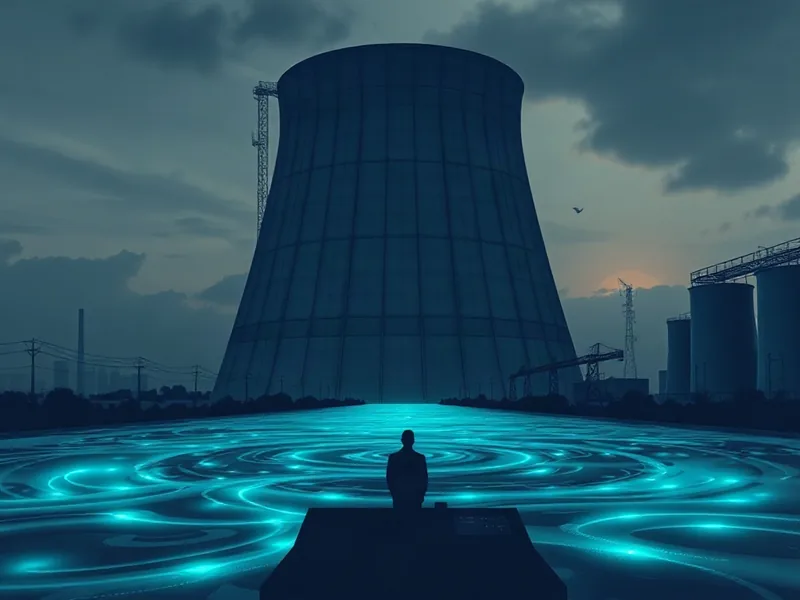
Duane Arnold sits at the smaller end of this trio. Refurbishment will add 14 megawatts to the facility's output, bringing total capacity to 615 megawatts. Modest in absolute terms, but the deal matters more for what it signals about federal appetite than for the megawatts themselves.
Supply of viable restart candidates is limited. Utility Dive's reporting suggests there may be one or two more plants worth considering, including San Onofre in California. Those facilities have been offline longer and would need considerably more capital and time to bring back into service. The three plants already in motion, Duane Arnold, Three Mile Island, and Clinton, represent what one report called the lowest hanging fruit in the U.S. nuclear fleet. Once those are spoken for, the next tier of projects gets materially harder to underwrite.
The federal loan structure deserves attention as a template, not just a funding event. Two loans, two tech-adjacent power deals, and a Deputy Secretary of Energy publicly framing nuclear restarts as a cost-reduction tool for consumers. Watch whether the DOE extends similar financing to a third or fourth project, since that would confirm this is durable policy rather than a pair of opportunistic transactions.
Rate impact disclosures are the next data point worth tracking. Danly's claim that the restart will lower electricity costs has no supporting detail in the public record so far. If NextEra or state regulators publish actual rate projections, that will either validate or undercut the political rationale for the loan.
Capacity allocation is another variable. Only 50 megawatts of Duane Arnold's eventual 615 megawatts goes to the local cooperative, with the rest presumably earmarked for Google's data center ambitions. That ratio, roughly 8% to the public grid, is a useful benchmark for evaluating whether future restart deals genuinely serve regional demand or function primarily as private power purchase agreements dressed in public-interest language.
Finally, keep an eye on the diminishing pipeline. With San Onofre and a small number of other candidates requiring far more capital to restore, the era of cheap nuclear restarts may be short-lived. Companies still shopping for firm, low-carbon power may need to pivot toward new-build small modular reactors or long-term power purchase agreements sooner than current timelines suggest, and that shift would carry a materially different cost and risk profile than reviving existing infrastructure.
Tags
Original Sources
Google’s revived nuclear power plant gets $1.9B loan from US government | TechCrunch
↗ https://techcrunch.com/2026/09/08/googles-revived-nuclear-power-plant-gets-1-9b-loan-from-us-government
About the author
Marcus began tracking AI's market implications in 2016, noticing AI-related patent filings accelerating ahead of earnings upgrades before most of the sell-side had caught on. A former fixed-income quantitative analyst, he spent two decades building models that priced risk across emerging markets before pivoting to cover the economic impact of AI full-time. His writing translates opaque technical developments into clear risk/reward terms — and he's rarely diplomatic about the gap between AI valuations and underlying fundamentals. He believes most market participants still underestimate AI's long-run deflationary effect on knowledge work.
More from The Analyst →This Week's Edition
9 September 2026
29 articles
Related Articles

How Climate Scientists Are Putting AI to Work, and Where It Still Falls Short
Environment & Climate · 6 min

What Alaska's Burning Forests Reveal About the Planet's Frozen Carbon Vault
Environment & Climate · 5 min

FDA Finalizes Guidance on Drug-Related Apps as Telehealth Outpaces Oversight
Policy & Regulation · 5 min
Related Articles
How Climate Scientists Are Putting AI to Work, and Where It Still Falls Short
Environment & Climate · 6 min
What Alaska's Burning Forests Reveal About the Planet's Frozen Carbon Vault
Environment & Climate · 5 min
FDA Finalizes Guidance on Drug-Related Apps as Telehealth Outpaces Oversight
Policy & Regulation · 5 min
More Stories
© 2026 Cedar & Bloom. All rights reserved.
