The Drum · Weekly AI news, freeSubscribe →

Share
Researchers unveil GeoMFormer, a groundbreaking Transformer-based system that adeptly balances flexibility and efficiency in geometric molecular representation, essential for precise quantum simulations.
In a recent paper, researchers from leading institutions have introduced GeoMFormer, a novel Transformer-based architecture designed to tackle the challenges of geometric molecular representation learning. This work is significant because it addresses the need for a flexible and efficient framework that can handle both invariant and equivariant properties in molecular systems, which are crucial for accurate quantum mechanical simulations.
Traditionally, deep learning models for molecular modeling have relied on heuristic and computationally expensive modules to enforce geometric constraints such as invariance (properties remain unchanged under transformations) and equivariance (properties change predictably under transformations). GeoMFormer introduces a more general and efficient approach by leveraging the Transformer architecture. This new model uses two separate streams within the Transformer framework to handle invariant and equivariant features, connected by carefully designed cross-attention mechanisms.
Dual Stream Architecture:
Cross-Attention Modules:
Flexibility:
Efficiency:
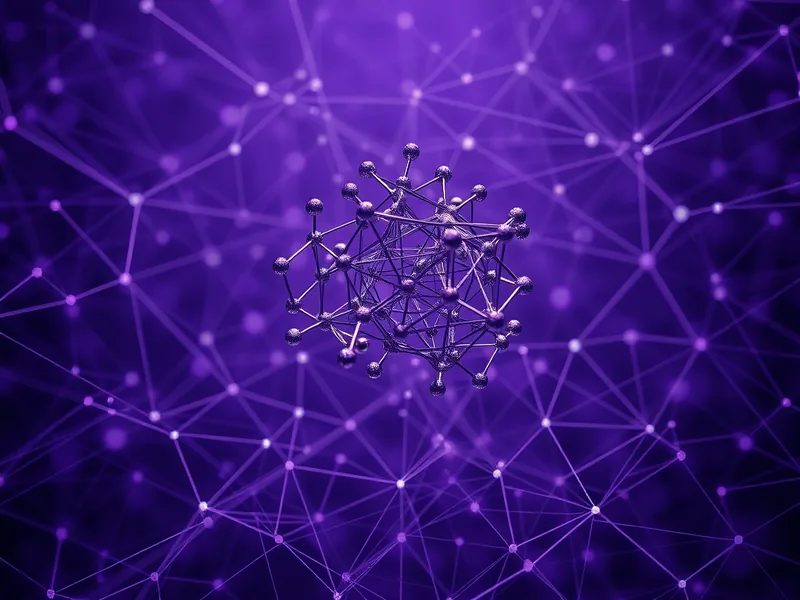
Architecture Overview:
Benchmarks:
The introduction of GeoMFormer opens up new avenues for research in geometric representation learning. Future work could explore the application of this framework to more complex systems, such as proteins and materials, and investigate further optimizations to improve computational efficiency.
GeoMFormer represents a significant step forward in the field of molecular modeling by providing a flexible and efficient framework for handling geometric constraints. Its dual stream architecture and cross-attention mechanisms make it a powerful tool for both researchers and practitioners. With its strong performance on a range of tasks, GeoMFormer is poised to become a key component in the toolkit of those working in quantum mechanics and related fields.
Tags
Original Sources
About the author
Kai built ML infrastructure at a Bay Area startup before developing an obsession with transformer architectures and inference optimisation that eventually pulled him out of product work entirely. A stint at a compute research lab sharpened his instinct for what actually matters in a model release versus what is marketing. He writes from the inside — from the perspective of someone who has debugged the systems he is describing at three in the morning. He is allergic to hype and instinctively drawn to the unglamorous plumbing questions that everyone else skips over.
More from The Engineer →This Week's Edition
26 June 2024
29 articles
Related Articles

Wharton's Fourth Annual AI Survey: Most Companies See Returns, Few See Big Ones
Models & Research · 6 min
Tensormesh Launches Enterprise KV Cache Platform to Cut Redundant LLM Compute
Models & Research · 6 min

Iambic Therapeutics Raises $150 Million in IPO to Fund AI-Designed Cancer Drugs
Finance & Markets · 5 min
Related Articles
Wharton's Fourth Annual AI Survey: Most Companies See Returns, Few See Big Ones
Models & Research · 6 min
Tensormesh Launches Enterprise KV Cache Platform to Cut Redundant LLM Compute
Models & Research · 6 min
Iambic Therapeutics Raises $150 Million in IPO to Fund AI-Designed Cancer Drugs
Finance & Markets · 5 min
More Stories
© 2026 Cedar & Bloom. All rights reserved.
