The Drum · Weekly AI news, freeSubscribe →
Share
An anonymous detection claim upended a prizewinning migration novel and its author's reputation. The case shows how fragile trust in creative work has become, and how unevenly AI accusations can be tested.
A novel about survival has become a test case for something else entirely: how easily a writer's credibility can unravel in the age of AI suspicion.
Thelyson Orelien, the Haitian-Canadian author behind the bestselling novel "C'etait Ca ou Mourir" ("It Was Either That or Die"), spent Tuesday pushing back against claims that his book was generated by artificial intelligence. He did not deny everything, though. In a letter sent to Reuters and other outlets through his French publisher Grasset, he admitted to plagiarizing passages in two much earlier works, a 2012 short story and a 2013 opinion piece, while insisting his novel was entirely his own.
The distinction matters. Plagiarism is an old, well-understood transgression: copying someone else's words and passing them off as yours. AI-generated text is a newer and murkier accusation, one that hinges on detection tools whose reliability is still hotly contested among researchers. Orelien is now caught between admitting to the first and fighting the second, and the two accusations have become tangled in public perception even though they describe very different kinds of wrongdoing.
The controversy traces back to September, when a little-known X account called "Balance ton Claude" claimed an AI detection tool showed the novel was written "almost entirely" by AI. French essayist Samuel Fitoussi later said he helped run the account along with unnamed others. Shortly after, Canadian newspaper La Presse reported that a 2012 short story by Orelien lifted passages from a book by French author Louis Pauwels, and that a 2013 opinion piece copied from the Philippine Star. One claim came from an anonymous social media account using unspecified software. The other came from a newspaper investigation with named sources and side-by-side text comparisons. Only one of those two claims has been independently substantiated.
Orelien's novel tells the story of a Haitian migrant's journey north through Latin America before reaching Canada. It is his debut, and it had been racking up literary honors before the accusations hit, with translations into multiple languages reportedly in the works. That momentum stalled fast. The organizers of France's prestigious Goncourt prize removed the book from their longlist after the AI allegations surfaced, a decision made before any formal verification process had run its course.
Here is the uncomfortable truth at the center of this story: there is no reliable, universally accepted way to prove a piece of writing was generated by AI after the fact.
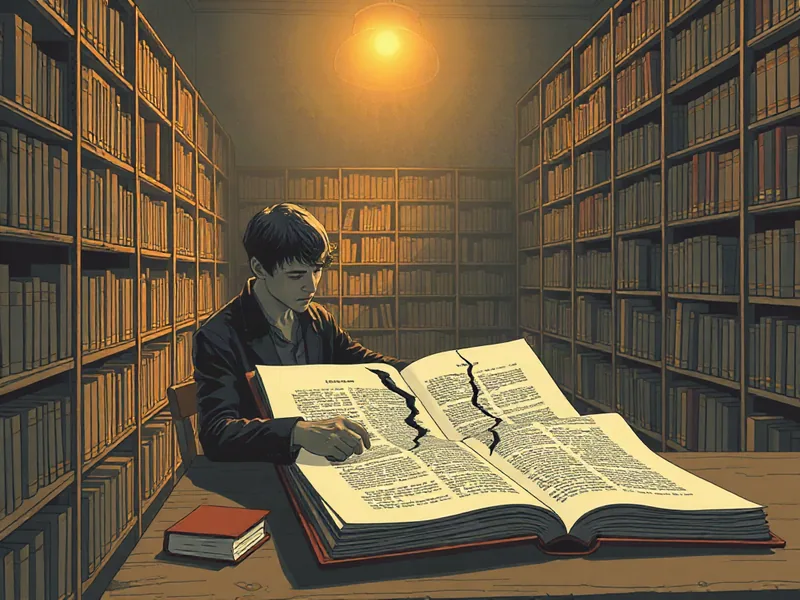
Detection tools work by looking for statistical patterns, things like predictable word choices or unusually even sentence rhythm, that tend to show up more often in machine-generated text. Think of it like trying to tell a factory-made chair from a handmade one just by looking at the finish. Sometimes the signs are obvious. Often they are not, and skilled human writing can trigger false positives just as easily as polished AI output can slip past undetected. Researchers studying these tools have repeatedly found their error rates too high for confident, high-stakes conclusions, especially with non-native English or French prose, translated text, or heavily edited drafts.
That uncertainty did not slow things down here. An anonymous account made a claim, named an unverified tool, and within weeks a major literary prize had acted. Orelien described the fallout in stark terms, saying he faced "threats, media lynching, and racist harassment" for weeks, and that criticism is fair but what he experienced went well beyond that line. He wants the novel, he said, to be judged "for what it is."
His defense of the book itself was personal and pointed. "This novel, I wrote it myself," he wrote. "It comes from my wounds and those of other migrants. That wound of exile, from which one never heals. This novel is its fruit; it is the fruit of my labor; it is my creation." He called the earlier plagiarism "unacceptable mistakes," stopping short of excusing them but separating them clearly from the authorship of his current novel.
The episode has pulled in questions well beyond one book. French commentators and writers have debated whether race played a role in how quickly and aggressively the accusations spread, given that Orelien is a Black migrant author writing about migration. Literary ethics, creative authenticity, and the growing anxiety around AI's encroachment into human expression have all collided in a single, messy public dispute, and the French literary establishment has been visibly rattled by it.
This case is not really about one author or one novel. It is a preview of a problem that is going to keep recurring: as AI writing tools become more common, the tools meant to catch them remain unreliable, and the social cost of a false or unproven accusation can be severe and immediate. A prize committee pulled a book from consideration based on an anonymous claim using unnamed software, not a peer-reviewed finding or a transparent methodology.
That speed is the real risk here. Institutions, from publishers to prize juries to newsrooms, are being forced to make fast judgment calls about authenticity without dependable forensic tools to back them up. In the meantime, real people absorb the damage: careers, reputations, and in this case, a story about migration and survival that Orelien says belongs to him and to the migrants whose experiences shaped it. Whatever the final judgment on his book turns out to be, the industry needs clearer standards, and quickly, before the next writer finds themselves in the same impossible position.
Tags
Original Sources
Haitian-Canadian author Thelyson Orelien denies use of AI, but admits past plagiarism
↗ https://www.reuters.com/world/haitian-canadian-author-thelyson-orelien-denies-use-ai-admits-past-plagiarism-2026-10-13
About the author
Amara's entry point into AI was an epidemiology role at a London research hospital, where she spent five years studying how digital health tools reached — or conspicuously failed to reach — underserved communities. Watching early algorithmic systems in healthcare quietly entrench existing inequalities, she redirected her career toward the systemic consequences of AI at scale. She covers AI through an unflinching lens: who benefits, who bears the cost, and what evidence actually says versus what the press release claims. Her writing is calm and precise, but she doesn't mistake balance for neutrality.
More from The Steward →This Week's Edition
14 October 2026
23 articles
Related Articles
Related Articles
More Stories
© 2026 Cedar & Bloom. All rights reserved.