The Drum · Weekly AI news, freeSubscribe →

Share
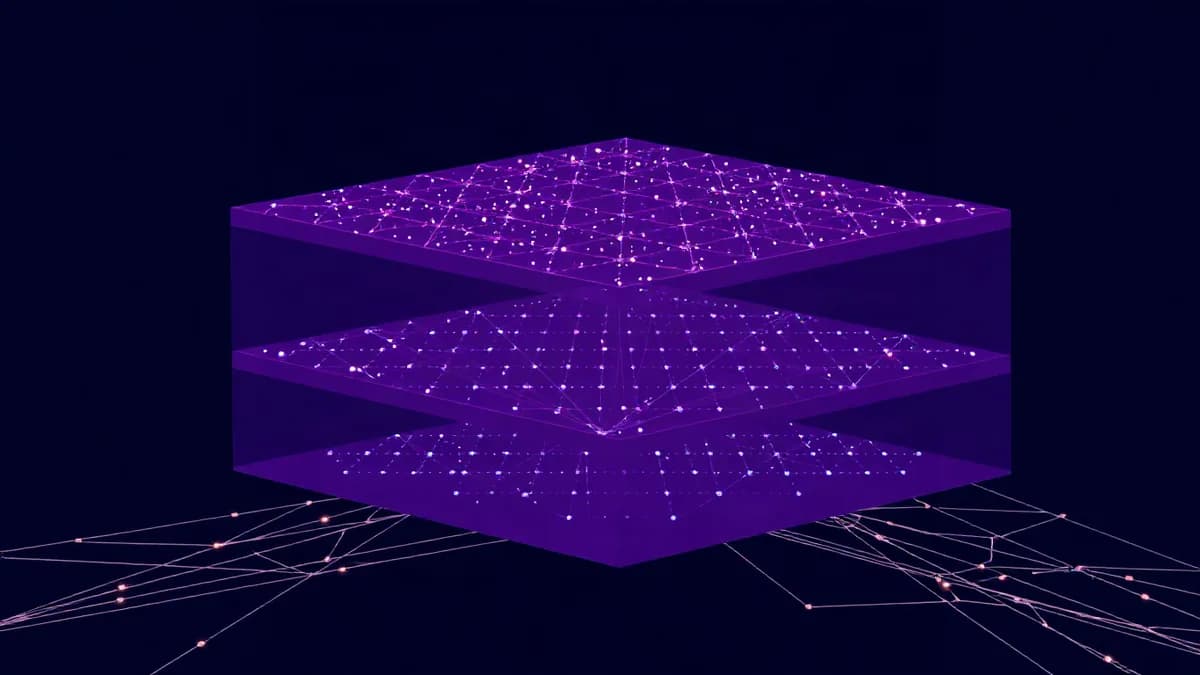
Hugging Face's BitNet slashes model precision to just 1.58 bits, dramatically cutting memory and energy use without sacrificing too much accuracy, making extreme quantization more accessible for LLMs.
As Large Language Models (LLMs) continue to grow in size and complexity, the challenge of reducing their computational and energy costs has become increasingly pressing. One effective approach is quantization, which involves reducing the precision of model parameters from standard formats like FP16 or FP32 to lower-bit formats such as 8-bit or 4-bit. While this can significantly cut memory usage and speed up computation, it often comes at the cost of accuracy.
Recently, Hugging Face introduced BitNet, a novel architecture that represents each parameter with only three values: (-1, 0, 1). This extreme quantization results in just 1.58 bits per parameter (log2(3)). However, BitNet requires training the model from scratch, which is not always feasible due to resource constraints. To address this limitation, Hugging Face has developed techniques to fine-tune existing models to achieve similar performance with 1.58-bit quantization.
BitNet is a specialized transformers architecture designed for extreme quantization. Each parameter in the model can take on one of three values: (-1, 0, 1). This approach significantly reduces the memory footprint and computational requirements while maintaining or even improving performance. The key benefits include:
However, BitNet's effectiveness comes with a catch: it requires training from scratch, which can be prohibitively expensive in terms of both time and computational resources. This is where fine-tuning existing models becomes crucial.
Hugging Face conducted extensive experiments to evaluate the performance of BitNet when pre-trained from scratch. The results were impressive:

To make extreme quantization more accessible, Hugging Face explored techniques to fine-tune existing models to achieve similar performance with 1.58-bit quantization. The key steps include:
(-1, 0, 1) values.(-1, 0, 1) format after training.To support these techniques, Hugging Face developed specialized kernels optimized for 1.58-bit operations. These kernels are designed to handle the unique challenges of extreme quantization, such as:
(-1, 0, 1) values.The benchmarks show significant improvements:
Extreme quantization to 1.58 bits using BitNet and fine-tuning techniques offers a promising solution to the challenges of deploying large language models on resource
Tags
Original Sources
About the author
Kai built ML infrastructure at a Bay Area startup before developing an obsession with transformer architectures and inference optimisation that eventually pulled him out of product work entirely. A stint at a compute research lab sharpened his instinct for what actually matters in a model release versus what is marketing. He writes from the inside — from the perspective of someone who has debugged the systems he is describing at three in the morning. He is allergic to hype and instinctively drawn to the unglamorous plumbing questions that everyone else skips over.
More from The Engineer →This Week's Edition
19 September 2024
29 articles
Related Articles

Wharton's Fourth Annual AI Survey: Most Companies See Returns, Few See Big Ones
Models & Research · 6 min
Tensormesh Launches Enterprise KV Cache Platform to Cut Redundant LLM Compute
Models & Research · 6 min

Iambic Therapeutics Raises $150 Million in IPO to Fund AI-Designed Cancer Drugs
Finance & Markets · 5 min
Related Articles
Wharton's Fourth Annual AI Survey: Most Companies See Returns, Few See Big Ones
Models & Research · 6 min
Tensormesh Launches Enterprise KV Cache Platform to Cut Redundant LLM Compute
Models & Research · 6 min
Iambic Therapeutics Raises $150 Million in IPO to Fund AI-Designed Cancer Drugs
Finance & Markets · 5 min
More Stories
© 2026 Cedar & Bloom. All rights reserved.
