The Drum · Weekly AI news, freeSubscribe →

Share
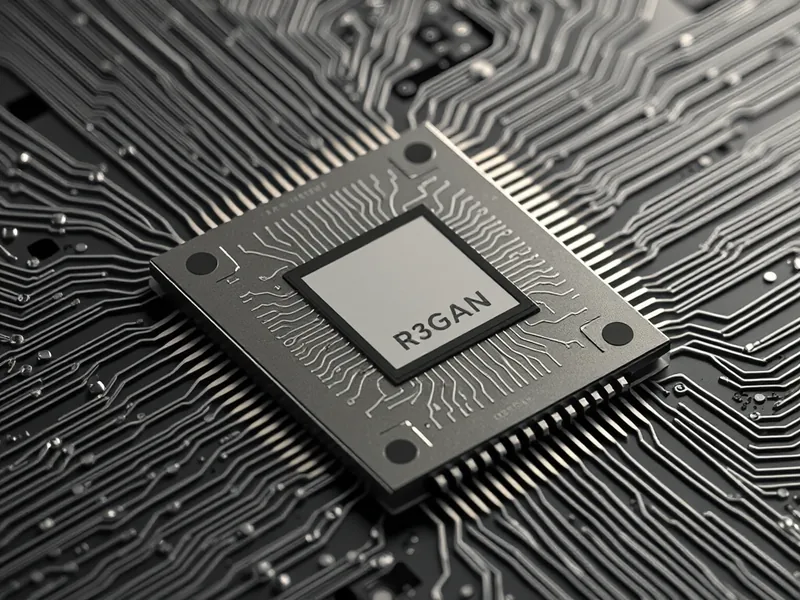
Researchers unveil R3GAN, a new baseline for Generative Adversarial Networks that simplifies training and boosts performance, challenging the notion that GANs are inherently complex to work with.
In a recent paper titled "The GAN is dead; long live the GAN! A Modern GAN Baseline," researchers Yiwen Huang, Aaron Gokaslan, Volodymyr Kuleshov, and James Tompkin challenge the common perception that Generative Adversarial Networks (GANs) are inherently difficult to train. They introduce a new baseline model, R3GAN, which simplifies and modernizes GAN training while achieving state-of-the-art performance on several benchmarks.
Regularized Relativistic GAN Loss:
Simplification of Training Tricks:
Modern Architectures:
Loss Function Derivation:
Convergence Guarantees:
Implementation Notes:
The introduction of R3GAN marks a significant step forward in GAN research. By simplifying the training process and leveraging modern architectures, the authors have created a robust baseline that outperforms existing models on multiple benchmarks. This work not only challenges the notion that GANs are difficult to train but also provides a clear path for practitioners to achieve state-of-the
Tags
Original Sources
About the author
Kai built ML infrastructure at a Bay Area startup before developing an obsession with transformer architectures and inference optimisation that eventually pulled him out of product work entirely. A stint at a compute research lab sharpened his instinct for what actually matters in a model release versus what is marketing. He writes from the inside — from the perspective of someone who has debugged the systems he is describing at three in the morning. He is allergic to hype and instinctively drawn to the unglamorous plumbing questions that everyone else skips over.
More from The Engineer →This Week's Edition
14 January 2025
29 articles
Related Articles

Wharton's Fourth Annual AI Survey: Most Companies See Returns, Few See Big Ones
Models & Research · 6 min
Tensormesh Launches Enterprise KV Cache Platform to Cut Redundant LLM Compute
Models & Research · 6 min

Iambic Therapeutics Raises $150 Million in IPO to Fund AI-Designed Cancer Drugs
Finance & Markets · 5 min
Related Articles
Wharton's Fourth Annual AI Survey: Most Companies See Returns, Few See Big Ones
Models & Research · 6 min
Tensormesh Launches Enterprise KV Cache Platform to Cut Redundant LLM Compute
Models & Research · 6 min
Iambic Therapeutics Raises $150 Million in IPO to Fund AI-Designed Cancer Drugs
Finance & Markets · 5 min
More Stories
© 2026 Cedar & Bloom. All rights reserved.
