The Drum · Weekly AI news, freeSubscribe →
Share
Cosite isolation, the electromagnetic clash between antennas crammed onto the same aircraft or ship, has long forced engineers to build first and troubleshoot later. New computational methods promise to flip that order, and the implications for design cycles are significant.
If you've ever worked near RF systems, you know the pain of "cosite interference": put enough antennas on one platform (a jet, a ship, a vehicle bristling with sensors) and they start talking over each other. Signals leak, couple, and degrade in ways that are miserable to diagnose after the hardware already exists. The traditional fix has been expensive and slow: build a prototype, measure the coupling, redesign, repeat.
The underlying source material here comes from a Wiley/IEEE Spectrum resource on predicting antenna coupling on electrically large platforms, and while the page itself is mostly a gated registration wall, the topic it points to is one that a lot of RF and systems engineers care about deeply: how do you model cosite isolation accurately enough to trust the numbers before you've cut any metal?
That question matters because "electrically large" platforms are a genuinely hard computational problem. When a structure is many wavelengths across, which describes most aircraft, ships, and ground vehicles at typical RF and microwave bands, full-wave electromagnetic solvers start choking on mesh size and matrix complexity. You either simplify the model and lose accuracy, or you keep the fidelity and wait days for a simulation to converge. Neither option is great when you're trying to iterate on antenna placement during a design review.
Cosite isolation, in plain terms, is a measure of how well two antennas on the same platform avoid interfering with each other. Low isolation means high coupling, which means one system's transmitter can desensitize or jam another system's receiver sitting a few meters away. On a modern platform with radar, comms, EW (electronic warfare), and navigation antennas all sharing real estate, that's not a hypothetical edge case. It's the default condition engineers have to design around.
The prediction challenge breaks down into a few distinct pain points:
Efficient and accurate prediction, which is the framing this research area uses, means finding algorithms that trade off compute cost against fidelity without quietly sacrificing accuracy in the process. That's a nontrivial balance. Hybrid methods that combine asymptotic techniques (fast but approximate) with full-wave solvers (slow but precise) for the antenna near-field region are one common approach. Others lean on domain decomposition, splitting the platform into manageable chunks and stitching the fields back together.
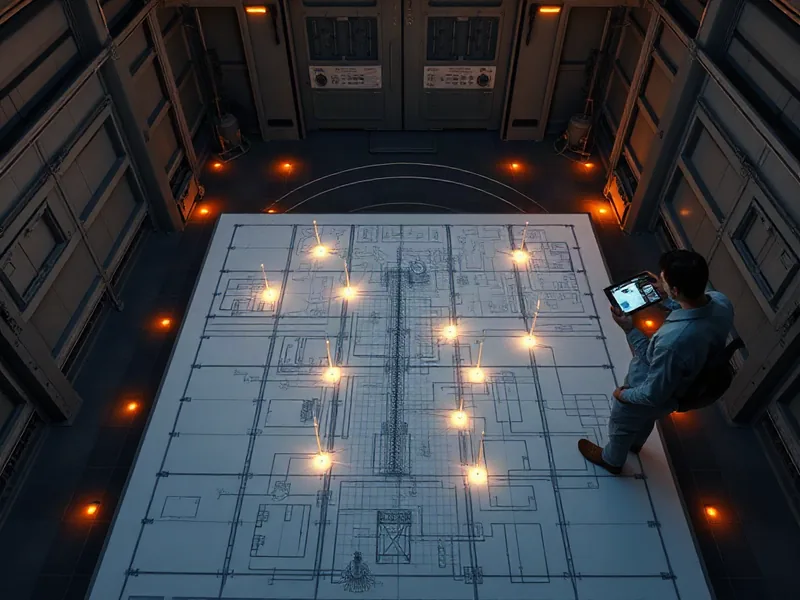
The practical payoff, if these prediction methods hold up, is a shift in when engineers catch interference problems. Right now, a lot of cosite isolation issues get discovered during integration testing, which is about the most expensive and schedule-damaging place to find them. A bad coupling result at that stage can mean re-routing cables, adding filters, relocating antennas, or in the worst case, redesigning structural elements.
Push that discovery earlier, into the CAD and simulation phase, and you change the economics entirely. Engineers can run "what-if" antenna placement scenarios computationally, compare isolation predictions across configurations, and only commit to hardware once the numbers look acceptable. That's the same logic that's driven decades of investment in computational fluid dynamics for aerodynamics and finite element analysis for structural loads: simulate first, build second, validate last.
For defense and aerospace programs specifically, where platforms often carry a dozen or more RF systems and program timelines are measured in years, even modest improvements in prediction accuracy or simulation speed translate into real schedule and cost savings. It's the kind of unglamorous infrastructure work that doesn't make headlines but quietly de-risks entire programs.
There's also a signal processing angle worth flagging. Isolation predictions feed into decisions about filtering, timing (for time-division approaches that keep transmitters and receivers from operating simultaneously), and physical layout, all of which are cheaper to adjust in software or early design than after fabrication. Getting the electromagnetic model right upstream makes every downstream engineering decision more reliable.
None of this eliminates the need for physical testing. Measured validation still matters, especially for edge cases the models don't capture well, like multipath reflections off nearby structures or nonlinear effects in high-power transmit chains. But the goal isn't to replace testing entirely. It's to make sure that when you finally do build hardware, you're testing a design that's already been through several rounds of computational scrutiny, rather than discovering fundamental placement problems for the first time on a test range.
Cosite isolation prediction on electrically large platforms remains a genuinely hard computational problem, but the direction of travel is clear: hybrid simulation methods that balance speed and fidelity are pushing interference discovery earlier into the design process. For engineers working on multi-antenna platforms, whether aerospace, defense, or dense IoT deployments, the underlying lesson generalizes well beyond this specific domain. Catching electromagnetic coupling problems in simulation, before hardware exists, is consistently cheaper than catching them in integration testing. The tooling to do that reliably at scale is still maturing, but the economic case for investing in it is already obvious.
Tags
Original Sources
Efficient and Accurate Prediction of Cosite Isolation on Large Platforms - Wiley Science and Engineering Content Hub
↗ https://spectrum.ieee.org/predict-antenna-coupling-on-electrically-largeplatforms-before-building-hardware
About the author
Kai built ML infrastructure at a Bay Area startup before developing an obsession with transformer architectures and inference optimisation that eventually pulled him out of product work entirely. A stint at a compute research lab sharpened his instinct for what actually matters in a model release versus what is marketing. He writes from the inside — from the perspective of someone who has debugged the systems he is describing at three in the morning. He is allergic to hype and instinctively drawn to the unglamorous plumbing questions that everyone else skips over.
More from The Engineer →This Week's Edition
3 September 2026
29 articles
Related Articles
Wharton's Fourth Annual AI Survey: Most Companies See Returns, Few See Big Ones
Models & Research · 6 min
Tensormesh Launches Enterprise KV Cache Platform to Cut Redundant LLM Compute
Models & Research · 6 min

Iambic Therapeutics Raises $150 Million in IPO to Fund AI-Designed Cancer Drugs
Finance & Markets · 5 min
Related Articles
Wharton's Fourth Annual AI Survey: Most Companies See Returns, Few See Big Ones
Models & Research · 6 min
Tensormesh Launches Enterprise KV Cache Platform to Cut Redundant LLM Compute
Models & Research · 6 min
Iambic Therapeutics Raises $150 Million in IPO to Fund AI-Designed Cancer Drugs
Finance & Markets · 5 min
More Stories
© 2026 Cedar & Bloom. All rights reserved.
