The Drum · Weekly AI news, freeSubscribe →

Share
Researchers introduce PatchScaler, a novel diffusion model that slashes computational costs without compromising image quality, making high-resolution imaging more accessible and efficient.
Diffusion models have become a cornerstone in generating high-quality super-resolved images, thanks to their impressive content generation capabilities. However, the computational costs associated with these models remain a significant barrier to widespread adoption. Recent efforts have focused on inference acceleration by reducing the number of sampling steps, but this alone hasn't been enough to make diffusion models practical for real-world applications.
In a recent paper titled "PatchScaler: An Efficient Patch-independent Diffusion Model for Super-Resolution," researchers from various institutions introduce a novel approach that addresses these efficiency issues. The key innovation is a patch-adaptive group sampling (PGS) method, which dynamically assigns different sampling configurations based on the difficulty of reconstructing each image patch. This results in faster inference times without compromising on the quality of the super-resolved images.
Patch-Adaptive Group Sampling (PGS):
Texture Prompt for Enhanced Denoising:
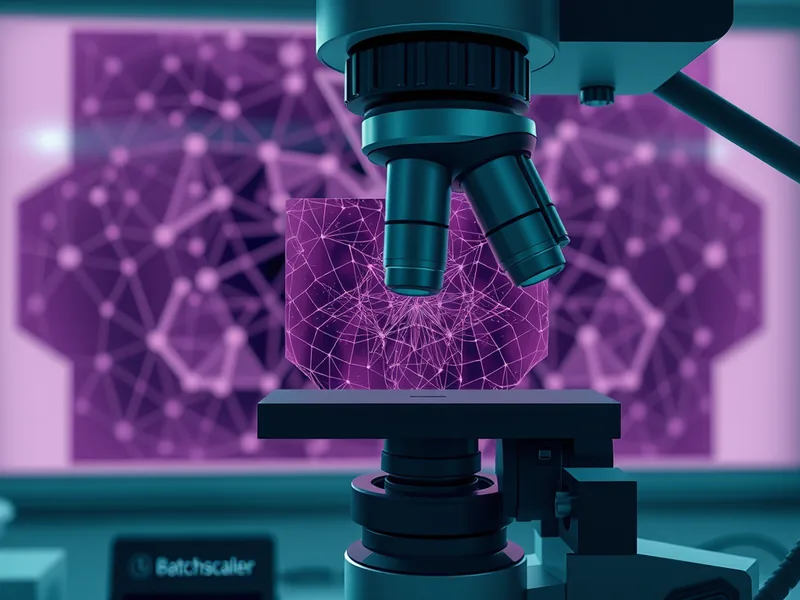
Architecture Overview:
Benchmarks:
PatchScaler represents a significant step forward in the field of super-resolution by addressing the computational efficiency challenges faced by diffusion models. By leveraging patch-adaptive group sampling and texture prompting, the model achieves both high-quality results and fast inference times. This makes it a promising solution for practical applications where performance and speed are critical.
For those interested in diving deeper, the code and pre-trained models are available on GitHub.
Tags
Original Sources
About the author
Kai built ML infrastructure at a Bay Area startup before developing an obsession with transformer architectures and inference optimisation that eventually pulled him out of product work entirely. A stint at a compute research lab sharpened his instinct for what actually matters in a model release versus what is marketing. He writes from the inside — from the perspective of someone who has debugged the systems he is describing at three in the morning. He is allergic to hype and instinctively drawn to the unglamorous plumbing questions that everyone else skips over.
More from The Engineer →This Week's Edition
30 May 2024
29 articles
Related Articles

Wharton's Fourth Annual AI Survey: Most Companies See Returns, Few See Big Ones
Models & Research · 6 min
Tensormesh Launches Enterprise KV Cache Platform to Cut Redundant LLM Compute
Models & Research · 6 min

Iambic Therapeutics Raises $150 Million in IPO to Fund AI-Designed Cancer Drugs
Finance & Markets · 5 min
Related Articles
Wharton's Fourth Annual AI Survey: Most Companies See Returns, Few See Big Ones
Models & Research · 6 min
Tensormesh Launches Enterprise KV Cache Platform to Cut Redundant LLM Compute
Models & Research · 6 min
Iambic Therapeutics Raises $150 Million in IPO to Fund AI-Designed Cancer Drugs
Finance & Markets · 5 min
More Stories
© 2026 Cedar & Bloom. All rights reserved.
