The Drum · Weekly AI news, freeSubscribe →

Share
Fresh federal dollars will flow into schools, recovery centers and first responder programs nationwide. The question is whether this latest round of grants can outlast shifting political priorities and reach the people who need it most.
For a parent watching a teenager struggle with addiction, or a first responder who's revived the same overdose patient twice in a month, federal funding announcements can feel abstract. But the money behind them determines whether a rural clinic can hire a counselor, whether a school has someone trained to spot a mental health crisis before it becomes a tragedy, or whether a family gets trauma care after surviving something unspeakable.
That's the real-world weight behind the latest announcement from the Department of Health and Human Services. On Friday, HHS awarded nearly $250 million in grants aimed at expanding access to mental health services and addiction treatment across the country. The funds, totaling $247.9 million, were distributed through the agency's Substance Abuse and Mental Health Services Administration, known as SAMHSA.
Think of SAMHSA as the federal government's distribution hub for behavioral health funding. It doesn't run programs directly in most cases. Instead, it sends money to states, tribes, universities and community organizations that do the hands-on work of treating addiction and supporting mental health.
The largest chunk of funding, $69.4 million, goes to Medication-Assisted Treatment for Prescription Drug and Opioid Addiction. This approach combines medications like buprenorphine or methadone with counseling, a strategy widely considered the gold standard for opioid use disorder because it reduces cravings while addressing the behavioral side of addiction.
Project AWARE received the second-largest award, at $54.9 million. The program focuses on mental health support in schools, training staff to recognize warning signs and connecting students to care before problems escalate. Given how often conversations about youth mental health circle back to what happens inside classrooms, this is one of the more consequential line items on the list.
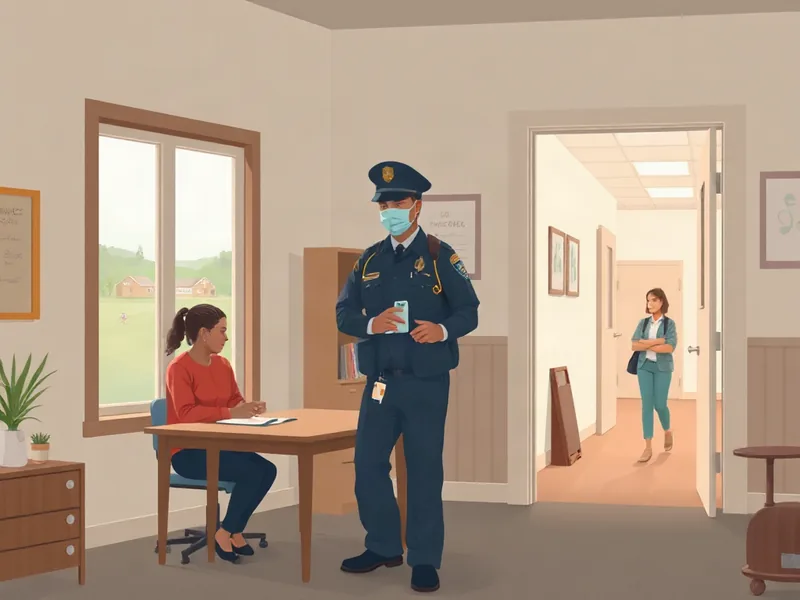
The National Child Traumatic Stress Initiative's Category III Community Treatment and Service Centers received $41.8 million. These centers expand trauma treatment for children and families, a category of care that often gets overlooked in broader addiction policy discussions but matters enormously for breaking cycles of harm. First Responders funding under the Comprehensive Addiction and Recovery Act brought in $34.6 million, supporting the police officers, paramedics and firefighters who are frequently the first to encounter someone in the throes of an overdose.
Several smaller but still significant awards round out the package. Mental Health Awareness Training Grants received $22 million. Treatment, Recovery and Workforce Support got $10.1 million, money that helps address a chronic shortage of trained addiction counselors. The Garrett Lee Smith Campus Suicide Prevention program received $8.7 million, aimed specifically at college students. Comprehensive Opioid Recovery Centers got $3.3 million, while the Consumer and Consumer Support Technical Assistance Center received $1.7 million. The Recovery Community Services Program rounded things out with $1.4 million.
SAMHSA Principal Deputy Assistant Secretary Christopher Carroll framed the funding in terms of timing. "With more tools and resources, communities can better connect people to care when they need it and support them on the path to recovery," he said in a statement, adding that the goal is to help communities "reach people at critical moments." That phrase matters. Addiction and mental health crises rarely announce themselves on a convenient schedule, and the gap between someone deciding they need help and actually getting it can be measured in hours, not weeks.
This is not a one-off infusion of cash. It's part of a pattern of behavioral health spending from HHS that's unfolded over several months. In early September, the agency awarded $383.4 million in behavioral health grants, with $252 million of that supporting the 988 Suicide and Crisis Lifeline along with suicide prevention and mobile crisis services. In August, HHS announced $77 million for substance abuse treatment and prevention, plus another $96.7 million for broader behavioral health services. Back in June, HHS Secretary Robert F. Kennedy Jr. publicized more than $700 million in newly opened funding opportunities tied to mental illness, addiction and homelessness.
Taken together, these announcements suggest a sustained federal push rather than a single symbolic gesture. Whether that sustained attention translates into sustained impact depends heavily on how efficiently the money reaches local providers and how long the funding commitments last.
Kennedy tied the latest grants to a broader initiative he's calling the Great American Recovery. "HHS is investing nearly $250 million to put lifesaving treatment and recovery services directly into communities across America," he said in a statement. He described the funding as a way of "expanding addiction treatment, preventing fatal overdoses, helping children and families heal from trauma, and giving Americans in recovery the support they need to rebuild their lives." His statement framed the effort as equipping communities with "proven tools that save lives and help people recover."
The opioid crisis has not gone away just because headlines about it have become less frequent. Overdose remains one of the leading causes of preventable death in the United States, and the ripple effects extend into schools, emergency rooms, courtrooms and families who are left to pick up the pieces. Funding for medication-assisted treatment, trauma care and first responder support addresses different points along that chain of harm, from prevention to crisis response to long-term recovery.
What's worth watching is durability. Grant cycles come and go, and community organizations often struggle with the uncertainty of year-to-year federal funding rather than stable, multi-year commitments. A clinic that hires staff based on a 12-month grant faces real risk if that money doesn't get renewed. The people these programs serve, often in the middle of the hardest fight of their lives, need consistency more than they need announcements. Whether this latest round of funding becomes part of a lasting infrastructure or simply another line in a long list of press releases will say a great deal about the country's actual commitment to treating addiction as the public health crisis it remains.
Tags
Original Sources
HHS awards nearly $250M in addiction treatment, overdose prevention grants
↗ https://www.fiercehealthcare.com/regulatory/hhs-awards-nearly-250m-addiction-treatment-overdose-prevention-grants
About the author
Amara's entry point into AI was an epidemiology role at a London research hospital, where she spent five years studying how digital health tools reached — or conspicuously failed to reach — underserved communities. Watching early algorithmic systems in healthcare quietly entrench existing inequalities, she redirected her career toward the systemic consequences of AI at scale. She covers AI through an unflinching lens: who benefits, who bears the cost, and what evidence actually says versus what the press release claims. Her writing is calm and precise, but she doesn't mistake balance for neutrality.
More from The Steward →This Week's Edition
2 October 2026
28 articles
Related Articles

Blue Shield of California Signals Commercial Expansion of Medicare's ACCESS Chronic Care Model
Health & Science · 5 min

UVM Wins $38 Million to Build AI Digital Twins for ICU Patients
Health & Science · 6 min

Payerset Bets on AI Research Assistant to Make Price Transparency Data Usable
Products & Applications · 6 min
Related Articles
Blue Shield of California Signals Commercial Expansion of Medicare's ACCESS Chronic Care Model
Health & Science · 5 min
UVM Wins $38 Million to Build AI Digital Twins for ICU Patients
Health & Science · 6 min
Payerset Bets on AI Research Assistant to Make Price Transparency Data Usable
Products & Applications · 6 min
More Stories
© 2026 Cedar & Bloom. All rights reserved.
