The Drum · Weekly AI news, freeSubscribe →

Share
A Kentucky health system's two-year-old virtual nursing program has logged 30,000 patient interactions, freeing bedside nurses from routine paperwork and proving that remote support can ease, not replace, hands-on care.
Ask any bedside nurse what they wish they had more of, and the answer is almost always the same: time. Not time to slack off, but time to sit with a frightened patient, explain a diagnosis slowly enough that it actually sinks in, or simply notice that something seems off before it becomes an emergency. That kind of time has been disappearing for years, squeezed out by documentation requirements, staffing shortages and the sheer volume of tasks packed into a single shift.
Owensboro Health, a hospital system in Kentucky, set out to claw some of that time back. In 2024, it launched a virtual nursing program that pairs bedside nurses with remote colleagues who handle many of the administrative and communication tasks that eat into patient-facing hours. Two years in, the results are measurable: more than 30,000 patient interactions, over 3,600 admissions supported, more than 2,000 discharges assisted, roughly 5,800 medication co-verifications completed, and more than 1,700 hours returned to bedside nursing teams.
Those numbers tell a story that will sound familiar to anyone who has spent time in a hospital, either as a patient or as staff. Admissions and discharges are notoriously time-intensive. An admission means asking detailed questions, reviewing a patient's history, reconciling medications and making sure the person actually understands what's happening to them. A discharge requires equally careful communication so patients and families know what comes next before they walk out the door. None of that can be rushed. But the bedside nurse handling it still has other patients waiting.
"There are so many things happening during a shift across admissions, discharges, medication questions, calls to physicians, calls to families and documentation, and all of those things matter," said Carin Kelly, RN, a virtual nurse at Owensboro Health. "But they can also take time away from building rapport and trust with the patient in front of you."
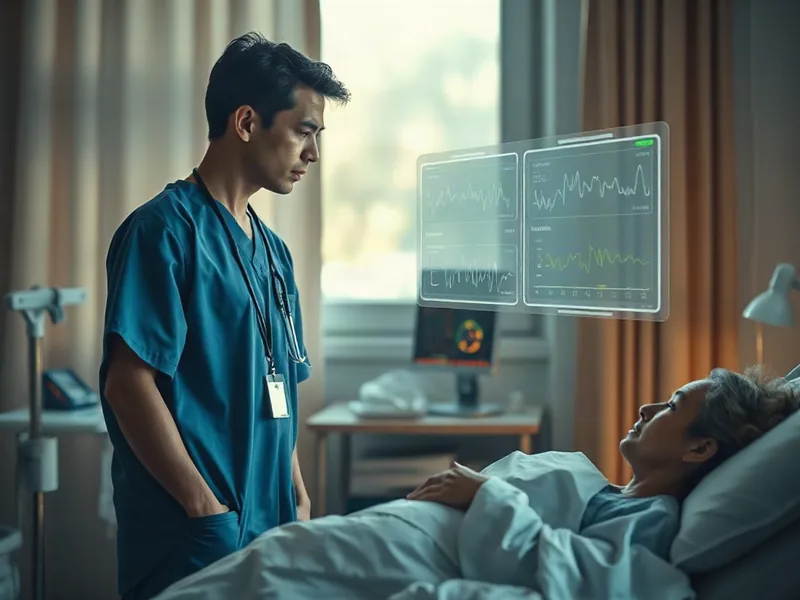
Think of the virtual nursing role less like a replacement for bedside care and more like a second set of hands working through a secure screen. When a patient arrives on the floor, the virtual nurse may be one of the first people they interact with, especially if the bedside nurse is tied up elsewhere. The virtual nurse greets the patient, answers lingering questions from the emergency room or a referring physician's office, and starts gathering the information the care team needs.
Much of that work centers on the same pressure points Kelly described: admissions, discharges and medication reconciliation. Virtual nurses ask admission questions, review home medications, call family members, phone a pharmacy or reach out to a nursing facility for history, orientation status or mobility details. It's detailed, time-consuming work, and offloading it from the bedside nurse means that nurse can stay in the room, focused on the person actually in front of them.
Communication between the two roles runs through secure messaging built into the electronic health record. If a virtual nurse needs an order changed or information confirmed, they reach out through that channel to the bedside nurse or physician. Once they've gathered what's needed, they send a written summary the same way. If the bedside nurse has follow-up questions, she can message back, or the two can simply talk by phone. It's a workflow, not a gimmick, built to mirror how the hospital's teams already operate rather than forcing them to adapt to new tools.
Optum, the health-services arm of UnitedHealth Group, helped Owensboro Health design and implement that workflow, mapping out how virtual nursing could integrate into existing care processes as the program scaled. But Kelly was careful to draw a distinction that matters: the care itself stayed with Owensboro Health's own team. "The virtual nurses are Owensboro Health nurses, and the program was built around how our teams actually work at the bedside," she said.
Adoption has grown steadily since launch. "In the beginning, we might only get one or two requests for assistance during a shift," Kelly recalled. "Now we get calls all the time, across multiple units and hospitals, because the bedside nurses know we are there to help." That kind of organic uptake, driven by staff who found the support useful rather than mandated from above, is often a better predictor of a program's staying power than any pilot study.
Owensboro Health isn't alone in reporting these kinds of gains. Johns Hopkins has described its own virtual nursing initiative as delivering "sustainable value," while health systems like MUSC and Hackensack Meridian Health have reported improvements in both nurse satisfaction and patient experience from similar programs. Taken together, these examples suggest virtual nursing is moving from experimental pilot to a genuine operational strategy for hospitals trying to stretch limited nursing capacity without stretching their staff too thin.
The 1,700 hours figure is the headline number, but it's worth sitting with what it actually represents. Each hour returned to a bedside nurse is an hour that didn't go toward tracking down a medication list or calling a family member. It went toward assessing a patient, administering medication safely, answering a worried question, or simply being present.
"The value is not just the number itself," Kelly said. "It is what that time means for the patient and more time for the bedside nurse to provide care, answer questions, talk with families and make sure patients feel heard."
Nursing shortages aren't going away soon, and burnout remains a stubborn problem across hospital systems nationwide. Virtual nursing won't solve either issue on its own. But Owensboro Health's experience offers a useful data point for other health systems weighing how to support stretched staff without asking them to simply do more with less. Sometimes the fix isn't adding more hands to the floor. It's redistributing the work those hands are already doing, so the most important part, actual human care, gets the attention it deserves.
Tags
Original Sources
Virtual nursing saves Owensboro Health 1,700 hours
↗ https://www.healthcareitnews.com/news/virtual-nursing-saves-owensboro-health-1700-hours
About the author
Amara's entry point into AI was an epidemiology role at a London research hospital, where she spent five years studying how digital health tools reached — or conspicuously failed to reach — underserved communities. Watching early algorithmic systems in healthcare quietly entrench existing inequalities, she redirected her career toward the systemic consequences of AI at scale. She covers AI through an unflinching lens: who benefits, who bears the cost, and what evidence actually says versus what the press release claims. Her writing is calm and precise, but she doesn't mistake balance for neutrality.
More from The Steward →This Week's Edition
18 November 2026
29 articles
Related Articles

Elsevier Gives ClinicalKey AI Full EHR Access, Betting on Patient Context Over Chatbots
Products & Applications · 6 min

BMO Claims Quantum Utility Milestone in AI Feature Selection, Using 100x Less Data
Products & Applications · 5 min

National Academies Report Calls for Faster, Tougher Retraction Standards
Models & Research · 5 min
Related Articles
Elsevier Gives ClinicalKey AI Full EHR Access, Betting on Patient Context Over Chatbots
Products & Applications · 6 min
BMO Claims Quantum Utility Milestone in AI Feature Selection, Using 100x Less Data
Products & Applications · 5 min
National Academies Report Calls for Faster, Tougher Retraction Standards
Models & Research · 5 min
More Stories
© 2026 Cedar & Bloom. All rights reserved.
