The Drum · Weekly AI news, freeSubscribe →
Share
In a bid to modernize its traditional healthcare practices, India is leveraging artificial intelligence to enhance research and treatment in Ayush medicine, setting a new precedent for public health innovation.
In a significant move to bridge the gap between ancient wisdom and modern technology, India's Ministries of Electronics and Information Technology (MeitY) and Ayush have joined forces to integrate artificial intelligence (AI) into the country's traditional medical systems. This partnership aims to enhance research, drug development, and workforce training in Ayush medicine, which encompasses practices like Ayurveda, Yoga, Naturopathy, Unani, Siddha, and Homeopathy.
The memorandum of understanding (MoU) signed by the two ministries will see the Ministry of Ayush contributing anonymized datasets, metadata, AI models, toolkits, and use cases to the government's sovereign AI repository, AIKosh. This repository, developed under MeitY, will be accessible to eligible researchers, startups, and academic institutions through the IndiaAI Compute ecosystem. The two-year agreement, which does not involve financial commitments from either party, is designed to support the development of AI across various areas, including Ayush research, medicinal plants, drug administration, and workforce capacity building.
The integration of AI into Ayush medicine represents a significant step toward modernizing traditional healthcare practices. By leveraging advanced technologies, researchers can gain deeper insights into the efficacy and safety of traditional treatments, leading to more evidence-based medical practices. For example, AI algorithms can analyze large datasets of patient outcomes to identify patterns and predict treatment responses, which could improve clinical decision-making and patient care.
One of the key benefits of this collaboration is the potential for enhanced drug development. Traditional medicines often rely on natural plant extracts, and AI can help in identifying active compounds and optimizing formulations. This could lead to the creation of new drugs that combine the benefits of traditional knowledge with modern scientific rigor. AI can assist in standardizing treatment protocols, ensuring consistency and quality across different healthcare providers.
The MoU also emphasizes workforce capacity building, which is crucial for the sustainable adoption of AI in Ayush medicine. Training programs and workshops will be organized to equip healthcare professionals with the necessary skills to use AI tools effectively. This not only ensures that practitioners are well-versed in the latest technologies but also fosters a culture of innovation within the healthcare sector.
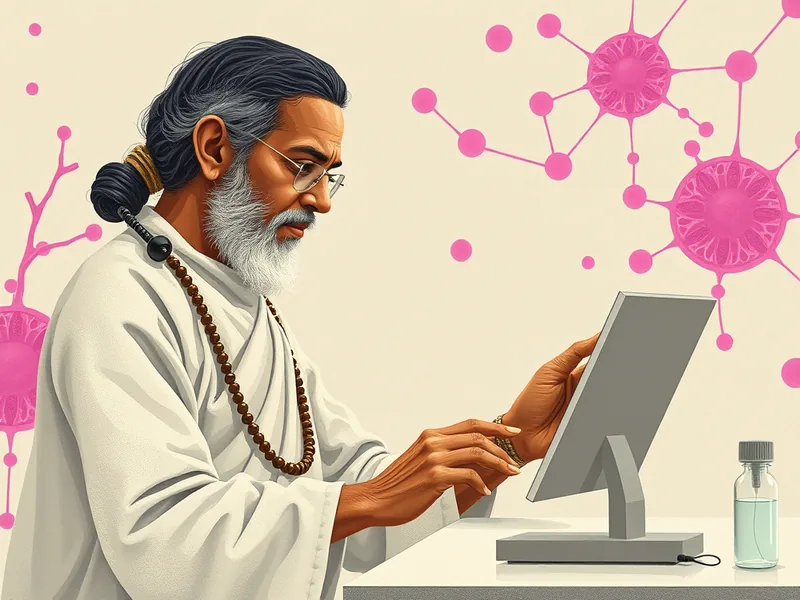
As India continues to explore the integration of AI into its traditional medical systems, several key points will need careful consideration. Ensuring data privacy and security is paramount, especially when dealing with sensitive health information. The anonymization of datasets must be rigorous to protect patient confidentiality and comply with ethical standards.
Another critical aspect is the validation and regulation of AI tools. While AI has the potential to revolutionize healthcare, it is essential to establish robust frameworks for evaluating the accuracy and reliability of these technologies. Regulatory bodies will need to work closely with researchers and developers to ensure that AI applications in Ayush medicine meet high standards of safety and efficacy.
The success of this initiative could have far-reaching implications beyond India's borders. As other countries look to modernize their traditional healthcare practices, the lessons learned from India's experience could serve as a valuable reference point. The collaboration between MeitY and the Ministry of Ayush sets a precedent for how governments can harness AI to enhance public health outcomes while preserving cultural heritage.
Ultimately, the integration of AI into Ayush medicine is not just about technological advancement; it is about improving the lives of millions of people who rely on traditional healthcare practices. By combining ancient wisdom with modern innovation, India is taking a significant step toward a more inclusive and effective healthcare system.
Tags
Original Sources
India to integrate AI into Ayush and more briefs
↗ https://www.healthcareitnews.com/news/asia/india-integrate-ai-ayush-and-more-briefs
About the author
Amara's entry point into AI was an epidemiology role at a London research hospital, where she spent five years studying how digital health tools reached — or conspicuously failed to reach — underserved communities. Watching early algorithmic systems in healthcare quietly entrench existing inequalities, she redirected her career toward the systemic consequences of AI at scale. She covers AI through an unflinching lens: who benefits, who bears the cost, and what evidence actually says versus what the press release claims. Her writing is calm and precise, but she doesn't mistake balance for neutrality.
More from The Steward →This Week's Edition
17 August 2026
113 articles
Related Articles
Related Articles
More Stories
© 2026 Cedar & Bloom. All rights reserved.