The Drum · Weekly AI news, freeSubscribe →

Share
As investors forecast AI's escalating role in 2026, concerns rise over job displacement and workforce restructuring, challenging businesses to adapt and workers to upskill for an uncertain future.
In the coming year, artificial intelligence (AI) is poised to significantly transform the labor market, according to a growing number of investors. The exact impact remains uncertain, but trends are beginning to emerge that suggest a shift in how businesses operate and how workers will be employed.
For millions of workers around the world, AI's encroachment into the labor market is more than just a technological curiosity-it's a real concern. As AI systems become more sophisticated, they can perform tasks that were once the exclusive domain of human workers. This has profound implications for job security, wages, and the overall structure of the workforce.
Rebecca Szkutak, writing for TechCrunch, highlights that investors are increasingly bullish on AI's potential to disrupt traditional labor markets. They see 2026 as a pivotal year where these trends will start to become more apparent. While some view this as an opportunity for efficiency and growth, others are wary of the potential downsides.
AI has the potential to bring significant benefits to businesses and consumers alike. For instance, AI can optimize supply chains, reduce operational costs, and enhance customer experiences. However, these gains often come at a cost to human workers. Jobs that are repetitive or data-intensive are particularly vulnerable to automation.
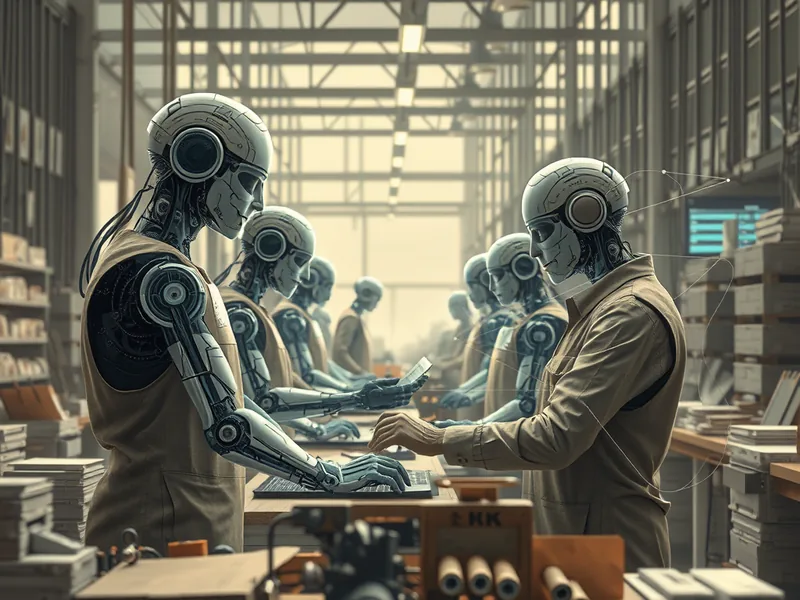
The long-term consequences of AI's impact on the labor market are still being debated. Some experts argue that while certain jobs will be lost, new ones will emerge in fields like data science, AI development, and technology maintenance. However, the transition period could be challenging, with many workers facing uncertainty and economic hardship.
To mitigate the negative impacts of AI on the workforce, several strategies can be employed:
As we move into 2026, the role of AI in the labor market will continue to evolve. While there is potential for significant benefits, it is essential to address the risks and challenges proactively. By investing in education, implementing supportive policies, and promoting ethical AI development, we can ensure that the transition to an AI-driven workforce is as smooth and equitable as possible.
Tags
Original Sources
About the author
Amara's entry point into AI was an epidemiology role at a London research hospital, where she spent five years studying how digital health tools reached — or conspicuously failed to reach — underserved communities. Watching early algorithmic systems in healthcare quietly entrench existing inequalities, she redirected her career toward the systemic consequences of AI at scale. She covers AI through an unflinching lens: who benefits, who bears the cost, and what evidence actually says versus what the press release claims. Her writing is calm and precise, but she doesn't mistake balance for neutrality.
More from The Steward →This Week's Edition
1 January 2026
29 articles
Related Articles

Ottawa Expands AI Funding for Northern Ontario Businesses, Aims to Close the Regional Tech Gap
Job Market & Society · 6 min

AI Is Lowering the Cost of Starting a Business. It's Not Lowering the Cost of Running One.
Job Market & Society · 6 min

Iambic Therapeutics Raises $150 Million in IPO to Fund AI-Designed Cancer Drugs
Finance & Markets · 5 min
Related Articles
Ottawa Expands AI Funding for Northern Ontario Businesses, Aims to Close the Regional Tech Gap
Job Market & Society · 6 min
AI Is Lowering the Cost of Starting a Business. It's Not Lowering the Cost of Running One.
Job Market & Society · 6 min
Iambic Therapeutics Raises $150 Million in IPO to Fund AI-Designed Cancer Drugs
Finance & Markets · 5 min
More Stories
© 2026 Cedar & Bloom. All rights reserved.
