The Drum · Weekly AI news, freeSubscribe →

Share
A German startup's successful orbital launch from Arctic Norway marks Europe's first continental commercial spaceflight. Behind the milestone sits a fragile industry racing to catch SpaceX, backed by fresh capital and government urgency.
Isar Aerospace's Spectrum rocket reached orbit on Saturday, launching from the Andoeya Spaceport in Arctic Norway. It was the first commercial flight to reach orbit from continental Europe. That distinction matters more than the payload itself, five small satellites and an in-flight technology experiment.
The company called it European history in a post on X. Norway's minister of industry and commerce, Cecilie Myrseth, framed the launch in security terms rather than commercial ones. "The fact that we can now launch satellites from Andoeya strengthens Norwegian and European security in the turbulent times we live in," she said in a statement.
That framing is deliberate. Europe has spent years watching satellite launch capability concentrate in American and, increasingly, Chinese hands. German Chancellor Friedrich Merz visited Isar's launch site in March, a signal that Berlin sees this as strategic infrastructure, not just industrial policy. The visit came as the broader transatlantic order shifts under President Donald Trump, pushing European governments toward greater autonomy in defense-adjacent technology.
Saturday's flight was Isar's second attempt. The first, in March 2025, ended when the rocket plunged into the sea and exploded shortly after takeoff. No one was hurt. Isar characterized that failure as a success at the time, arguing it generated valuable data for engineers. Eighteen months later, the company frames Saturday's launch as both a qualification mission and the vehicle's first flight carrying real payload. Two attempts, one company, and a data point every investor in this sector should weigh carefully: rocket development is iterative, expensive, and unforgiving of shortcuts.
Europe's launch ambitions do not begin or end with Isar. Sweden's Esrange site and Britain's SaxaVord Spaceport in the Shetland Islands are pursuing the same goal from different corners of the continent. All three efforts share a common motivation: reducing dependence on non-European launch providers for satellite deployment.
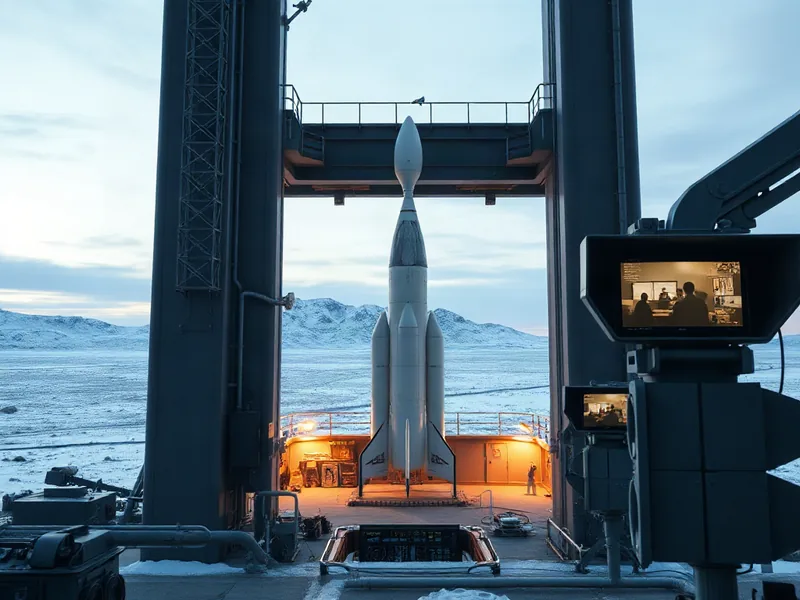
The scale gap remains stark. SpaceX dominates the global launch market from its U.S. bases and, in June, listed on the Nasdaq in a record initial public offering. Elon Musk's company now spans rockets, satellites, and artificial intelligence infrastructure, a diversification that dwarfs anything a European startup can currently match. ArianeGroup, the joint venture between Airbus and Safran, offers Europe's established alternative, launching from French Guiana in South America. That arrangement has kept Europe technically self-sufficient for decades, but reliance on a single legacy provider concentrates risk.
Isar's pitch is different. The Bavarian company's Spectrum rocket targets small and medium-sized payloads, a market segment increasingly crowded with startups worldwide but still underserved in Europe specifically. Capturing even a modest share of that demand from a domestic launch site would represent a meaningful shift for European satellite operators currently forced to book slots abroad.
Money is following the ambition. Isar disclosed last week that it had secured about 200 million euros, roughly 232 million dollars, from the European Space Agency. That funding is earmarked for developing new rockets and expanding testing and launch infrastructure. The company is simultaneously building a second launch site in Canada, a hedge against reliance on any single geography and a bet that North American demand for smaller satellite launches will grow alongside Europe's.
One successful orbital launch does not make a commercial launch industry. It makes a proof point. Isar still needs to demonstrate repeatable, reliable flights at commercial cadence before satellite operators treat Andoeya as a serious alternative to established sites in French Guiana or the United States. The 18-month gap between Isar's first and second launches, and the explosive failure that preceded this success, underscores how unforgiving the development timeline remains.
For investors and industry watchers, the signal worth tracking is government commitment rather than any single flight. The 200 million euro ESA backing suggests European institutions are willing to fund infrastructure buildout even after a public failure, a sign of strategic patience that private capital markets rarely extend to early-stage aerospace ventures. Whether that patience translates into commercial contracts from satellite operators, rather than government subsidy alone, will determine if Isar and its European peers can meaningfully dent SpaceX's market position. The next several launches, not this one, will answer that question.
Tags
Original Sources
German rocket reaches space as Europe enters satellite launch race
↗ https://www.reuters.com/business/media-telecom/german-space-rocket-lifts-off-norway-base-2026-09-05
About the author
Marcus began tracking AI's market implications in 2016, noticing AI-related patent filings accelerating ahead of earnings upgrades before most of the sell-side had caught on. A former fixed-income quantitative analyst, he spent two decades building models that priced risk across emerging markets before pivoting to cover the economic impact of AI full-time. His writing translates opaque technical developments into clear risk/reward terms — and he's rarely diplomatic about the gap between AI valuations and underlying fundamentals. He believes most market participants still underestimate AI's long-run deflationary effect on knowledge work.
More from The Analyst →This Week's Edition
6 September 2026
23 articles
Related Articles

Few CPG and Retail Firms Are Converting AI Experiments Into Measurable Returns, New Report Finds
Products & Applications · 5 min

Spotify Pulls 50 Million AI Tracks From Recommendations as Platform Quality Fight Intensifies
Products & Applications · 5 min
What Tech's AI Adoption Curve Tells Other Industries About What Comes Next
Products & Applications · 5 min
Related Articles
Few CPG and Retail Firms Are Converting AI Experiments Into Measurable Returns, New Report Finds
Products & Applications · 5 min
Spotify Pulls 50 Million AI Tracks From Recommendations as Platform Quality Fight Intensifies
Products & Applications · 5 min
What Tech's AI Adoption Curve Tells Other Industries About What Comes Next
Products & Applications · 5 min
More Stories
© 2026 Cedar & Bloom. All rights reserved.
