The Drum · Weekly AI news, freeSubscribe →

Share
As technology continues to shape our world, a new study reveals that young people have nuanced views on AI that adults can learn from.
When we talk about artificial intelligence (AI), the conversation often revolves around its potential to transform industries, enhance productivity, or even pose ethical dilemmas. However, one group's perspective is often overlooked: kids and teens. A recent survey conducted by Technology Review sheds light on how young people aged 10 to 18 view AI, revealing a range of opinions that are both surprising and insightful.
Initially, we expected to hear stories about cheating, inspiring uses, and concerns like deepfakes or job destruction. Instead, what emerged was a nuanced and diverse set of views. Many kids were deeply against AI or simply uninterested in making it part of their lives, while others had specific worries about its environmental impact, effects on creativity, and critical thinking.
One of the most striking findings is that many young people are not as enthusiastic about AI as one might assume. Unlike their eagerness for the latest smartphones or social media platforms, they aren't clamoring for more AI in their lives. Some expressed a strong aversion to the technology, citing concerns about privacy and the potential for misuse.
For instance, 14-year-old Alex, from California, shared his thoughts: "I don't want AI to make decisions for me. It feels like giving up control." His sentiment reflects a broader concern among young people about the loss of autonomy and personal agency in an increasingly automated world.
On the other hand, some kids saw potential benefits but were wary of the downsides. 16-year-old Mia, from New York, said, "AI could help with homework or make tasks easier, but I worry it might make us lazy or less creative." This perspective highlights a balanced view that acknowledges both the advantages and risks of AI integration.
Environmental concerns also played a significant role in their opinions. Many young people are acutely aware of climate change and the environmental impact of technology. 13-year-old Jamie, from Florida, noted, "The energy it takes to run all those servers is bad for the planet. We should be more careful about how we use AI."
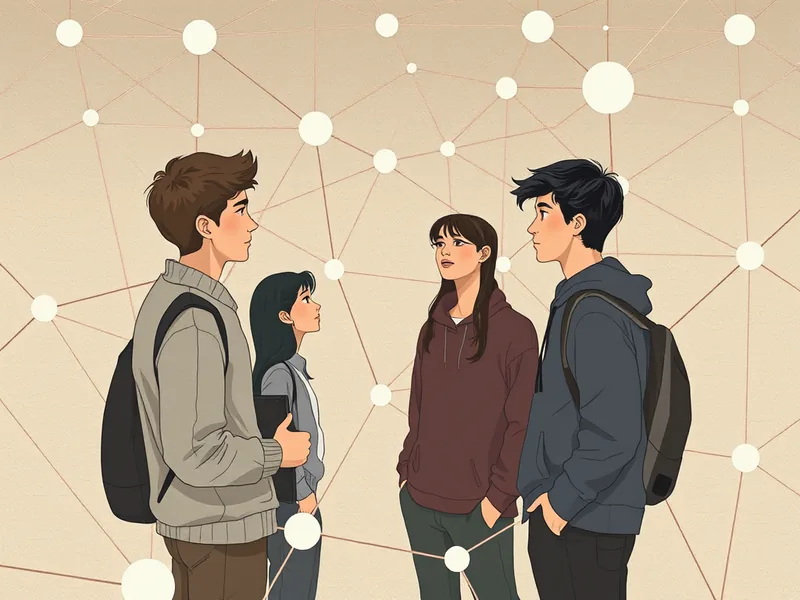
These insights from young people offer a valuable perspective that adults can learn from. They are not just passive recipients of technology but active thinkers who consider the broader implications of its use. Their concerns about privacy, creativity, and environmental impact align with many of the debates in the tech community.
Dr. Sarah Thompson, a public health researcher at the University of California, Berkeley, emphasizes the importance of these insights: "Young people are growing up in a world where technology is ubiquitous. Their perspectives can help us design more responsible and sustainable AI systems."
the survey highlights the need for better technology education. Many kids expressed confusion about how AI works and what its capabilities truly are. This gap in understanding underscores the importance of educating young people about the technology that will shape their future.
In a world where AI is becoming increasingly integrated into daily life, it's crucial to listen to the voices of those who will inherit this technology. By incorporating their perspectives, we can ensure that AI development is not only innovative but also ethical and sustainable.
As we continue to navigate the complex landscape of AI, the views of young people serve as a reminder that technology should always be designed with human values at its core. Their insights offer a roadmap for a future where AI enhances our lives without compromising our principles or the planet.
Tags
Original Sources
The Download: kids’ thoughts on AI, and female clones of male mice
↗ https://www.technologyreview.com/2026/08/13/1141896/the-download-kids-thoughts-on-ai-female-clones-male-mice
About the author
Amara's entry point into AI was an epidemiology role at a London research hospital, where she spent five years studying how digital health tools reached — or conspicuously failed to reach — underserved communities. Watching early algorithmic systems in healthcare quietly entrench existing inequalities, she redirected her career toward the systemic consequences of AI at scale. She covers AI through an unflinching lens: who benefits, who bears the cost, and what evidence actually says versus what the press release claims. Her writing is calm and precise, but she doesn't mistake balance for neutrality.
More from The Steward →This Week's Edition
17 August 2026
18 articles
Related Articles

A Media Executive's Open Letter to Young People on AI Tells Them: It's Not Too Late
Job Market & Society · 6 min

Twenty-Five Years After the Anthrax Letters, the Lessons Are More Urgent Than Ever
Security & Risk · 5 min
DARPA's Robotic Repair Mission Aims to Service Satellites 22,000 Miles Up
Products & Applications · 5 min
Related Articles
A Media Executive's Open Letter to Young People on AI Tells Them: It's Not Too Late
Job Market & Society · 6 min
Twenty-Five Years After the Anthrax Letters, the Lessons Are More Urgent Than Ever
Security & Risk · 5 min
DARPA's Robotic Repair Mission Aims to Service Satellites 22,000 Miles Up
Products & Applications · 5 min
More Stories
© 2026 Cedar & Bloom. All rights reserved.
