The Drum · Weekly AI news, freeSubscribe →

Share
Researchers at the University of Ghent have developed **landmarker**, a specialized Python toolkit using PyTorch, to enhance accuracy in locating anatomical landmarks in medical images, surpassing limitations of generic pose estimation tools.
In a recent paper published on arXiv, researchers from the University of Ghent have introduced landmarker, a new Python package built on PyTorch. This toolkit is specifically designed to address the unique challenges of anatomical landmark localization in 2D and 3D medical images. While general-purpose tools for pose estimation exist, they often fall short when it comes to the precision and modularity required for medical applications. landmarker aims to fill this gap by providing a flexible and comprehensive set of tools tailored for medical imaging tasks.
The key technical innovation in landmarker is its modular design, which supports both static and adaptive heatmap regression methods. This flexibility allows researchers and practitioners to tailor the toolkit to their specific datasets and applications, enhancing accuracy and streamlining development processes.
For medical imaging professionals, accurate anatomical landmark localization is crucial for tasks such as surgical planning, disease diagnosis, and treatment monitoring. landmarker offers several advantages:
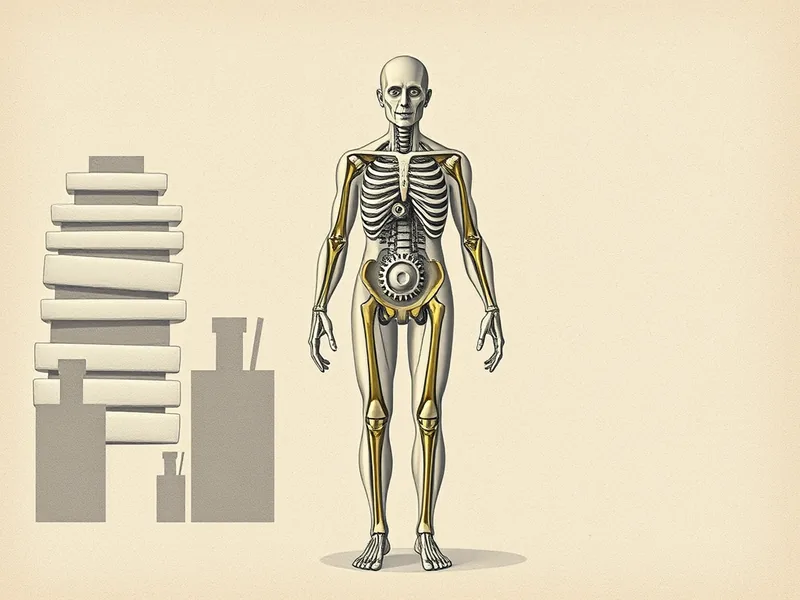
The landmarker package is built on PyTorch, leveraging its powerful deep learning capabilities. Here are some key implementation details:
To illustrate the toolkit's capabilities, consider a scenario where you need to localize anatomical landmarks in 3D MRI scans for surgical planning. Here’s how you might use landmarker:
landmarker is a significant step forward in the field of medical imaging, offering a flexible and powerful toolkit for anatomical landmark localization. Its modular design, support for advanced regression methods, and compatibility with various image formats make it an invaluable resource for researchers and practitioners alike. By enhancing the accuracy and efficiency of landmark identification, landmarker has the potential to accelerate innovation and improve patient outcomes in medical imaging.
Tags
Original Sources
About the author
Kai built ML infrastructure at a Bay Area startup before developing an obsession with transformer architectures and inference optimisation that eventually pulled him out of product work entirely. A stint at a compute research lab sharpened his instinct for what actually matters in a model release versus what is marketing. He writes from the inside — from the perspective of someone who has debugged the systems he is describing at three in the morning. He is allergic to hype and instinctively drawn to the unglamorous plumbing questions that everyone else skips over.
More from The Engineer →This Week's Edition
22 January 2025
29 articles
Related Articles

Wharton's Fourth Annual AI Survey: Most Companies See Returns, Few See Big Ones
Models & Research · 6 min

Tensormesh Launches Enterprise KV Cache Platform to Cut Redundant LLM Compute
Models & Research · 6 min

Iambic Therapeutics Raises $150 Million in IPO to Fund AI-Designed Cancer Drugs
Finance & Markets · 5 min
Related Articles
Wharton's Fourth Annual AI Survey: Most Companies See Returns, Few See Big Ones
Models & Research · 6 min
Tensormesh Launches Enterprise KV Cache Platform to Cut Redundant LLM Compute
Models & Research · 6 min
Iambic Therapeutics Raises $150 Million in IPO to Fund AI-Designed Cancer Drugs
Finance & Markets · 5 min
More Stories
© 2026 Cedar & Bloom. All rights reserved.
