The Drum · Weekly AI news, freeSubscribe →

Share
Sakana AI's Digital Red Queen (DRQ) algorithm breathes life into Core War by pitting large language models against each other in an ever-evolving battle for dominance within a virtual world.
In a fascinating twist on the classic programming game Core War, researchers at Sakana AI have developed an algorithm called Digital Red Queen (DRQ) that uses large language models (LLMs) to drive an adversarial evolutionary process. This setup simulates a continuous arms race where programs, known as "warriors," adapt and evolve to outcompete each other in a virtual machine environment.
Core War is a competitive programming game introduced in 1984. In this game, developers write battle programs called warriors in a specialized assembly language called Redcode. These warriors fight for control of a virtual computer by employing sophisticated strategies such as targeted self-replication, data bombing, and massive multithreading.
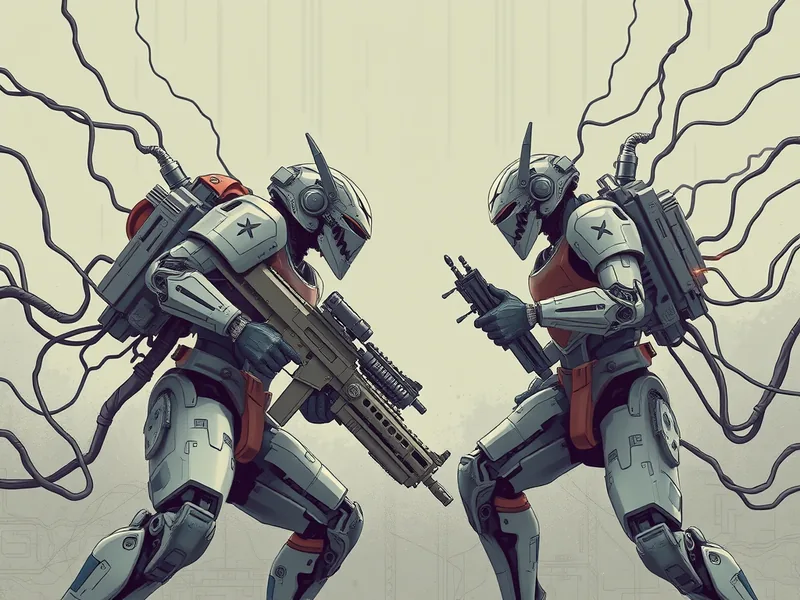
Two notable examples of warriors produced by DRQ are:
The researchers have also developed an interactive visualization tool where users can explore the Redcode of the evolved warriors. By moving the mouse cursor over different parts of the code, users can see detailed explanations and comments generated by the LLM.
This work positions Core War as a sandbox for studying "Red Queen" dynamics in artificial systems. The continuous adversarial process provides a safe, controlled environment for analyzing how AI agents might evolve in real-world settings such as cybersecurity. By simulating these dynamics, researchers can gain insights into the emergent behaviors and strategies that arise from constant competition.
The Digital Red Queen (DRQ) algorithm showcases the potential of LLMs in driving adversarial evolution. The emergent behaviors and convergent evolution observed in this study offer valuable lessons for AI research, particularly in understanding how agents adapt to ever-changing threats. Core War serves as a unique platform for exploring these dynamics, providing a rich environment for both theoretical and practical insights.
For more details, you can read the technical report and access the code on the following links:
Tags
Original Sources
About the author
Kai built ML infrastructure at a Bay Area startup before developing an obsession with transformer architectures and inference optimisation that eventually pulled him out of product work entirely. A stint at a compute research lab sharpened his instinct for what actually matters in a model release versus what is marketing. He writes from the inside — from the perspective of someone who has debugged the systems he is describing at three in the morning. He is allergic to hype and instinctively drawn to the unglamorous plumbing questions that everyone else skips over.
More from The Engineer →This Week's Edition
13 January 2026
24 articles
Related Articles

Tether Evo's New Research Tackles BCI's Cross-Subject Problem Across Speech, Vision, and Music
Models & Research · 6 min

xAI Launches Grok Bot, an Autonomous Agent That Logs Into Your Tools and Does the Work
Products & Applications · 5 min

German Bishops Back Child-Friendly AI Standards, Citing Papal Call on Human Dignity
Policy & Regulation · 5 min
Related Articles
Tether Evo's New Research Tackles BCI's Cross-Subject Problem Across Speech, Vision, and Music
Models & Research · 6 min
xAI Launches Grok Bot, an Autonomous Agent That Logs Into Your Tools and Does the Work
Products & Applications · 5 min
German Bishops Back Child-Friendly AI Standards, Citing Papal Call on Human Dignity
Policy & Regulation · 5 min
More Stories
© 2026 Cedar & Bloom. All rights reserved.
