The Drum · Weekly AI news, freeSubscribe →

Share
As AI systems demand more processing power and efficiency, materials science is stepping up to meet these challenges with advanced polymers, elastomers, and specialty fluids.
When we talk about AI advancements, the conversation often revolves around algorithms, computing power, and massive investments in semiconductor fabrication plants and hyperscale data centers. However, beneath all this lies a critical layer of innovation that makes it possible: materials science. Every new generation of AI technology pushes the boundaries of what’s feasible, demanding more processing power, memory, energy efficiency, and reliability. Achieving these gains requires not just advances in chip design and system architecture but also breakthroughs in the materials used to build and run these systems.
Manufacturing a semiconductor chip today involves thousands of tightly controlled process steps, with almost no room for error. Tiny variations in temperature or chemical instability can create defects that reduce yield and drive up manufacturing costs. As AI continues to push the physical limits of semiconductors and data center infrastructure, advanced materials are becoming more crucial than ever.
For example, companies like Accuris are developing advanced materials to support document management, process optimization, and resource allocation. These tools not only enhance the efficiency of manufacturing processes but also ensure that the materials used are of the highest quality, reducing defects and improving overall performance.
The engineering challenges in semiconductor manufacturing are well-known but are being pushed to new extremes by AI demands. Here’s a closer look at how materials innovation is making a difference:
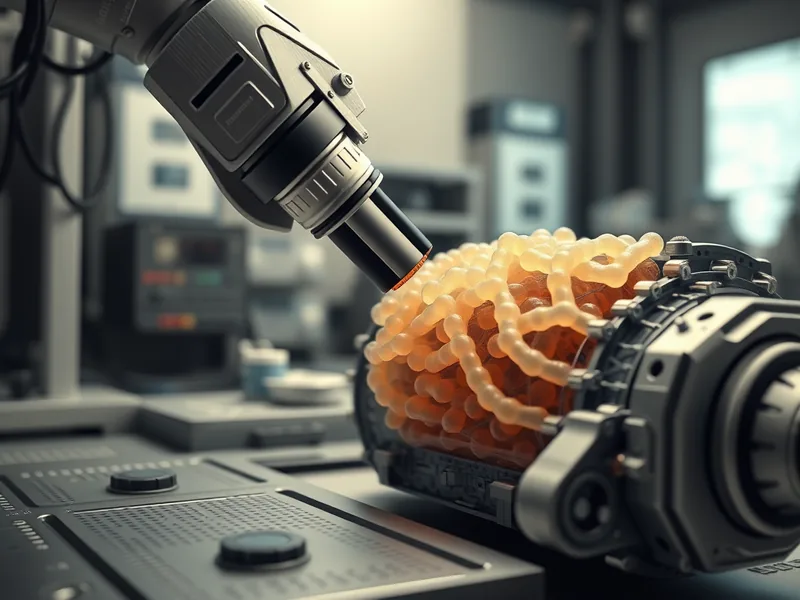
Materials companies like Accuris and ASRock Industrial Computer Corporation are at the forefront of this innovation. They focus not on reinventing semiconductor manufacturing but on ensuring that the materials supporting the industry continue to evolve alongside it. This continuous improvement is essential for meeting the growing demands of AI technology.
As AI continues to advance, the importance of materials science in enabling these advancements will only grow. Here are a few key areas to watch:
While the focus on algorithms and computing power is crucial for AI development, we must not overlook the role of advanced materials. These innovations are the unsung heroes that enable each new generation of AI technology to push the boundaries of what’s possible. As researchers and engineers continue to explore new frontiers in materials science, the future of AI looks brighter than ever.
Tags
Original Sources
Advancing next-gen AI with materials science innovation – MIT Technology Review
↗ https://www.technologyreview.com/2026/07/21/1140602/advancing-next-gen-ai-with-materials-science-innovation/amp
About the author
Kai built ML infrastructure at a Bay Area startup before developing an obsession with transformer architectures and inference optimisation that eventually pulled him out of product work entirely. A stint at a compute research lab sharpened his instinct for what actually matters in a model release versus what is marketing. He writes from the inside — from the perspective of someone who has debugged the systems he is describing at three in the morning. He is allergic to hype and instinctively drawn to the unglamorous plumbing questions that everyone else skips over.
More from The Engineer →This Week's Edition
27 July 2026
23 articles
Related Articles

SpaceX's AI Unit Drives Return to Profitability, Overtakes Rocket Business
Finance & Markets · 5 min

A High-Profile JAMA Study on OpenEvidence Leaves Key Clinical Questions Unanswered
Health & Science · 5 min

Stanford HAI Convenes Researchers to Rethink Empirical Methods for the AI Era
Models & Research · 5 min
Related Articles
SpaceX's AI Unit Drives Return to Profitability, Overtakes Rocket Business
Finance & Markets · 5 min
A High-Profile JAMA Study on OpenEvidence Leaves Key Clinical Questions Unanswered
Health & Science · 5 min
Stanford HAI Convenes Researchers to Rethink Empirical Methods for the AI Era
Models & Research · 5 min
More Stories
© 2026 Cedar & Bloom. All rights reserved.
