The Drum · Weekly AI news, freeSubscribe →

Share
Artificial intelligence now generates more than half of SpaceX's income, pushing Elon Musk's conglomerate back into the black. But a $19.6 billion capex bill and thin AI margins raise questions about how durable the turnaround really is.
SpaceX's transformation from rocket maker to AI infrastructure play produced its first profitable quarter in a year, and the numbers suggest the shift is no longer cosmetic.
The company reported third-quarter revenue of $14.6 billion, according to a regulatory filing released Tuesday. Net income came in at $4.4 billion, reversing a $1 billion loss in the same period last year. That is a swing of roughly $5.4 billion in twelve months, and it was driven almost entirely by one segment: the renamed "Super Intelligence" business, which now accounts for 52% of total income.
Super Intelligence generated $7.5 billion in revenue this quarter. That figure folds together the recently acquired Cursor coding tool, the Grok chatbot, and a neocloud compute business that has scaled to 1.7 gigawatts. For a company still best known for landing boosters and launching satellites, that mix is a notable departure.
The profit picture inside that segment deserves a closer look, though. Super Intelligence generated $431 million in profit on $7.5 billion in revenue, a margin under 6%. Strip out the context and that looks thin for a business Musk is pitching as the company's future. The margin would have been higher without $1.2 billion in one-time stock-based compensation tied to the Cursor acquisition, but one-time items have a habit of recurring in fast-moving AI deals. Investors should treat that adjustment as informative, not dispositive.
There is also a quality-of-earnings question buried in the topline number. Roughly $1 billion of the revenue boost came from Bitcoin price recovery and unspecified related-party income, possibly tied to a SpaceX investment in another company. Neither of those is core operating revenue in any conventional sense. Back them out and the quarter looks solid but less spectacular than the headline suggests.
SpaceX's capital expenditures hit $19.6 billion for the quarter, funding a second data center project called Colossus II alongside continued investment in Starship. CFO Bret Johnsen told investors the company plans to spend $35 billion to $40 billion on capital projects in the fourth quarter alone. That is an extraordinary pace of spending, even by the standards of a sector where hyperscalers routinely commit tens of billions to AI infrastructure.
Musk said he now spends four days a week in Memphis, where Colossus II is being built, and framed the binding constraint on AI deployment differently than most of his competitors do. "People are starting to realize the constraint on deployment of super intelligence is more in power and cooling and infrastructure than it is in chips," he said during a livestreamed investor call, adding that SpaceX engineers are working to solve the problem directly.
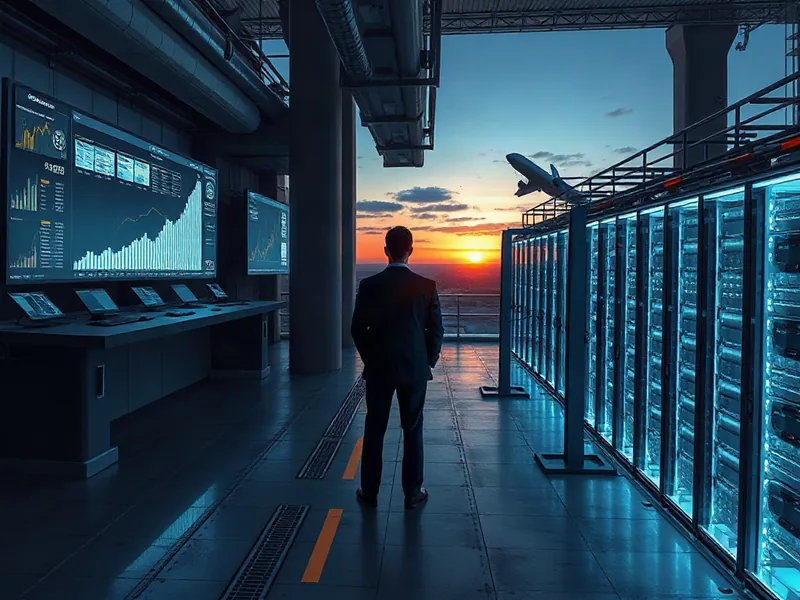
That claim is worth taking seriously because SpaceX appears to have a genuine structural advantage here. Musk pointed out that turbine manufacturers face 12 to 18 month delays sourcing the metals needed for blades and vanes. SpaceX is now using metal casting capabilities built for its rocket program to manufacture those components itself, shortening its own turbine procurement timeline. Musk called the dynamic "a bit like the New York Yankees playing in Little League," arguing the company can deploy power and cooling infrastructure faster than rivals because of capabilities built for an entirely different business.
If that advantage holds, it matters more than any single quarter's revenue mix. Power and cooling, not chip supply, has become the real bottleneck across the AI infrastructure buildout. A company that can manufacture its own turbine components while competitors wait over a year for parts has a cost and timing edge that compounds.
The rocket business has not disappeared, and it remains central to the long-term AI thesis. Musk said the next Starship test flight, expected in November, will attempt to recover both the booster and the second stage, something he called a "massive technology milestone." The real prize, he said, is reflying both stages, which would materially lower launch costs and support SpaceX's plans for orbital data centers and an expanded Starlink constellation. Starlink itself grew to 13.6 million subscribers in the quarter, with Musk predicting that AI agents will drive further connectivity demand.
The forward guidance is where skepticism is warranted. Musk predicted Super Intelligence annual recurring revenue could reach between $500 billion and $1 trillion by the end of 2027. That is an enormous range, spanning a factor of two, and it implies growth of roughly 65x to 130x from the segment's current quarterly run rate. Johnsen's nearer-term forecast is more grounded: total company revenue of $33 billion to $37 billion for the first quarter of 2027, implying sequential growth from this quarter's $14.6 billion.
Investors should also note that despite this quarter's profit, SpaceX posted a net income loss of $413 million for the first nine months of 2026. One strong quarter does not erase nine months of red ink, and the company still needs a fourth quarter well above this one just to finish the year in the black.
Watch three things going forward: whether Super Intelligence margins improve as the Cursor-related stock compensation rolls off, whether the $35 billion to $40 billion in fourth-quarter capex translates into incremental compute capacity rather than cost overruns, and whether Starship's November test flight delivers the dual-stage recovery Musk is promising. The power and cooling advantage is real and worth tracking closely, but the valuation case for SpaceX as an AI company now rests on execution against guidance that is, by the CFO's own admission, a wide range built on early-stage assumptions.
Tags
Original Sources
SpaceX's AI business is beating expectations | TechCrunch
↗ https://techcrunch.com/2026/10/20/spacexs-ai-business-is-beating-expectations
About the author
Marcus began tracking AI's market implications in 2016, noticing AI-related patent filings accelerating ahead of earnings upgrades before most of the sell-side had caught on. A former fixed-income quantitative analyst, he spent two decades building models that priced risk across emerging markets before pivoting to cover the economic impact of AI full-time. His writing translates opaque technical developments into clear risk/reward terms — and he's rarely diplomatic about the gap between AI valuations and underlying fundamentals. He believes most market participants still underestimate AI's long-run deflationary effect on knowledge work.
More from The Analyst →This Week's Edition
21 October 2026
23 articles
Related Articles
Ex-OpenAI Research Chief Raises $230 Million for AI Manufacturing Startup Arda at $1.5 Billion Valuation
Finance & Markets · 6 min

Readily Raises $11M Series A to Automate Healthcare Compliance as Federal Fines Surge
Finance & Markets · 5 min

HSBC's Elhedery: AI Is Transformational, Data Center Deals Are Not All Equal
Finance & Markets · 5 min
Related Articles
Ex-OpenAI Research Chief Raises $230 Million for AI Manufacturing Startup Arda at $1.5 Billion Valuation
Finance & Markets · 6 min
Readily Raises $11M Series A to Automate Healthcare Compliance as Federal Fines Surge
Finance & Markets · 5 min
HSBC's Elhedery: AI Is Transformational, Data Center Deals Are Not All Equal
Finance & Markets · 5 min
More Stories
© 2026 Cedar & Bloom. All rights reserved.
