The Drum · Weekly AI news, freeSubscribe →

Share
MonST3R revolutionizes video geometry estimation by processing scenes feed-forward to generate dynamic point clouds, camera poses, and intrinsics, paving the way for efficient depth estimation and scene segmentation.
MonST3R, a novel approach developed by researchers from UC Berkeley, Google DeepMind, Stability AI, and UC Merced, tackles the challenge of estimating geometry in dynamic video scenes. This method processes videos to produce time-varying point clouds, camera poses, and intrinsics in a predominantly feed-forward manner. The result is an efficient representation that can be used for various downstream tasks, such as depth estimation and scene segmentation.
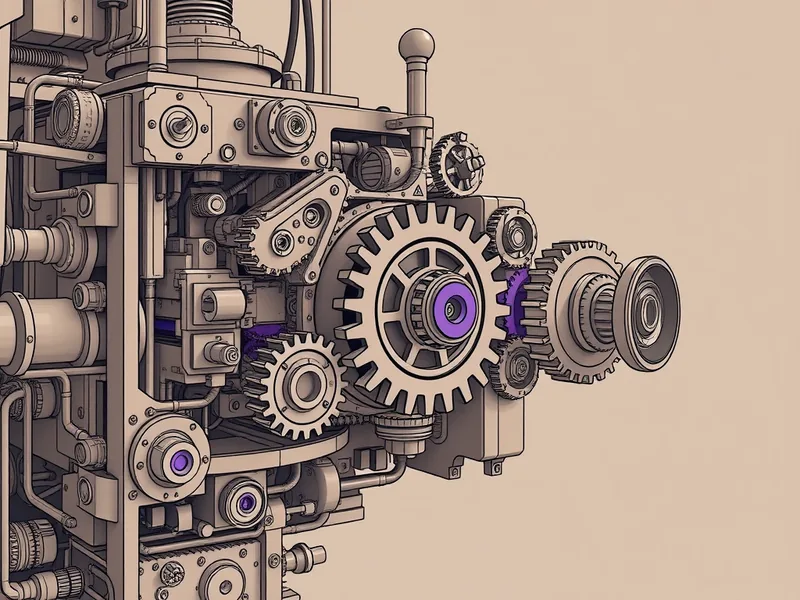
To explore the capabilities of MonST3R, check out the interactive 4D visualization results on various dynamic scenes. The results are downsampled 4 times for efficient online rendering.
Estimating geometry from dynamic scenes, where objects move and deform over time, remains a core challenge in computer vision. Current approaches often rely on multi-stage pipelines or global optimizations that decompose the problem into subtasks, like depth and flow, leading to complex systems prone to errors. In this paper, we present Motion DUSt3R (MonST3R), a novel geometry-first approach that directly estimates per-timestep geometry from dynamic scenes. Our key insight is that by simply estimating a pointmap for each timestep, we can effectively adapt DUST3R's representation, previously only used for static scenes, to dynamic scenes. However, this approach presents a significant challenge: the scarcity of suitable training data, namely dynamic, posed videos with depth labels. Despite this, we show that by posing the problem as a fine-tuning task, identifying several suitable datasets, and strategically training the model on this limited data, we can surprisingly enable the model to handle dynamics, even without an explicit motion representation.
Tags
Original Sources
↗ https://monst3r-project.github.io/?utm_source=tldrai
About the author
Kai built ML infrastructure at a Bay Area startup before developing an obsession with transformer architectures and inference optimisation that eventually pulled him out of product work entirely. A stint at a compute research lab sharpened his instinct for what actually matters in a model release versus what is marketing. He writes from the inside — from the perspective of someone who has debugged the systems he is describing at three in the morning. He is allergic to hype and instinctively drawn to the unglamorous plumbing questions that everyone else skips over.
More from The Engineer →This Week's Edition
6 February 2025
29 articles
Related Articles

Wharton's Fourth Annual AI Survey: Most Companies See Returns, Few See Big Ones
Models & Research · 6 min
Tensormesh Launches Enterprise KV Cache Platform to Cut Redundant LLM Compute
Models & Research · 6 min

Iambic Therapeutics Raises $150 Million in IPO to Fund AI-Designed Cancer Drugs
Finance & Markets · 5 min
Related Articles
Wharton's Fourth Annual AI Survey: Most Companies See Returns, Few See Big Ones
Models & Research · 6 min
Tensormesh Launches Enterprise KV Cache Platform to Cut Redundant LLM Compute
Models & Research · 6 min
Iambic Therapeutics Raises $150 Million in IPO to Fund AI-Designed Cancer Drugs
Finance & Markets · 5 min
More Stories
© 2026 Cedar & Bloom. All rights reserved.
