The Drum · Weekly AI news, freeSubscribe →

Share
A drug is only as good as a patient's ability to take it. Genentech leaders describe how AI, real-time data, and clinicians working both sides of the aisle are trying to fix biotech's broken last mile.
Imagine spending a decade and billions of dollars developing a medicine, only to watch more than half the people who need it never fill the prescription. That is not a hypothetical. It is the reality biotech faces today, and it is forcing an industry built on lab discoveries to rethink what happens after the science ends.
Charlotte Owens, M.D., lives in both of those worlds at once. She leads U.S. medical affairs at Genentech from South San Francisco, one of the birthplaces of modern biotech. She also still practices as an OB-GYN at a safety-net hospital in Atlanta, treating patients across the income spectrum. For years, those two roles rarely spoke to each other. Innovation happened in one place, access happened, or didn't happen, in another.
That divide is starting to narrow. Speaking at STAT Breakthrough West 2026, Owens described how her dual role shapes both her clinical care and her corporate decision-making. "I can understand what patients truly need, not because I'm remembering from back in the day, but because of real experiences that I still encounter," she said. Seeing patients face to face, she added, also keeps her attuned to what frontline clinicians are up against.
That insight, she said, feeds directly back into how Genentech thinks about developing new treatments and building them around real patient needs, not assumptions made from a distance.
Biotech has spent the past fifty years proving it can invent. The next fifty, according to several speakers at the summit, need to prove it can deliver. Zoë Lazarre, Ph.D., Genentech's chief marketing officer, put a name to the failure point: the "last-mile gap" in translational medicine. It is the space between a drug getting approved and a patient actually taking it.
The numbers are stark. "Over half of the medicines prescribed for patients are not filled," Lazarre said in a lounge interview at the summit. That statistic alone should give anyone pause. All the clinical trial data, all the regulatory approvals, all the manufacturing capacity in the world cannot help a patient who never picks up their prescription.
The reasons are layered, like an onion with a bitter center. "The disconnect starts with things that we know. It's access, it's insurance, it's affordability," Lazarre said, "but it goes much farther, to lack of trust in the health care system." That last piece is easy to overlook in policy discussions focused on price tags and coverage rules. Trust is not a line item on a budget sheet, but it shapes behavior just as powerfully as cost does.
Closing that gap means going into communities directly, listening before prescribing solutions. Doing that well, and at scale, used to require armies of outreach workers and years of trial and error. Now, data and AI are compressing that timeline dramatically.
Lazarre pointed to last flu season as a working example. Genentech used geo-targeting to track flu infection trends in near real time, then adjusted its awareness campaign for a time-sensitive antiviral accordingly. "We adjusted our media spend, our radio ads, and where we deployed our field personnel to accommodate for that data," she said. The payoff was concrete: more patients got treated quickly, and that likely slowed the flu's spread through those communities.
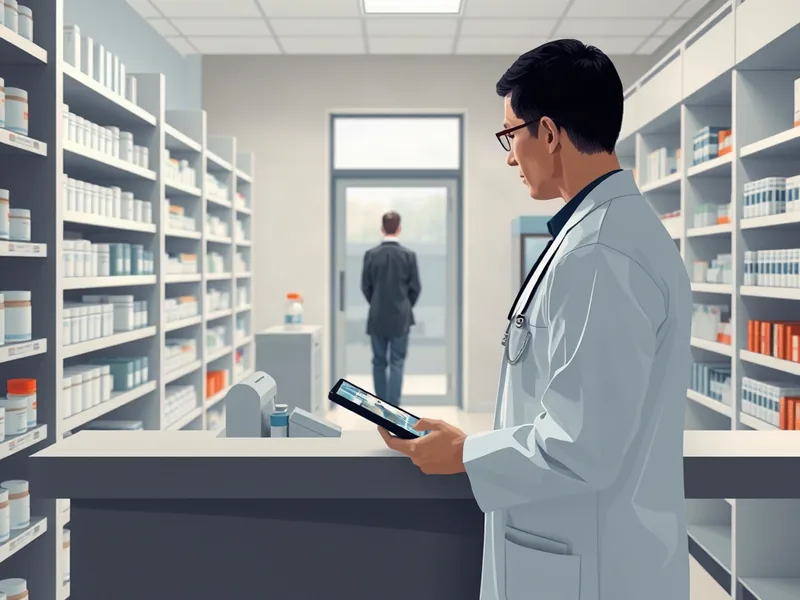
Think of it like a weather forecast for illness. Instead of blanket advertising everywhere at once, resources moved toward the places where flu was actually spiking, when it mattered most.
AI's role does not start at the marketing stage. It starts much earlier, in the lab, with scientists trying to find the right molecule in the first place. Gina Wang, a senior principal scientist at Genentech, uses machine learning to refine drug discovery models, often targeting complex problems like treatment resistance or harmful side effects.
Wang describes her job in terms that scale far beyond any single patient interaction. "A chemist can treat thousands and millions of patients at the same time if we discover a transformative medicine," she said. What excites her most about AI is not the technology itself, but what it does to the clock. "I now see projects being impacted positively that can really shorten that discovery process. I couldn't be more happy for the development of AI."
That speed matters downstream too. AI is increasingly showing up in patient education tools, clinical decision support systems, and diagnostics, all pieces of the puzzle that determine whether a breakthrough drug actually reaches the person who needs it. Owens frames the challenge less as a technology question and more as a coordination one. "When you think about patients, providers, payers, everyone's using AI," she said. "The real question is not can you use AI for the sake of using it, but how can you actually use it to help all of these groups navigate this complex health care ecosystem?"
In plain terms, that often means making the system less confusing for patients who are already overwhelmed by diagnosis, cost, and logistics all at once.
None of this fixes health care overnight. AI is not a cure for a fragmented system, and no one at the summit claimed otherwise. But it arrives at a moment when biotech has genuine incentive, and increasingly the tools, to shrink the distance between bench and bedside.
For patients, that distance is not abstract. It is the difference between a diagnosis caught early or missed, a prescription filled or abandoned, a flu that spreads through a household or gets stopped cold. Owens put it simply: "If you can actually bring the point of care, from a diagnosis perspective and a treatment perspective, closer to the patient instead of vice versa, then now you're changing the trajectory of people's lives."
The stakes go beyond any single company's balance sheet. An industry that spent decades proving it could invent breakthroughs now has to prove it can deliver them, reliably, equitably, and fast enough to matter. As Owens put it, the convergence of science, technology, and AI creates real momentum toward that goal. "Maybe there's no condition that is too big for us to tackle," she said. Whether that promise holds will depend less on what happens in the lab, and more on what happens in the mile after it.
Tags
Original Sources
Biotech’s bold new mandate: Breakthroughs beyond the lab
↗ https://www.statnews.com/sponsor/2026/08/31/biotechs-bold-new-mandate-breakthroughs-beyond-the-lab
About the author
Amara's entry point into AI was an epidemiology role at a London research hospital, where she spent five years studying how digital health tools reached — or conspicuously failed to reach — underserved communities. Watching early algorithmic systems in healthcare quietly entrench existing inequalities, she redirected her career toward the systemic consequences of AI at scale. She covers AI through an unflinching lens: who benefits, who bears the cost, and what evidence actually says versus what the press release claims. Her writing is calm and precise, but she doesn't mistake balance for neutrality.
More from The Steward →This Week's Edition
1 September 2026
29 articles
Related Articles
Related Articles
More Stories
© 2026 Cedar & Bloom. All rights reserved.