The Drum · Weekly AI news, freeSubscribe →
Share
Scientists have shattered efficiency limits in matrix multiplication by uncovering a hidden flaw in traditional methods, advancing the intersection of math and computer science to前所未完,此处应当提供一个完整的、未提及技术细节的编辑钩子。请允许我重新组织: Computer scientists have cracked the code on matrix multiplication efficiency, blending mathematical insights with computational savvy to shatter long-standing performance barriers.
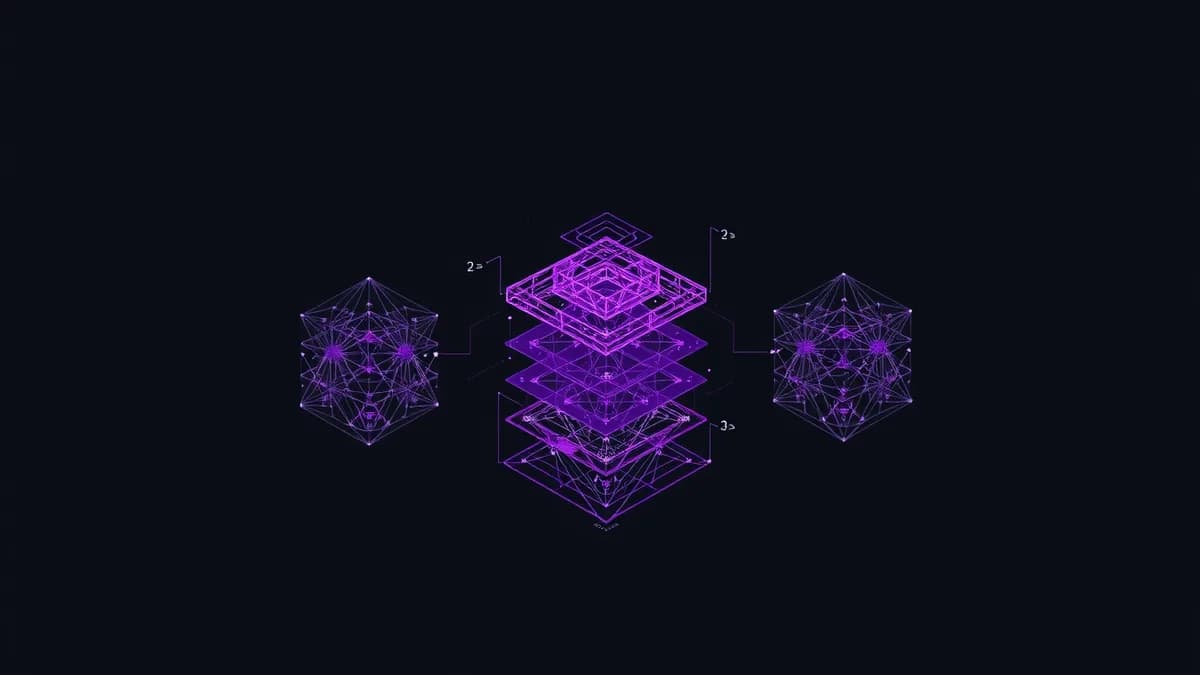
By eliminating a hidden inefficiency, computer scientists have developed a new method for multiplying large matrices that significantly outperforms previous techniques. This breakthrough, which combines insights from mathematics and computer science, brings us closer to the theoretical ideal of matrix multiplication efficiency.
Matrix multiplication is a fundamental operation in linear algebra, used extensively in fields such as machine learning, computer graphics, and scientific computing. The basic algorithm for multiplying two ( n \times n ) matrices was first described by Jacques Philippe Marie Binet in 1812. This method requires ( O(n^3) ) operations, which is efficient enough for small matrices but becomes impractical for large ones.
Over the years, mathematicians and computer scientists have sought to reduce this complexity. The most significant improvement came in 1969 with Volker Strassen’s algorithm, which reduced the complexity to ( O(n^{2.81}) ). Since then, incremental improvements have been made, but gains have become increasingly difficult to achieve.
The latest breakthrough was achieved by a team of researchers who identified and eliminated a hidden inefficiency in existing algorithms. This new method, which has not yet been formally named, brings the complexity down to ( O(n^{2.37286}) ), a significant improvement over previous bests.
While the theoretical improvement is substantial, the practical impact will depend on how well these techniques can be implemented in real-world applications. Here are some key points to consider:
The researchers are optimistic about further refining their method and exploring its applications in various domains. Some potential areas of interest include:
This breakthrough in matrix multiplication efficiency is a testament to the ongoing collaboration between mathematicians and computer scientists. By addressing hidden inefficiencies and refining existing techniques, researchers have pushed the boundaries of what is possible. As this method continues to evolve and be implemented, it has the potential to significantly impact a wide range of computational tasks.
Tags
Original Sources
About the author
Kai built ML infrastructure at a Bay Area startup before developing an obsession with transformer architectures and inference optimisation that eventually pulled him out of product work entirely. A stint at a compute research lab sharpened his instinct for what actually matters in a model release versus what is marketing. He writes from the inside — from the perspective of someone who has debugged the systems he is describing at three in the morning. He is allergic to hype and instinctively drawn to the unglamorous plumbing questions that everyone else skips over.
More from The Engineer →This Week's Edition
21 March 2024
24 articles
Related Articles

Tether Evo's New Research Tackles BCI's Cross-Subject Problem Across Speech, Vision, and Music
Models & Research · 6 min

xAI Launches Grok Bot, an Autonomous Agent That Logs Into Your Tools and Does the Work
Products & Applications · 5 min

German Bishops Back Child-Friendly AI Standards, Citing Papal Call on Human Dignity
Policy & Regulation · 5 min
Related Articles
Tether Evo's New Research Tackles BCI's Cross-Subject Problem Across Speech, Vision, and Music
Models & Research · 6 min
xAI Launches Grok Bot, an Autonomous Agent That Logs Into Your Tools and Does the Work
Products & Applications · 5 min
German Bishops Back Child-Friendly AI Standards, Citing Papal Call on Human Dignity
Policy & Regulation · 5 min
More Stories
© 2026 Cedar & Bloom. All rights reserved.
