The Drum · Weekly AI news, freeSubscribe →

Share
As courts quietly lean on AI to draft opinions, a New York proposal would make fabricated legal citations grounds for discipline or impeachment, the first state effort to hold judges directly accountable for AI errors.
Imagine losing a court case because the judge's ruling cited a law case that never existed. That's not a hypothetical anymore. It's happened in courtrooms across the United States, and New York lawmakers want to make sure it comes with consequences.
A new bill introduced in the New York State Senate would allow judges who "knowingly or recklessly" include fabricated legal citations, generated by artificial intelligence, in their rulings to be sanctioned or referred to the legislature for impeachment. State Senator Michelle Hinchey, a Democrat, introduced the measure on Monday. It carries a formal title that sounds almost bureaucratic for something this consequential: the "judicial artificial intelligence accountability and integrity act."
Here's the plain-language version of what's at stake. AI language models, the same technology behind tools like ChatGPT, can generate text that sounds authoritative but is sometimes just wrong. In legal contexts, that means inventing case citations, quoting rulings that don't exist, or misstating legal standards entirely. Lawyers call these "hallucinations," a term borrowed from AI research that doesn't quite capture how serious the fallout can be when it happens inside an actual court order.
Think of it like a doctor prescribing medication based on a drug interaction chart that a computer made up. The confidence of the output doesn't make it true. And when a judge, not just a lawyer, signs off on that output, the stakes multiply. A ruling isn't just advice. It's binding. People's custody arrangements, prison sentences, and business disputes can hinge on it.
This isn't an isolated glitch. At least three judges in the United States have already acknowledged that rulings they issued contained AI-generated fictitious citations or other fabricated material. Two federal judges, one in Mississippi and one in New Jersey, admitted last year in response to an inquiry from Senate Judiciary Committee Chairman Chuck Grassley that members of their staff had used AI to help prepare court orders. Grassley didn't mince words, calling the resulting orders "error-ridden."
The fallout was real. In one of those cases, the 5th US Circuit Court of Appeals reassigned the case away from the judge entirely last month. That's a significant rebuke, essentially a signal that trust in that judge's handling of the matter had been broken.
Separately, an Oklahoma state judge acknowledged that a ruling he issued contained fictitious citations generated by AI, according to state records. Lawyers, too, have faced discipline or scrutiny nationwide for similar errors, suggesting this isn't a problem confined to the bench. It's a broader growing pain as the legal profession figures out how to use a powerful but unreliable tool responsibly.
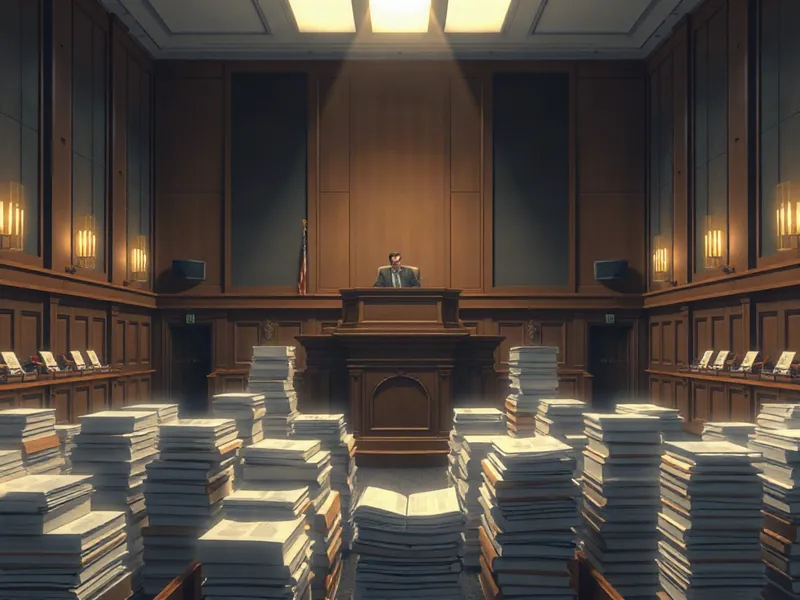
What's notable about the New York bill is what it doesn't do. It doesn't ban judges from using AI altogether. The use of AI alone would not constitute misconduct under the proposed law. The line being drawn is narrower and, frankly, more sensible: it's not the tool that's the problem, it's using the tool carelessly or dishonestly and letting fabricated material slip into a binding legal decision.
Under the bill, the New York State Commission on Judicial Conduct, the body that already investigates and disciplines judges for ethics violations, would have authority to issue sanctions. In more serious cases, it could refer its misconduct finding to state lawmakers for them to consider impeachment. That's a notably high ceiling for punishment, reserved in New York for the most serious breaches of judicial duty.
If passed, this would be the first state law anywhere to specifically address AI misuse by judges, as distinct from general ethics rules or administrative guidance. New York's court system already issued an administrative policy on AI use by judges and court staff last year, joining other states that have rolled out similar guidelines. But guidance is not the same as law with teeth. Policies can be quietly ignored. A statute that ties fabricated rulings to impeachment referral is a different order of seriousness.
The timing tracks with a broader reckoning happening across the legal profession. California has a first-of-its-kind state law taking effect in January that sets rules for how lawyers and arbitrators may use generative AI in their work. That law doesn't target judges specifically, but it reflects the same underlying worry: that AI's fluency can outpace its accuracy, and that the legal system's credibility depends on catching the gap before it reaches the public.
It's worth pausing on why this matters beyond the legal profession itself. Courts function because people trust that rulings are grounded in real law, applied fairly. When a judge's order cites a case that doesn't exist, it's not just an embarrassing clerical error. It chips away at the basic premise that the system is reliable. For someone fighting for custody of their child, facing eviction, or appealing a criminal sentence, a fabricated citation isn't an abstract technology mishap. It can mean a wrongly decided case, a wasted appeal, months of additional legal costs to untangle the mess.
New York's bill is a relatively narrow fix, but it signals something larger: lawmakers are beginning to treat AI misuse in courts as a governance problem, not just a technology hiccup. The accountability it proposes doesn't punish innovation. It punishes carelessness and dishonesty, which is exactly where accountability should land.
Whether other states follow New York's lead will say a lot about how seriously the legal system intends to take this moment. AI tools aren't going away from courtrooms, law firms, or clerks' offices. The question is whether oversight catches up to adoption before more rulings, and more people's lives, get caught in the gap between what AI generates and what's actually true.
Tags
Original Sources
New York bill would punish judges who misuse AI
↗ http://mobile.reuters.com/legal/government/new-york-bill-would-punish-judges-who-misuse-ai-2026-11-17
About the author
Amara's entry point into AI was an epidemiology role at a London research hospital, where she spent five years studying how digital health tools reached — or conspicuously failed to reach — underserved communities. Watching early algorithmic systems in healthcare quietly entrench existing inequalities, she redirected her career toward the systemic consequences of AI at scale. She covers AI through an unflinching lens: who benefits, who bears the cost, and what evidence actually says versus what the press release claims. Her writing is calm and precise, but she doesn't mistake balance for neutrality.
More from The Steward →This Week's Edition
18 November 2026
29 articles
Related Articles
Who Decides If Your Treatment Is Medically Necessary? Industry Leaders Say It Shouldn't Be AI Alone
Policy & Regulation · 6 min

Epic Systems Pushes Back on Antitrust Criticism, Pledges Broader AI Data Access
Policy & Regulation · 5 min

AI Is Showing Up in Court Filings. Courts Can't Yet Agree on How to Prove It
Policy & Regulation · 6 min
Related Articles
Who Decides If Your Treatment Is Medically Necessary? Industry Leaders Say It Shouldn't Be AI Alone
Policy & Regulation · 6 min
Epic Systems Pushes Back on Antitrust Criticism, Pledges Broader AI Data Access
Policy & Regulation · 5 min
AI Is Showing Up in Court Filings. Courts Can't Yet Agree on How to Prove It
Policy & Regulation · 6 min
More Stories
© 2026 Cedar & Bloom. All rights reserved.
