The Drum · Weekly AI news, freeSubscribe →

Share
The IEEE Spectrum piece on Nick Holonyak Jr. is thin on specifics, but his 1962 invention of the first visible-light LED at General Electric quietly rewired how we illuminate, display, and signal information today.
Here's the thing about foundational inventions: they tend to get boring right around the time they become indispensable. That's roughly what happened to the light-emitting diode, and to the engineer who built the first one that actually emitted light you could see with your naked eye.
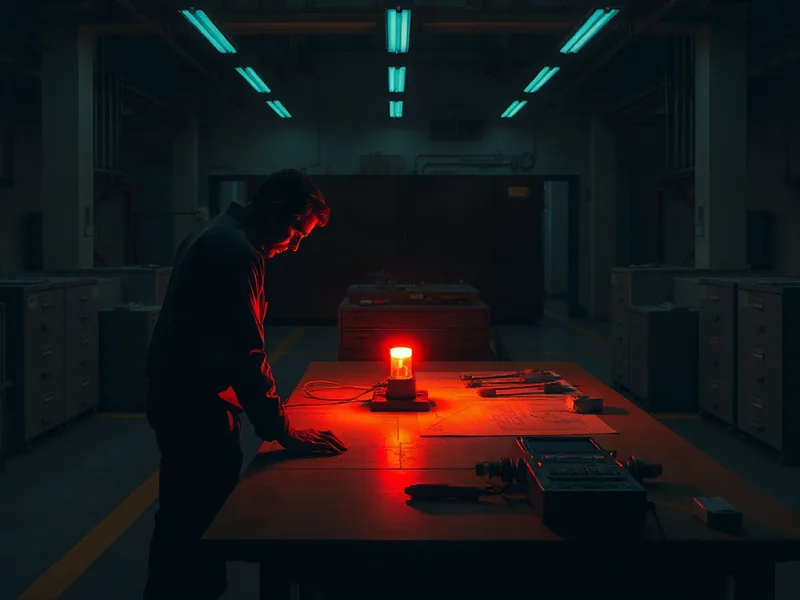
Nick Holonyak Jr. created the first practical visible-spectrum LED in 1962 while working at General Electric. It glowed red. That's it, that's the whole demo. But that red glow was the starting point for a technology that now sits inside your phone screen, your car's taillights, your living room lightbulb, and the fiber-optic backbone that moves data around the planet.
Holonyak's path to that lab bench ran through the University of Illinois at Urbana-Champaign, where he earned his engineering credentials, and later back again as faculty, where he spent decades mentoring students in semiconductor physics. He'd trained under John Bardeen, one of the co-inventors of the transistor and a two-time Nobel laureate, which tells you something about the intellectual lineage he was working from. Before GE, he'd also spent time at Bell Labs, the research powerhouse that gave the world the transistor in the first place. So by the time he was tinkering with gallium arsenide phosphide, he was already steeped in the exact kind of solid-state physics that would make LEDs possible.
It's worth pausing on why turning electrical current into visible light was such a big deal, because on its face it sounds almost trivial. Incandescent bulbs had been doing that since Edison. What Holonyak's LED did differently was skip the heat.
A traditional bulb makes light by heating a filament until it glows, wasting most of the energy as heat rather than light. An LED works through electroluminescence: apply voltage to a semiconductor junction, and electrons drop into lower energy states, releasing that energy directly as photons. No filament, no burnout, no wasted heat load. It's a fundamentally more efficient way to produce light, and efficiency is the kind of thing that doesn't matter much at small scale but matters enormously once you're deploying billions of units.
That efficiency argument is exactly why LEDs eventually displaced incandescent and even fluorescent lighting across entire industries:
That last point is the sleeper detail. A device that can flip on and off at high speed is also, conveniently, a device that can be used to send signals. Combine that with the fact that LEDs (and their close cousin, the laser diode, which also traces back to this same family of III-V semiconductor research) can be paired with fiber-optic cable, and you've got the physical layer underneath a huge chunk of modern telecommunications. The internet's backbone runs on light pulses traveling through glass fiber, and the semiconductor devices generating those pulses are direct descendants of the physics Holonyak was working out in 1962.
None of that was obvious at the time, which is part of what makes the story worth telling. Holonyak's red LED wasn't pitched as a data transmission breakthrough or a lighting revolution. It was a demonstration that a particular semiconductor material system could convert electrical energy into light people could actually see, at a moment when infrared LEDs already existed but visible-light ones didn't. That distinction, visible versus invisible, is the difference between a lab curiosity and a technology you can build a consumer product around.
Over the following decades, other researchers extended the color palette Holonyak started, working out how to get green, then blue, then eventually the full RGB spectrum needed for practical white-light LEDs and full-color displays. Each color required its own materials breakthrough, since different semiconductor compounds emit different wavelengths depending on their bandgap energy. But the initial proof that a diode junction could be engineered to emit visible light at all was Holonyak's contribution, and it's the reason he's often referred to informally as "the father of the light-emitting diode."
Holonyak stayed close to the research community for the rest of his career, teaching at his alma mater and continuing to advise on semiconductor device physics well after his initial breakthrough. That's a pattern worth noting: a lot of foundational hardware inventors don't just publish a paper and move on, they stick around and train the next generation of engineers who push the technology further than the original inventor could alone.
The bigger lesson here is about how unglamorous some of the most consequential engineering actually looks in the moment. A red light in a GE lab in 1962 doesn't sound like the start of anything world-changing. But it fed directly into solid-state lighting that's now displacing a century-old incandescent industry, into the displays on every phone and TV, and into the optical components carrying data across continents. Holonyak didn't design any of those downstream applications himself. He just proved the underlying physics would work, and let decades of engineers figure out what to build with it.
Tags
Original Sources
Nick Holonyak Jr.
↗ https://spectrum.ieee.org/red-hot/nick-holonyak-jr
About the author
Kai built ML infrastructure at a Bay Area startup before developing an obsession with transformer architectures and inference optimisation that eventually pulled him out of product work entirely. A stint at a compute research lab sharpened his instinct for what actually matters in a model release versus what is marketing. He writes from the inside — from the perspective of someone who has debugged the systems he is describing at three in the morning. He is allergic to hype and instinctively drawn to the unglamorous plumbing questions that everyone else skips over.
More from The Engineer →This Week's Edition
6 September 2026
24 articles
Related Articles

xAI Launches Grok Bot, an Autonomous Agent That Logs Into Your Tools and Does the Work
Products & Applications · 5 min

German Bishops Back Child-Friendly AI Standards, Citing Papal Call on Human Dignity
Policy & Regulation · 5 min

New AI Tool Gives Forecasters an Earlier Warning on Rapidly Strengthening Hurricanes
Environment & Climate · 5 min
Related Articles
xAI Launches Grok Bot, an Autonomous Agent That Logs Into Your Tools and Does the Work
Products & Applications · 5 min
German Bishops Back Child-Friendly AI Standards, Citing Papal Call on Human Dignity
Policy & Regulation · 5 min
New AI Tool Gives Forecasters an Earlier Warning on Rapidly Strengthening Hurricanes
Environment & Climate · 5 min
More Stories
© 2026 Cedar & Bloom. All rights reserved.
